
Optimizing WPS for Pressure Vessel Welding
Optimizing WPS Variables for Precision in Pressure Vessel Welding
The fabrication of pressure vessels demands an unwavering commitment to precision, safety, and regulatory compliance. At the heart of achieving these critical objectives lies the meticulous establishment and adherence to Welding Procedure Specifications (WPS). A well-defined WPS serves as a detailed blueprint, guiding welders through every step of the welding process to ensure consistent quality, mechanical integrity, and the ultimate reliability of the finished vessel. For welding engineers and fabrication managers, understanding and accurately setting these variables is not merely a best practice; it is a fundamental requirement for preventing costly failures, ensuring operational longevity, and protecting human lives.
This comprehensive guide delves into the essential variables that constitute a robust WPS for pressure vessel construction, exploring how each parameter influences weld quality, material properties, and adherence to international standards. We will also highlight how Oldwelders, with its ISO 9001 certified manufacturing and extensive product range, supports the industry in achieving these exacting standards.
The Critical Role of Welding Procedure Specifications in Pressure Vessel Fabrication
A Welding Procedure Specification (WPS) is a formal written document that outlines the specific parameters and conditions required to produce a weld of acceptable quality for a particular application. In the context of pressure vessel fabrication, the WPS is paramount. These vessels operate under extreme conditions—high pressures, varying temperatures, and often corrosive environments—making any compromise in weld integrity unacceptable. The WPS provides undeniable evidence that a specific welding process, when performed according to its guidelines, will yield a weld that meets all specified mechanical and metallurgical properties.
The development of a WPS typically involves a Procedure Qualification Record (PQR), a document that verifies the WPS by recording the actual welding parameters used during a test weld and the subsequent mechanical testing results. This rigorous process is crucial for:
- Ensuring Safety: Preventing catastrophic failures due to faulty welds, which could lead to explosions, leaks, or structural collapse.
- Maintaining Quality Consistency: Guaranteeing that every weld performed on a pressure vessel, regardless of the welder or location, meets the same high standards.
- Achieving Regulatory Compliance: Adhering to stringent codes and standards issued by bodies such as ASME (American Society of Mechanical Engineers), API (American Petroleum Institute), and other national and international organizations.
- Optimizing Production Efficiency: Providing clear instructions that minimize rework, reduce material waste, and streamline the fabrication process.
Without a precise WPS, the inherent risks in pressure vessel manufacturing escalate dramatically, jeopardizing both product performance and organizational reputation. Oldwelders understands this criticality, offering a range of high-quality welding machine solutions designed to deliver the precision and reliability essential for these demanding applications.
Key Welding Variables for Pressure Vessel Construction
The effectiveness of any WPS hinges on the precise definition and control of numerous welding variables. These variables are generally categorized into essential, non-essential, and supplementary essential variables, depending on their impact on the mechanical properties of the weld. For pressure vessel applications, where weld integrity is non-negotiable, many variables considered non-essential in other contexts become critical points of control.
Electrical Parameters
- Welding Current (Amperage): Directly controls the penetration and melt-off rate. Too low, and fusion issues arise; too high, and undercut or burn-through can occur. For thick-walled pressure vessels, careful calibration is vital.
- Welding Voltage: Influences the arc length and width. Optimal voltage ensures proper bead contour and reduces spatter.
- Travel Speed: Dictates the heat input per unit length. Slow speeds can lead to excessive heat input, grain growth, and distortion, while fast speeds may cause insufficient penetration and lack of fusion.
- Wire Feed Speed: In MIG/MAG welding, this is directly linked to the welding current and directly impacts the deposition rate.
Material and Consumable Parameters
- Filler Metal Classification: The welding materials, including welding wire and welding rod, must be compatible with the base material and designed to meet the required mechanical properties and chemical composition of the weld. For example, specific AWS E6013 welding electrodes are chosen for their excellent all-position capabilities and ease of use in certain applications.
- Shielding Gas Type and Flow Rate: Essential for protecting the molten weld pool from atmospheric contamination. The gas composition (e.g., argon, CO2, or mixtures) affects arc stability, penetration, and bead appearance.
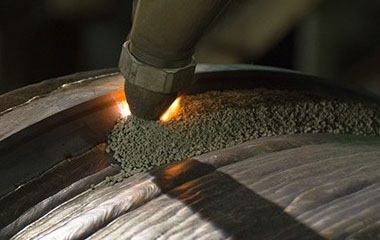
- Welding Flux: For processes like Submerged Arc Welding (SAW), the welding fluxes play a crucial role in shielding, deoxidation, and influencing the weld metal chemistry and mechanical properties. Oldwelders' commitment to quality is evident in our flux products, which are produced from excellent raw materials like dolomite, bauxite, cryolite, silica, and fluorine ore, melted at 2000 °C to ensure superior performance.
Thermal Management Parameters
- Preheat Temperature: Applying heat to the base metal before welding reduces the thermal gradient, minimizes hydrogen-induced cracking, and slows the cooling rate, which is especially critical for high-strength steels and thick sections.
- Interpass Temperature: The temperature of the weldment between passes. Maintaining controlled interpass temperatures prevents excessive heat buildup, which can degrade mechanical properties, and ensures consistent weld quality throughout multiple passes.
- Post-Weld Heat Treatment (PWHT): Often required for pressure vessels to relieve residual stresses, temper the weld, or achieve specific metallurgical structures, enhancing toughness and corrosion resistance.
Joint and Positional Parameters
- Joint Design: The type of joint (e.g., butt, fillet, lap) and its preparation (groove angle, root opening, root face) directly impact weld penetration and strength.
- Welding Position: The orientation of the weld affects puddle control and deposition rates. While flat (1G/1F) is preferred for efficiency, pressure vessels often require welds in horizontal, vertical, or overhead positions, necessitating specific WPS adjustments.
Material Selection and Joint Design for Robust Pressure Vessel Welds
The selection of base materials and the meticulous design of welded joints are foundational elements that profoundly influence the development of a WPS for pressure vessels. These choices dictate not only the welding parameters but also the overall integrity and service life of the vessel under operational stresses.
Material Selection
Pressure vessels are constructed from a variety of materials, each chosen for its specific properties relating to strength, corrosion resistance, and high-temperature performance. Common materials include:
- Carbon Steels: Widely used for their good strength and cost-effectiveness, but require careful preheat and interpass temperature control, especially for thicker sections, to prevent hydrogen-induced cracking.
- Low Alloy Steels: Such as Cr-Mo steels, designed for elevated temperature service and increased strength. These often demand more complex PWHT procedures and specific filler metal chemistries.
- Stainless Steels: Valued for their corrosion resistance. Welding stainless steels requires controlling heat input to prevent sensitization (carbide precipitation) and distortion, with careful selection of shielding gases and flux-cored wire to maintain corrosion resistance.
- Nickel Alloys: Used in highly corrosive or very high-temperature applications. These materials often present challenges related to hot cracking and require specialized welding techniques and consumables.
The chosen material dictates the appropriate filler metals, pre- and post-weld heat treatments, and even the type of automatic welding machine or manual process that can be effectively employed. Oldwelders provides a diverse range of welding materials, including various types of welding wire and welding rods, specifically formulated to meet the demanding requirements of different pressure vessel alloys.
Joint Design and Preparation
The design of the joint is critical for ensuring full penetration, adequate strength, and ease of welding. Common joint types for pressure vessels include:
- Butt Joints: Often used for vessel shells and heads, these require careful groove preparation (V, U, or J grooves) to ensure complete fusion throughout the thickness. The root opening and root face dimensions are critical for controlling penetration and preventing burn-through.
- Fillet Joints: Used for attaching nozzles, skirts, and other attachments to the main shell. The leg length and throat thickness must be sufficient to transfer loads effectively.
Proper joint preparation—including machining, grinding, and cleaning—is paramount. Contaminants such as oil, grease, paint, or rust can lead to porosity, lack of fusion, and other weld defects, compromising the integrity of the pressure boundary. The WPS must detail these preparation steps precisely to ensure optimal conditions for welding.
Ensuring Quality, Compliance, and Efficiency in Pressure Vessel Welding
The ultimate goal of a meticulously crafted WPS is to ensure the highest standards of quality, complete compliance with industry regulations, and maximum efficiency in the fabrication process. Achieving this requires a holistic approach that integrates robust procedures, skilled personnel, and advanced equipment.
Quality Assurance and Control
Quality assurance in pressure vessel fabrication encompasses all planned and systematic actions necessary to provide confidence that the vessel will perform satisfactorily in service. Key aspects include:
- Non-Destructive Testing (NDT): Techniques like radiographic testing (RT), ultrasonic testing (UT), magnetic particle testing (MT), and liquid penetrant testing (PT) are routinely used to inspect welds for internal and surface defects without damaging the component. The WPS will often specify the required NDT methods and acceptance criteria.
- Destructive Testing: While not performed on the actual vessel, destructive tests on PQR coupons (e.g., tensile tests, bend tests, impact toughness tests) verify the mechanical properties of the weld metal and heat-affected zone, confirming the WPS's validity.
- Welder Qualification: Welders must be qualified to perform welds according to specific WPS documents, demonstrating their ability to consistently produce sound welds.
Oldwelders is an ISO 9001 certified company, signifying our commitment to stringent quality management systems across all our operations. This certification provides our partners, particularly those in critical industries like pressure vessel manufacturing, with the assurance that our products and processes meet globally recognized quality standards.
Regulatory Compliance
Pressure vessels are among the most regulated pieces of equipment globally. Compliance with codes such as ASME Boiler and Pressure Vessel Code (BPVC), European Pressure Equipment Directive (PED), and local national standards is not optional; it is mandatory. The WPS is a direct link to this compliance, as it must reference the specific code sections and requirements it satisfies. Failure to comply can result in severe penalties, operational shutdowns, and legal liabilities.
Driving Efficiency
While quality and compliance are paramount, efficiency is also a significant driver in modern manufacturing. A well-optimized WPS, supported by reliable welding machines and consumables, can:
- Reduce Rework: By minimizing defects, the need for costly and time-consuming rework is drastically cut.
- Optimize Material Usage: Precise control over parameters reduces waste of filler metals and shielding gases.
- Increase Throughput: Clear, repeatable procedures allow for consistent production rates.
Oldwelders: Your Partner for Advanced Pressure Vessel Welding Solutions
At Oldwelders, we understand the complexities and critical demands of pressure vessel fabrication. Our mission is to empower welding engineers and fabricators with the highest quality welding machine, welding wire, welding rod, and welding fluxes, ensuring that your WPS can be executed with unparalleled precision and reliability.
Our commitment to excellence is deeply embedded in our operations. As an ISO 9001 certified manufacturer, we adhere to rigorous quality control standards at every stage of production. Our facility boasts six state-of-the-art production lines within a expansive 1000 square meter plant, capable of supplying up to 100 tons of product daily. This robust capacity, combined with a minimum order quantity of just 1 ton and a typical lead time of 30 days, allows us to efficiently serve a global clientele, including key markets such as Brazil, Thailand, Australia, and Malaysia.
We pride ourselves on the superior quality of our welding fluxes, which are produced using only excellent raw materials like dolomite, bauxite, cryolite, silica, and fluorine ore, melted at an extreme temperature of 2000 °C. This meticulous process ensures that our fluxes consistently deliver optimal arc stability, slag removal, and weld metal properties, critical for the integrity of arc welding machine applications in pressure vessel manufacturing.
Whether you require advanced high grade energy welding machine for specialized applications or robust resistance welding machine for high-volume production, Oldwelders offers solutions engineered for performance and durability. Our comprehensive product portfolio ensures that you have access to the right tools and consumables to meet the demanding requirements of any WPS for pressure vessel construction, thereby enhancing safety, quality, and operational efficiency.
Trust Oldwelders to be your strategic partner in achieving welding excellence for your most critical pressure vessel projects. Our expertise and quality products are designed to support your success, ensuring every weld contributes to the vessel's long-term integrity and performance.