
Optimizing Electroslag Welder Control for Defect Prevention
Optimizing Your Electroslag Welder for Defect-Free Production
For welding supervisors overseeing critical projects involving thick sections, the Electroslag Welder (ESW) stands as an indispensable tool. Its ability to create high-quality, single-pass welds in materials ranging from 25 mm to 300 mm (or even thicker) is unmatched, offering significant time and cost efficiencies. However, the unique characteristics of the ESW process, particularly its high heat input and reliance on a molten slag bath, demand meticulous control to prevent defects that can compromise structural integrity and project timelines. This guide delves into the fundamental principles of slag and heat management, providing actionable insights for validating process controls and ensuring consistent, high-quality production with your welding machine.
Understanding Electroslag Welding Fundamentals
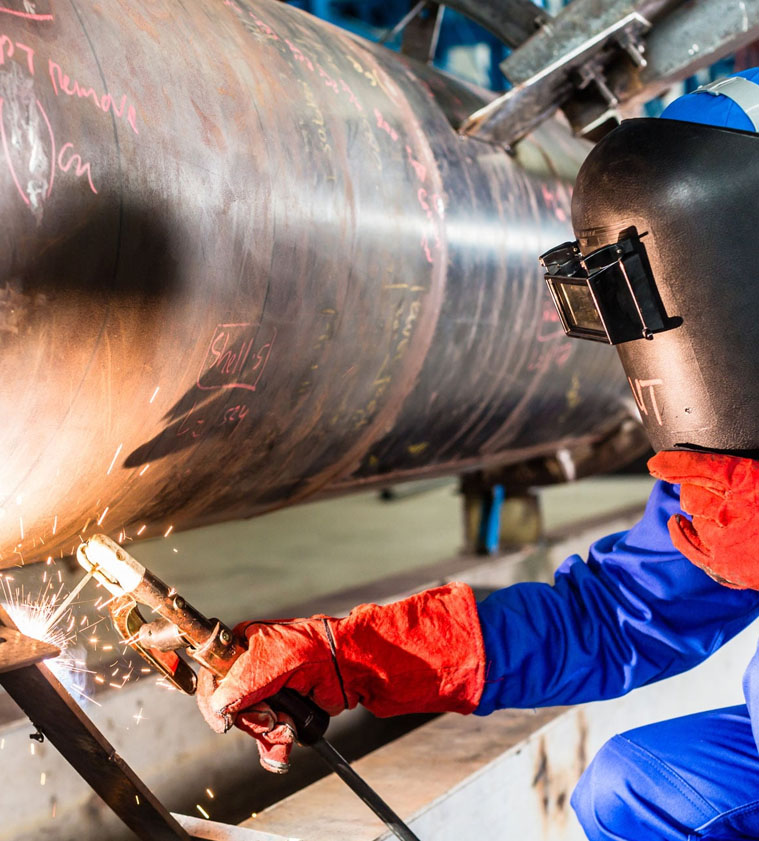
Electroslag Welding (ESW) is a fusion welding process primarily used for joining heavy-section materials in a single pass. Unlike traditional arc welding, ESW uses the resistance heating of a molten slag bath to melt the electrode wire and the edges of the base metal. The process initiates with an arc between the electrode and the base metal, which melts a specially formulated flux to create the molten slag pool. Once established, the arc extinguishes, and the current flows through the conductive slag, generating intense heat. This heat melts the continuously fed electrode wire and the joint faces, with the molten metal collecting in a pool beneath the slag and solidifying from the bottom up to form the weld bead.
Key Characteristics and Advantages:
- High Deposition Rates: ESW can achieve exceptional deposition rates, significantly reducing welding time for thick plates.
- Deep Penetration: The process provides full penetration in thick sections, eliminating the need for extensive joint preparation and multiple passes.
- Minimal Distortion: Due to its single-pass nature and controlled cooling, ESW often results in less distortion compared to multi-pass welding techniques.
- Vertical Welding Capability: ESW is ideally suited for vertical-up welding, making it perfect for large structural components, pressure vessels, and heavy machinery.
Despite these advantages, the high heat input inherent in ESW can lead to challenges if not properly managed. Issues such as coarse grain structures, hot cracking, and distortion are common concerns for welding supervisors. Oldwelders understands these complexities, offering robust welding materials and systems designed to meet stringent quality standards. Our commitment to excellence is underscored by our ISO 9001 certification, ensuring that the equipment and consumables you source from us are manufactured with precision and reliability in mind.
Critical Role of Slag Control in Electroslag Welder Performance
The slag bath is the heart of the Electroslag Welder process, performing multiple critical functions beyond just generating heat. Its composition and properties directly influence weld quality, making precise slag control paramount for defect prevention.
Functions of the Slag Bath:
- Heat Generation and Transfer: The electrical resistance of the slag generates and transfers the necessary heat to melt the electrode and base metal.
- Shielding: The molten slag protects the weld pool from atmospheric contamination (oxygen and nitrogen), preventing porosity and oxidation.
- Refining: The slag can absorb impurities from the molten metal, contributing to a cleaner weld.
- Alloying: Certain flux components can transfer alloying elements to the weld metal, enhancing its mechanical properties.
- Shape Control: The slag bath, contained by water-cooled copper shoes, helps shape the solidifying weld bead.
Slag Chemistry and Composition:
The choice of welding flux is crucial. Oldwelders produces high-quality welding fluxes using excellent raw materials such as dolomite, bauxite, cryolite, silica, and fluorine ore. These components are melted at 2000 °C to create a consistent and effective flux. The specific formulation dictates the slag's electrical conductivity, viscosity, melting point, and refining capabilities. For instance, fluxes with higher basicity tend to offer better desulfurization and deoxidation, while those with specific fluoride content improve slag fluidity and arc stability.
Common Slag-Related Defects and Control Strategies:
- Slag Inclusions: Occur when solidified slag particles become entrapped within the weld metal.
- Causes: Incorrect flux consumption rate, improper slag viscosity (too high or too low), inadequate cleaning between passes (though less common in single-pass ESW), or solidification issues.
- Control: Maintain optimal voltage and current to ensure proper slag fluidity. Use the correct flux type for the base material and joint configuration. Ensure consistent wire feed speed.
- Lack of Fusion: Can occur at the sidewalls if the slag does not adequately melt the base metal edges.
- Causes: Insufficient heat input, improper electrode positioning, or excessively viscous slag.
- Control: Adjust voltage and current to ensure sufficient heat. Optimize electrode oscillation patterns to ensure uniform melting along the joint faces. Select fluxes that promote good wetting properties.
- Irregular Bead Shape: Inconsistent slag behavior can lead to uneven weld beads.
- Causes: Fluctuations in slag pool depth, inconsistent cooling shoe contact, or improper flux feed.
- Control: Ensure a stable slag pool depth by maintaining consistent voltage and flux feed. Verify proper fit-up and integrity of the water-cooled shoes.
Understanding the intricate relationship between flux composition, process parameters, and slag behavior is key to preventing these defects. Our advanced production facilities, covering an area of 1000 square meters with six production lines, enable us to supply up to 100 tons of flux daily, ensuring consistent quality and availability for your operations.
Mastering Heat Input for Defect Prevention
The Electroslag Welder process is characterized by its very high heat input, which is essential for melting thick sections in a single pass. However, uncontrolled or excessive heat input is a primary driver of metallurgical and mechanical defects. Effective heat management is crucial for producing sound, high-integrity welds.
Impact of Heat Input:
- Metallurgical Changes: High heat input can lead to a coarse grain structure in the heat-affected zone (HAZ) and weld metal, reducing toughness and ductility. This is particularly critical in steels sensitive to grain growth.
- Hot Cracking: Excessive heat can prolong the solidification time of the weld pool, increasing the susceptibility to hot cracking, especially in materials with a wide solidification range or high impurity levels.
- Distortion: Uneven heating and cooling cycles, exacerbated by high heat input, can induce significant residual stresses and distortion in the welded component.
- Residual Stresses: High thermal gradients lead to high residual stresses, which can impact the fatigue life and brittle fracture resistance of the structure.
Parameters Influencing Heat Input:
Heat input in ESW is primarily controlled by voltage, current, and travel speed (or wire feed speed, which influences current). Electrode oscillation parameters also play a significant role in distributing heat across the joint.
- Voltage: Directly affects the temperature of the slag bath and the penetration depth. Higher voltage generally means a hotter, more fluid slag and greater melt-off.
- Current (Wire Feed Speed): Determines the rate at which electrode wire is melted. Higher current increases deposition rate and heat input.
- Travel Speed: While ESW is typically a vertical-up process, the ascent rate of the Electroslag Welder unit impacts the overall heat distribution and cooling rate. A slower ascent rate means higher heat input per unit length.
- Electrode Oscillation: The frequency and amplitude of electrode oscillation distribute heat more evenly across the joint, ensuring uniform melting of sidewalls and preventing lack of fusion. Proper oscillation also helps refine the grain structure by stirring the weld pool.
Thermal Cycle Management:
To mitigate the adverse effects of high heat input, careful management of the thermal cycle is necessary:
- Preheating: Preheating the base material can reduce the thermal gradient between the weld and base metal, minimizing distortion and the risk of cold cracking in certain alloys.
- Post-Weld Heat Treatment (PWHT): PWHT is often mandatory for ESW welds to refine the coarse grain structure, improve toughness, and relieve residual stresses. This transforms the as-welded microstructure into a more favorable one.
- Cooling Rate Control: While challenging to directly control in ESW, optimizing parameters to achieve a controlled cooling rate can help prevent the formation of undesirable microstructures.
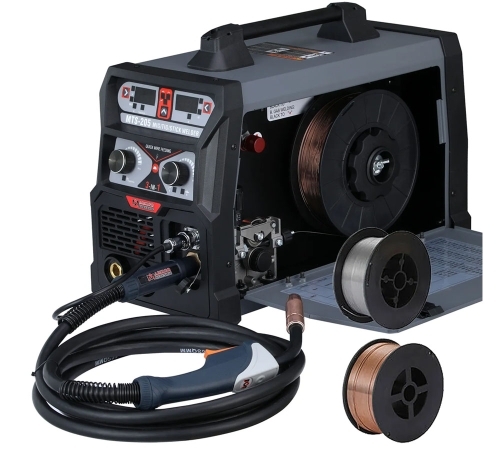
Oldwelders provides advanced automatic welding machine solutions that offer precise control over these parameters, allowing welding supervisors to fine-tune their ESW processes for optimal results.
Common ESW Defects and Troubleshooting
Despite the inherent advantages of the Electroslag Welder, specific defects can arise if process parameters are not meticulously controlled. Proactive troubleshooting is essential for maintaining weld quality and operational efficiency.
1. Lack of Fusion:
- Description: Failure of the weld metal to merge completely with the base metal or previous weld passes, often occurring at the sidewalls.
- Causes: Insufficient heat input (low voltage or current), improper electrode oscillation (not enough dwell time at sidewalls), excessively viscous slag, or inadequate joint preparation.
- Troubleshooting:
- Increase voltage or current within acceptable limits.
- Adjust electrode oscillation amplitude to ensure full coverage of the joint width and adequate melting of sidewalls.
- Check slag composition and feed rate to ensure proper fluidity.
- Verify joint fit-up and cleanliness.
2. Hot Cracking:
- Description: Cracks that occur in the weld metal or HAZ during solidification at elevated temperatures.
- Causes: High heat input leading to prolonged solidification time, high sulfur or phosphorus content in the base metal, excessive restraint, or improper weld metal chemistry.
- Troubleshooting:
- Optimize heat input to achieve a faster, but controlled, cooling rate.
- Ensure base metal composition is suitable for ESW; consider using filler wires designed to mitigate hot cracking.
- Reduce restraint where possible.
- Implement preheating or PWHT as required by material specifications.
3. Slag Inclusions:
- Description: Non-metallic slag particles trapped within the solidified weld metal.
- Causes: Incorrect slag viscosity (either too high to float out or too low to adequately shield), improper flux feed, or inconsistent current/voltage settings.
- Troubleshooting:
- Verify the correct welding fluxes type for the application.
- Adjust voltage and current to achieve optimal slag temperature and fluidity.
- Ensure consistent flux feeding.
- Consider adjusting electrode oscillation to promote better slag-metal separation.
4. Porosity:
- Description: Gas pockets trapped within the weld metal during solidification.
- Causes: Contamination (moisture, rust, grease) on the base metal or electrode, inadequate slag shielding, or insufficient deoxidizers in the flux/filler wire.
- Troubleshooting:
- Thoroughly clean joint surfaces and electrode wire.
- Ensure the flux is dry and stored correctly.
- Verify proper slag bath coverage and depth.
- Check for adequate deoxidizers in the flux or filler wire.
5. Distortion:
- Description: Undesired changes in the shape of the welded component.
- Causes: High heat input, large weld volume, inadequate fixturing, or improper welding sequence.
- Troubleshooting:
- Optimize heat input by adjusting voltage, current, and travel speed.
- Utilize robust fixturing to constrain movement during welding.
- Implement preheating or PWHT to manage thermal stresses.
- Consider multi-wire ESW systems for better heat distribution.
At Oldwelders, we pride ourselves on delivering not just products, but solutions. Our ISO 9001 certification reflects our unwavering commitment to quality management systems, ensuring that every welding machine and material we provide helps you achieve defect-free results.
Optimizing Your Electroslag Welder Process with Oldwelders
Preventing defects in Electroslag Welder operations hinges on a deep understanding of the interplay between slag chemistry, heat input, and material response. By systematically controlling these variables, welding supervisors can ensure consistent weld quality, reduce rework, and enhance the overall efficiency of their production lines.
Oldwelders is your trusted partner in achieving ESW excellence. With a robust manufacturing plant covering 1000 square meters and equipped with six production lines, we have the capacity to meet demanding global requirements, supplying up to 100 tons of high-quality flux daily. Our raw materials, including excellent dolomite, bauxite, cryolite, silica, and fluorine ore, are melted at 2000 °C to guarantee the superior performance of our welding fluxes.
We supply a comprehensive range of welding machine, welding materials, welding wire, welding rod, and welding fluxes, tailored for demanding B2B applications. Our proven track record extends to major markets including Brazil, Thailand, Australia, and Malaysia, demonstrating our global reach and reliability. We support your operational needs with a minimum order quantity of just 1 ton and a lead time of 30 days, ensuring timely delivery for your projects.
By partnering with Oldwelders, you gain access to not only cutting-edge special welding machine and consumables but also the expertise to optimize your welding processes. Our commitment to quality, backed by ISO 9001 certification, means you can rely on our products to deliver consistent, defect-free performance.
Conclusion
Mastering slag and heat control is fundamental to preventing defects and unlocking the full potential of your Electroslag Welder. By meticulously managing flux selection, process parameters, and thermal cycles, welding supervisors can consistently produce high-quality, robust welds in thick sections. Oldwelders stands ready to support your operations with superior welding machine and premium welding fluxes, engineered for reliability and performance. Contact us today to discuss how our solutions can enhance your ESW processes and ensure the integrity of your critical projects.