
Optimizing Amperage for Consistent Welding Rod Performance
Achieving Consistent Arc Starts by Optimizing Amperage for Your Welding Rod
For any professional operating in industrial fabrication, construction, or maintenance, the challenge of a welding rod sticking to the workpiece is a familiar frustration. This common issue, particularly prevalent in Shielded Metal Arc Welding (SMAW), not only costs valuable time but can also compromise the integrity of the initial weld. The primary culprit behind this problem often lies in an improperly set amperage, the electrical current that drives the welding process. Understanding and mastering amperage control is crucial for achieving smooth arc initiation, stable welding, and high-quality results.
This article delves into the critical role of amperage in SMAW, offering practical guidance for diagnosing, troubleshooting, and preventing welding rod sticking. We will explore how different amperage settings impact the arc and the molten weld pool, provide insights into selecting the correct current for various electrode types, and highlight Oldwelders' commitment to supplying the high-quality electrodes and support necessary for optimal performance.
Understanding Amperage and Its Impact on Welding Rod Performance
Amperage, or current, is the lifeblood of the welding arc. It dictates the heat input into the workpiece and the rate at which the welding rod melts. When the amperage is correctly dialed in, it creates a stable, consistent arc that melts both the electrode and the base metal efficiently, forming a robust weld pool. However, when amperage settings are off, a cascade of problems can arise, with sticking being one of the most immediate and disruptive.
Low Amperage: If the amperage is set too low, there isn't enough heat generated to quickly establish and maintain a stable arc. The electrode tip struggles to melt, leading to frequent sticking. The arc may sputter and extinguish, making it difficult to initiate the weld. Furthermore, inadequate heat input results in poor penetration, cold laps, and an uneven, lumpy weld bead. This often forces the welder to increase arc length to compensate, which can introduce porosity and further instability.
High Amperage: Conversely, excessively high amperage can also cause issues, though sticking is less common in this scenario compared to low amperage. Too much current generates excessive heat, causing the electrode to melt too rapidly, leading to uncontrollable spatter, deep penetration that can burn through thinner materials, and severe undercutting. The intense heat can also degrade the flux coating on the electrode prematurely, leading to an unstable arc and potential metallurgical problems in the weld. Moreover, the increased heat can overheat the welding machine and the electrode itself, making it difficult to handle and potentially damaging the equipment.
The ideal amperage creates a balanced environment where the arc is stable, the electrode melts smoothly, and the weld pool is manageable. This balance is influenced by factors such as electrode diameter, type of base metal, material thickness, desired penetration, and welding position. Oldwelders understands the intricacies of these relationships, which is why our manufacturing processes, certified under ISO 9001 standards, ensure that our welding materials provide consistent electrical properties, facilitating easier arc starts and stable operation for our B2B clients worldwide.
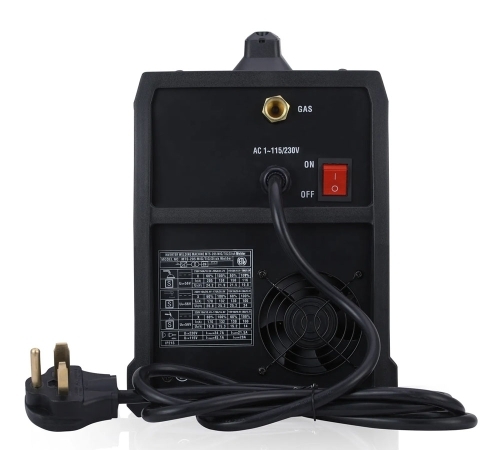
Diagnosing and Troubleshooting Welding Rod Sticking Issues
When a welding rod repeatedly sticks, it's essential to approach the problem systematically. While amperage is a frequent cause, other factors can contribute. Here’s a troubleshooting guide:
Incorrect Amperage Setting
- Symptom: Electrode "freezes" to the workpiece immediately upon striking, or arc is very weak and sputters out.
- Solution: Increase amperage in small increments (5-10 amps at a time). Consult the electrode manufacturer's recommendations (usually printed on the electrode box) for the appropriate amperage range for the specific electrode diameter and type.
Improper Arc Length
- Symptom: Arc is difficult to maintain, wanders, or extinguishes frequently, sometimes leading to sticking.
- Solution: Maintain a short, consistent arc length, typically equal to or slightly less than the electrode's core wire diameter. A very short arc can lead to sticking as the molten metal bridges the gap too quickly. A very long arc is unstable and may cause porosity and spatter.
Damp or Contaminated Electrodes
- Symptom: Arc is erratic, sputters excessively, and electrodes stick easily, often accompanied by excessive smoke or hydrogen bubbles.
- Solution: Ensure electrodes are stored in a dry environment or a heated oven according to manufacturer specifications. Moisture in the flux coating can cause arc instability and sticking. Oldwelders' AWS E6013 Welding Electrodes, like all our products, are manufactured to strict standards to minimize moisture absorption, but proper storage remains critical.
Poor Ground Connection
- Symptom: Weak arc, difficulty striking, or inconsistent welding, often with electrode sticking.
- Solution: Always ensure a clean, direct, and solid electrical connection between the workpiece and the ground clamp. Remove any paint, rust, or scale that could impede conductivity. A poor ground creates resistance, reducing the effective amperage at the arc.
Dirty Workpiece Surface
- Symptom: Arc is unstable, contaminates the weld pool, and can lead to sticking.
- Solution: Thoroughly clean the welding area of any rust, oil, grease, paint, or mill scale. Contaminants interfere with arc stability and can cause the electrode to stick.
Incorrect Electrode Angle and Travel Speed
- Symptom: Arc instability, poor bead shape, and intermittent sticking.
- Solution: Use the correct electrode angle for the welding position (typically 10-15 degrees pull angle for flat and horizontal, or push angle for vertical downhill). Maintain a consistent travel speed; too slow can cause material to pile up and stick, while too fast can lead to insufficient heat input and poor fusion.
Setting Optimal Amperage for Various Welding Rod Types
Selecting the correct amperage range is paramount for successful SMAW. While specific values will vary slightly between manufacturers and conditions, general guidelines exist for common welding rod types. It is always recommended to start at the lower end of the suggested amperage range for a given electrode diameter and adjust upwards until a smooth, stable arc is achieved without excessive spatter or overheating.
E6010 and E6011 (Fast-Freeze Electrodes)
- Characteristics: Deep penetrating, strong arc force, ideal for dirty or rusty material, excellent for root passes and vertical-up/down. E6010 is DC only (DCEP), E6011 is AC/DC.
- Amperage Range: Typically require higher amperage for their diameter due to their strong arc. For a 1/8" (3.2mm) diameter electrode, expect a range of 80-120 amps.
- Sticking Tip: Due to their strong arc, they are less prone to sticking from low amperage than other types, but insufficient current will still cause issues. Ensure good ground and a quick "scratch" start.
E6013 (All-Position, Easy-to-Use Electrodes)
- Characteristics: Smooth, stable arc, light penetration, easy slag removal, good for sheet metal and general fabrication, AC/DC.
- Amperage Range: Generally operate at lower amperages compared to E6010/E6011. For a 1/8" (3.2mm) diameter electrode, a range of 70-110 amps is common.
- Sticking Tip: More susceptible to sticking with low amperage due to their softer arc. A slightly higher initial current can help establish the arc, then reduce if necessary. Oldwelders' AWS E6013 Welding Electrodes are designed for ease of use, but correct amperage is still vital.
E7018 (Low-Hydrogen Electrodes)
- Characteristics: Excellent mechanical properties, good ductility, low hydrogen content for critical applications, DC only (DCEP) preferred, some AC versions.
- Amperage Range: Typically require medium-to-high amperage. For a 1/8" (3.2mm) diameter electrode, a range of 100-150 amps is typical.
- Sticking Tip: These electrodes have a thicker flux coating and can be prone to sticking if the amperage is too low or if they are damp. Maintain a short arc and ensure preheating if recommended for the base material.
General Amperage Adjustment Principles:
- Electrode Diameter: Larger diameter electrodes require more amperage to melt efficiently.
- Material Thickness: Thicker materials typically require higher amperage to achieve sufficient penetration.
- Welding Position: Flat and horizontal positions generally allow for higher amperages, while vertical and overhead positions often require slightly lower settings for better puddle control.
- Polarity: DCEP (Direct Current Electrode Positive) typically provides deeper penetration and operates at slightly lower amperages than DCEN (Direct Current Electrode Negative) for the same electrode, which offers faster melt-off and shallower penetration.
Oldwelders' Commitment to Quality Welding Materials and Support
At Oldwelders, we understand that reliable performance starts with superior quality welding materials. Our dedication to excellence is reflected in every product we manufacture, from welding machines to welding wire, and particularly our comprehensive range of electrodes and welding fluxes. We are proud to be an ISO 9001 certified company, a testament to our rigorous quality management systems that ensure consistency and reliability across our entire product line.
Our commitment extends to the very foundation of our products. The raw materials used in our flux products, for instance, are meticulously selected, including excellent dolomite, bauxite, cryolite, silica, fluorine ore, and other high-grade ores. These are then melted at precisely controlled temperatures of 2000 °C to achieve optimal chemical composition and performance characteristics, ensuring that our welding fluxes provide stable arcs and excellent slag removal, contributing directly to reduced rod sticking and superior weld quality.
With a state-of-the-art plant covering an area of 1000 square meters and equipped with six advanced production lines, Oldwelders boasts an impressive daily production capacity of 100 tons. This substantial capacity ensures that our B2B partners, whether in Brazil, Thailand, Australia, Malaysia, or other global markets, can rely on a consistent and timely supply of high-performance welding consumables. For many of our products, we accommodate industrial-scale requirements with a minimum order quantity (MOQ) of 1 ton, demonstrating our capability to serve large-scale projects and demanding supply chains.
We stand behind the quality of our products with a 30-day assurance period, offering peace of mind to our customers. This commitment to quality and customer satisfaction is integral to our philosophy. We believe that by providing superior welding materials and expert support, we empower our clients to achieve optimal welding efficiency and outstanding results in their operations, minimizing frustrations like electrode sticking and maximizing productivity.
Conclusion
Reducing welding rod sticking is a fundamental step towards improving welding efficiency and quality in SMAW operations. While the issue can stem from various factors, incorrect amperage settings are often the primary cause. By understanding the impact of amperage on the arc and the weld pool, systematically diagnosing problems, and precisely setting the current for the specific electrode type and application, welders can significantly enhance their arc initiation and overall welding performance.
Oldwelders is your trusted partner in this endeavor, providing not only high-quality electrodes and welding machines but also the foundational expertise derived from stringent quality control and advanced manufacturing. Our commitment to excellence, from raw material selection to large-scale production, ensures that our products support consistent, reliable welding for industries worldwide. For superior welding solutions that minimize downtime and maximize productivity, trust Oldwelders.