
Match Hardfacing Electrodes to Crusher & Bucket Wear
Optimizing Crusher and Bucket Longevity: Matching the Right Hardfacing Electrode
In demanding industries such as mining, quarrying, and construction, heavy machinery like crushers and excavator buckets are subjected to relentless wear. The constant impact, abrasion, and erosion can significantly reduce their operational lifespan, leading to costly downtime and frequent replacements. Extending the life of these critical components is paramount for maintaining productivity and controlling operational expenses. This is where the strategic application of a suitable Hardfacing Electrode becomes invaluable. By understanding the specific wear mechanisms at play, businesses can select the optimal electrode to provide superior protection and enhance equipment durability.
At Oldwelders, we understand the critical role of specialized welding materials in heavy machinery maintenance. Our commitment to quality is underscored by our ISO 9001 certification, ensuring that our products consistently meet rigorous international standards. With a state-of-the-art plant covering an area of 1000 square meters and six production lines, we possess the capacity to supply up to 100 tons of product a day, reinforcing our reliability as a partner for businesses in target markets such as Brazil, Thailand, Australia, and Malaysia.
Understanding Wear Mechanisms in Heavy Machinery
Before selecting a Hardfacing Electrode, it is essential to identify the predominant types of wear affecting the component. Heavy machinery components typically encounter a combination of these mechanisms:
- Abrasion: This is the most common form of wear in crushers and buckets, caused by the scraping or grinding action of hard particles (e.g., rock, sand) against a surface. It can be further categorized as high-stress (gouging) or low-stress (scratching) abrasion.
- Impact: Occurs when components strike or are struck by other objects, leading to deformation, cracking, or spalling. This is particularly prevalent in crusher jaws, hammer mill components, and bucket teeth.
- Erosion: A combination of abrasion and impact, often seen in components exposed to high-velocity streams of abrasive particles, such as slurry pumps or chute linings.
- Corrosion: Chemical or electrochemical attack on the metal surface, which can be exacerbated by abrasive wear, creating a synergistic effect.
- Heat: Elevated temperatures can affect the microstructure of metals, reducing their hardness and wear resistance, especially in high-friction applications.
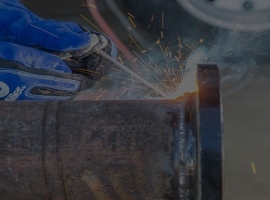
Standard welding wires or rods are designed for joining metals, not for resisting these extreme wear conditions. Hardfacing, conversely, involves depositing a layer of wear-resistant material onto a component's surface, specifically formulated to withstand the identified wear mechanisms.
Types of Hardfacing Electrode and Their Applications
The selection of a Hardfacing Electrode is dictated by the specific wear challenge and the performance requirements. Different formulations offer distinct advantages:
Chromium Carbide Hardfacing Electrodes
Known for their excellent resistance to high-stress and low-stress abrasion. These electrodes deposit a hard, brittle matrix with finely dispersed chromium carbides. They are ideal for applications where abrasion is the primary concern, coupled with moderate impact.
- Typical Applications: Crusher wear plates, bucket lips and sides, augers, conveyor screws, grizzly bars.
- Characteristics: High hardness, good flow characteristics, but can be susceptible to cracking under severe impact.
Complex Carbide Hardfacing Electrodes
These electrodes contain a blend of carbides (e.g., chromium, tungsten, niobium, molybdenum) designed to offer superior abrasion resistance compared to simple chromium carbides, often with improved resistance to moderate impact and heat. They create an extremely hard, dense deposit.
- Typical Applications: Hammer mill rotors, pulverizer rolls, highly abrasive chute linings, dredging equipment.
- Characteristics: Exceptional abrasion resistance, often retaining hardness at elevated temperatures, suitable for extreme wear environments.
Manganese Steel Hardfacing Electrodes
These are specifically formulated for components that experience high impact along with some abrasion. Manganese steel deposits are relatively soft as-welded but work-harden rapidly when subjected to impact, forming a very tough, wear-resistant surface.
- Typical Applications: Crusher mantles and concaves, bucket teeth, railway frogs, impact crusher blow bars.
- Characteristics: Outstanding impact strength, excellent work-hardening properties, good resistance to spalling.
Martensitic Hardfacing Electrodes
These electrodes produce a hard, tough deposit that offers a good balance of abrasion and impact resistance. They are often used for rebuilding and general maintenance.
- Typical Applications: Gears, shafts, rollers, excavator components requiring a balance of properties.
- Characteristics: Versatile, good for rebuilding worn parts before applying a final, more specialized hardfacing layer.
At Oldwelders, the raw materials for our welding flux products, which are integral to many of our specialized electrodes and welding fluxes, include excellent dolomite, bauxite, cryolite, silica, and fluorine ore. These are melted at 2000 °C to ensure purity and consistent performance, a testament to our focus on foundational quality.
Selecting the Optimal Hardfacing Electrode for Crushers
Crushers are at the heart of aggregates production, and their components face some of the most severe wear conditions. Choosing the correct Hardfacing Electrode can dramatically extend their service life.
- Jaw Crushers: Jaw plates experience high impact and severe gouging abrasion. Manganese steel electrodes are often used for rebuilding the base material due to their work-hardening properties, followed by chromium carbide or complex carbide electrodes on the working surfaces for enhanced abrasion resistance.
- Cone Crushers: Mantles and concaves are subject to compression, impact, and high-stress abrasion. Manganese steel is frequently used for these components due to its ability to work-harden under impact, while specific areas might benefit from a chromium carbide overlay for localized abrasion protection.
- Impact Crushers: Blow bars and impact plates undergo extreme impact and high-velocity abrasion. High-chromium white irons (deposited by chromium carbide or complex carbide electrodes) are highly effective for blow bars, offering excellent abrasion resistance. For components requiring more toughness, martensitic or manganese-based hardfacing can be considered. For example, our AWS E6013 Welding Electrodes offer a general-purpose solution, but for hardfacing, specialized options are necessary.
- Hammer Mills: Hammers and liner plates face intense impact and severe abrasion. Complex carbide electrodes are often the preferred choice to withstand the combined forces and maintain cutting edges.
Our commitment to providing reliable solutions means we not only offer a broad range of welding materials but also ensure efficient inventory management. With a minimum order quantity (MOQ) of just 1 ton, businesses can procure specialized materials without excessive initial investment, supported by an approximate lead time of 30 days for orders.
Choosing the Best Hardfacing Electrode for Buckets and Excavator Components
Excavator buckets, ripper shanks, and other ground-engaging tools (GET) are constantly exposed to abrasion, impact, and fatigue. Proper hardfacing extends their operational life and reduces maintenance frequency.
- Bucket Lips and Teeth: These areas endure significant impact and high-stress abrasion. Manganese steel electrodes are excellent for rebuilding and providing impact toughness, especially for teeth and adaptors. For the bucket lip's leading edge, a layer of chromium carbide or complex carbide Hardfacing Electrode can significantly improve abrasion resistance.
- Bucket Sides and Bottom: Predominantly experience abrasive wear from material flow. Chromium carbide electrodes are well-suited for these surfaces, providing a durable, wear-resistant layer.
- Ripper Shanks: Subjected to extreme impact and severe gouging abrasion. A combination of manganese steel for impact resistance and complex carbide for abrasion on critical areas can provide optimal protection.
When selecting a Hardfacing Electrode, consider not only the wear mechanisms but also the base material of the component, the welding process (e.g., manual arc welding, semi-automatic), and the available welding equipment. Oldwelders offers a comprehensive range of welding machines, including arc welding machines and automatic welding machines, to support various hardfacing applications.
Oldwelders' Commitment to Quality and Supply Chain Reliability
At Oldwelders, we pride ourselves on being a trusted partner for industrial clients seeking high-performance welding solutions. Our adherence to the ISO 9001 quality management system is a fundamental pillar of our operations, ensuring that every Hardfacing Electrode and all other products we supply meet stringent quality controls from raw material sourcing to final production.
Our expansive manufacturing facility, covering 1000 square meters, houses six advanced production lines. This robust infrastructure enables us to achieve an impressive daily production capacity of 100 tons, ensuring that we can meet the demands of large-scale industrial projects and maintain consistent supply for our global clientele. Whether you operate in Brazil, Thailand, Australia, or Malaysia, you can rely on Oldwelders for timely and efficient delivery of essential welding materials. We understand that downtime is costly, and our streamlined processes are designed to support your operational continuity with a typical lead time of 30 days for orders.
The quality of our hardfacing solutions begins with superior raw materials. We meticulously select excellent dolomite, bauxite, cryolite, silica, fluorine ore, and other vital ores. These are then melted at precisely 2000 °C, a critical step that ensures the homogeneity and purity of the components that form our high-performance welding fluxes and electrodes. This rigorous approach to material science directly translates into the exceptional wear resistance and durability of our Hardfacing Electrode products.
Conclusion
Matching the appropriate Hardfacing Electrode to the specific wear characteristics of crusher and bucket components is a strategic investment that yields significant returns in terms of extended equipment life, reduced maintenance costs, and increased operational uptime. By thoroughly assessing the types of wear—be it abrasion, impact, erosion, or a combination—and understanding the unique properties of various hardfacing alloys, businesses can make informed decisions that optimize their heavy machinery's performance.
Oldwelders stands ready to support your hardfacing needs with a comprehensive range of high-quality welding materials and the expertise to help you select the ideal solution. Our ISO 9001 certification, substantial production capacity, and commitment to using premium raw materials underscore our dedication to delivering reliable products that perform under the toughest conditions. Partner with Oldwelders to enhance the longevity and efficiency of your critical heavy machinery components.