
Optimal Hardfacing Electrode for Abrasion or Impact
Selecting the Optimal Hardfacing Electrode for Abrasion or Impact Applications
In industrial environments, equipment longevity is paramount for operational efficiency and cost control. Components subjected to relentless wear from abrasion, impact, or a combination of both inevitably degrade, leading to downtime and expensive replacements. Hardfacing, a process of depositing wear-resistant material onto a component surface, offers a robust solution to extend service life and reduce maintenance costs. However, the effectiveness of hardfacing hinges critically on selecting the correct electrode. This article delves into the nuances of choosing the optimal hardfacing electrode, specifically addressing the distinct challenges posed by abrasion and impact, to guide maintenance engineers in making informed decisions.

Understanding Wear Mechanisms: Abrasion vs. Impact
To effectively select a hardfacing electrode, one must first accurately diagnose the predominant wear mechanism. Wear is not a singular phenomenon; it manifests in various forms, each requiring a tailored metallurgical response.
What is Abrasion?
Abrasion occurs when hard, sharp particles slide or rub against a softer surface, gouging out material. This is a common wear mode in applications involving earthmoving equipment, agricultural machinery, mining components (e.g., conveyor screws, chute liners), and any machinery handling granular materials. Abrasion can be further categorized:
- Low Stress Abrasion: Occurs when fine particles rub against a surface under light pressure. Examples include soil erosion on farm implements.
- High Stress Abrasion: Involves coarser, harder particles under significant pressure, leading to deeper gouges and material removal. This is typical in crushing and grinding operations.
- Gouging Abrasion: The most severe form, characterized by large, hard particles impacting and sliding across a surface, often seen in excavator buckets or grizzly bars.
Materials prone to abrasive wear benefit from hardfacing deposits that exhibit high hardness, often achieved through carbides such as chromium carbides or tungsten carbides. These micro-constituents provide the necessary resistance to particle penetration and cutting action.
What is Impact?
Impact wear results from sudden, forceful blows that deform or fracture the surface material. Unlike abrasion, which is a gradual removal process, impact involves energy absorption and dissipation. Applications prone to impact include hammer mills, rock crushers, railway components, and forging dies. Impact can also vary in severity:
- Low Impact: Characterized by frequent, light blows that cause surface fatigue or plastic deformation.
- High Impact: Involves infrequent but severe blows that can lead to cracking, spalling, or gross deformation of the component.
For impact resistance, the hardfacing deposit needs to possess toughness and ductility to absorb kinetic energy without fracturing. High hardness alone can be detrimental, making the material brittle and susceptible to cracking under impact. Austenitic manganese steels are classic examples of materials chosen for their work-hardening properties under impact, becoming harder at the surface while retaining a tough core.
Types of Hardfacing Electrodes and Their Characteristics
Oldwelders offers a comprehensive range of welding materials, including various hardfacing electrodes, each engineered with specific metallurgical properties to combat different wear mechanisms. Understanding these types is crucial for effective selection.
Martensitic Deposits
These electrodes typically produce deposits with a martensitic microstructure, offering a good balance of hardness and toughness. They are often alloyed with chromium, molybdenum, and carbon. Martensitic deposits are excellent for moderate abrasion combined with moderate impact. Their hardness can range from 300 to 600 HB (Brinell Hardness), making them versatile for many industrial applications. They are commonly used on components like rollers, shafts, and gear teeth where both wear types are present but not extreme.
Austenitic Deposits
Austenitic electrodes, often based on manganese or stainless steel chemistries, yield deposits that are characterized by their high toughness and ability to work-harden under impact. Initially, these deposits may have a lower hardness (e.g., 200-250 HB), but under repeated impact, their surface hardness can increase significantly, sometimes exceeding 500 HB. This makes them ideal for severe impact applications, even with some accompanying abrasion, such as excavator bucket teeth, crusher jaws, and railway frogs. Their resistance to cracking under impact is a key advantage.
Carbide-Rich Deposits (Chromium Carbides, Tungsten Carbides)
These are the workhorses for severe abrasive wear.
- Chromium Carbide Electrodes: Form a deposit rich in complex chromium carbides within an austenitic or martensitic matrix. These carbides are extremely hard and provide exceptional resistance to high-stress gouging abrasion. They are typically applied on components like screw conveyors, cement plant components, and fan blades. They generally offer limited resistance to heavy impact due to their inherent brittleness.
- Tungsten Carbide Electrodes: Incorporate macroscopic tungsten carbide particles within a softer metallic matrix. These are the ultimate choice for extreme low-stress and high-stress abrasion, providing superior wear resistance. Applications include earthmoving tools, agricultural implements, and dredging equipment. However, they are very brittle and highly susceptible to cracking under impact.
Our manufacturing process at Oldwelders, which involves melting excellent raw materials like dolomite, bauxite, cryolite, silica, and fluorine ore at 2000 °C, ensures the consistent quality and performance of these specialized flux products and associated electrodes.
Key Considerations for Hardfacing Electrode Selection
Beyond identifying the primary wear mechanism, several other factors influence the selection of the most appropriate hardfacing electrode:
Severity and Combination of Wear
Rarely does wear occur in isolation. Most applications involve a combination of abrasion, impact, corrosion, and heat. The challenge is to identify the most dominant and damaging wear mechanism. If high impact is present, even with moderate abrasion, an electrode with good toughness (e.g., austenitic) might be preferred over a very hard but brittle one. Conversely, if abrasion is overwhelmingly dominant, carbide-rich electrodes will provide superior protection.
Base Metal Compatibility
The base metal of the component plays a critical role. The hardfacing deposit must be compatible with the base material to ensure good fusion, minimize cracking, and maintain structural integrity. Factors like preheating requirements, interpass temperature control, and post-weld heat treatment are often dictated by the base metal chemistry and thickness. For instance, the selection of a specific mig-mag-tig welding machine might also depend on the electrode and base material combination.
Deposit Thickness and Number of Layers
The required deposit thickness influences the choice of electrode and welding process. Thicker deposits may require multiple layers, with buffer layers (often tougher, less alloyed deposits) sometimes used to bridge differences between the base metal and the final hardfacing layer, especially when dealing with brittle hardfacing materials on tough base metals. This helps in stress distribution and crack prevention.
Service Environment
Consider other environmental factors such as elevated temperatures, corrosive media, or specific chemicals. Some hardfacing alloys offer resistance to high temperatures (e.g., some martensitic or complex carbide alloys) or corrosion, which might be a secondary but important selection criterion.
Cost and Application Method
The cost of the electrode and the ease of application are practical considerations. While tungsten carbide electrodes offer superior abrasion resistance, they are generally more expensive and can be more challenging to apply than chromium carbide or martensitic types. The welding process (SMAW, FCAW, GMAW, SAW) also impacts application efficiency and cost. Oldwelders provides a wide range of welding machine options to suit various hardfacing processes.
Oldwelders' Commitment to Quality Hardfacing Solutions
As an ISO 9001 certified manufacturer, Oldwelders is dedicated to providing high-quality welding consumables that meet the rigorous demands of industrial applications worldwide. Our commitment to excellence is reflected in every aspect of our operations, from raw material sourcing to final product delivery.
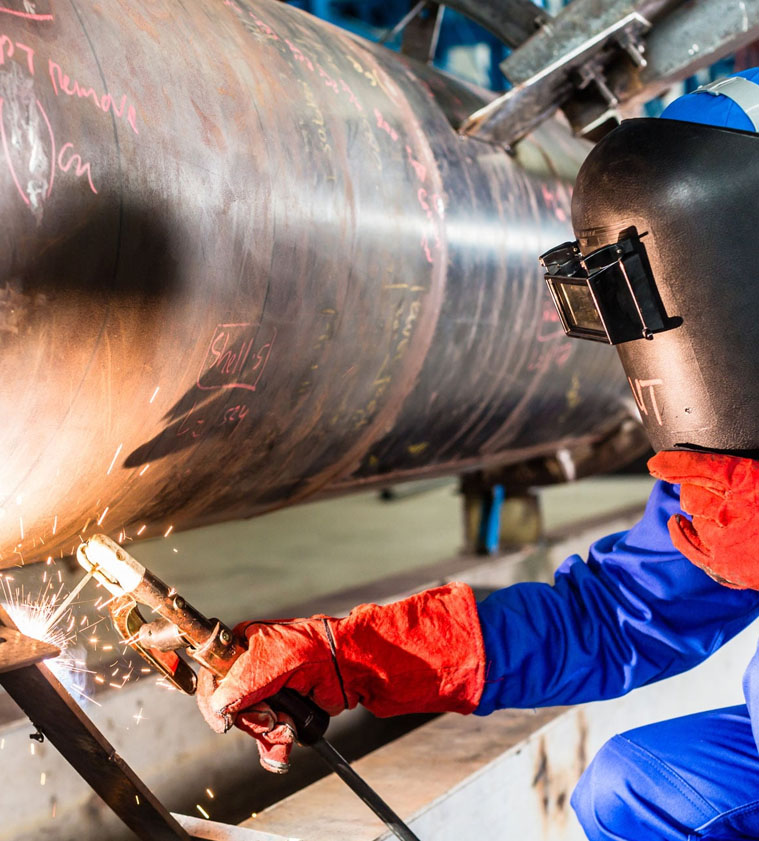
Our state-of-the-art plant, spanning an area of 1000 square meters, houses six production lines, enabling us to achieve an impressive daily supply capacity of 100 tons of high-grade welding materials. This robust infrastructure ensures that we can consistently meet the demands of our global clientele in markets such as Brazil, Thailand, Australia, and Malaysia.
For hardfacing applications, we understand that precision and performance are non-negotiable. That's why we meticulously select excellent raw materials for our welding fluxes and electrodes, including dolomite, bauxite, cryolite, silica, and fluorine ore. These materials are melted at an extreme temperature of 2000 °C to create superior flux products, which are integral to the performance of our welding consumables, including specialized hardfacing options. This rigorous control over material quality directly translates into the consistent and reliable performance of our hardfacing electrodes, ensuring optimal wear protection for your critical components.
With a minimum order quantity (MOQ) of just 1 ton and a standard lead time of 30 days, Oldwelders offers flexible and efficient supply chain solutions, tailored to the needs of our B2B partners. Our expertise in welding fluxes and electrodes positions us as a reliable partner for industries seeking to enhance the durability and operational lifespan of their machinery.
Application-Specific Hardfacing Electrode Recommendations
To summarize and provide practical guidance, here are general recommendations for specific wear scenarios:
For Pure Abrasion (Low to High Stress)
When the primary concern is material removal by sliding or rubbing particles with minimal impact, focus on high hardness and carbide content.
- Recommendation: Chromium carbide or tungsten carbide electrodes. These offer the highest resistance to abrasive wear. Depending on the severity, chromium carbides are a common starting point, with tungsten carbides reserved for the most extreme abrasive environments.
- Typical Applications: Dredging equipment, earthmoving bucket lips and teeth (where abrasion dominates), augers, screw conveyors, fan blades, pulverizer rolls, agricultural implements.
For Pure Impact (Low to High)
When components are subjected to heavy blows or repeated hammering with minimal abrasive particles, toughness and work-hardenability are key.
- Recommendation: Austenitic manganese steel electrodes. These materials can absorb significant impact energy without fracturing and will harden at the surface under repeated blows.
- Typical Applications: Crusher jaws, hammer mill hammers, railway frogs, impact wrenches, logging equipment components.
For Combined Abrasion and Impact (Moderate to Severe)
Most real-world scenarios involve a mix. The challenge is to find a hardfacing electrode that offers a good compromise without being overly brittle for impact or too soft for abrasion.
- Recommendation: Martensitic electrodes (e.g., those with high chromium content, but not forming primary carbides) or complex carbide electrodes with an appropriate matrix. Some specialized austenitic chromium carbide electrodes can also offer a balance, where the austenitic matrix provides toughness and the carbides resist abrasion.
- Typical Applications: Excavator bucket teeth (general purpose), chute liners, grizzly bars, dozer blades, some types of grinding mill liners. The specific balance will depend on which wear mechanism is more dominant.
Choosing the correct hardfacing electrode is a critical engineering decision that directly impacts the performance, lifespan, and maintenance costs of industrial equipment. By thoroughly assessing the wear mechanisms, considering the base metal, and understanding the metallurgical characteristics of different hardfacing materials, maintenance engineers can specify the optimal solution. Oldwelders stands as a trusted partner, supplying high-quality welding consumables backed by robust manufacturing capabilities and a commitment to excellence, ensuring your investments in component protection yield long-term returns.