
Optimize Sintering Process to Prevent Cracks
Understanding the Sintering Process for Crack Prevention in Powder Metallurgy
The integrity of powder metallurgy components hinges significantly on the effectiveness of the welding materials and the precision of their thermal treatment. Among these treatments, the Sintering Process is paramount. It transforms compacted metal powders into solid, functional parts through heat, but without melting them to a liquid state. However, a common challenge faced by production teams is the occurrence of cracks, particularly during the critical heat-up phase. These cracks can lead to costly material waste and compromised component performance. This article delves into the mechanisms behind crack formation during sintering heat-up and outlines strategic controls to mitigate these issues, ensuring higher quality and reliability in finished products.

Fundamentals of the Sintering Process
The Sintering Process is a complex metallurgical phenomenon involving atomic diffusion at elevated temperatures. It's typically categorized into three main stages: initial, intermediate, and final. During the initial stage, particle necks form and grow, increasing contact area. The intermediate stage involves pore rounding and coarsening as material diffuses, leading to significant densification. Finally, the final stage is characterized by isolated pores shrinking and disappearing, resulting in a dense, strong component.
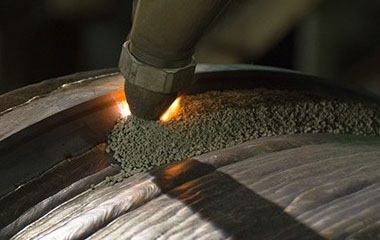
Temperature control is the bedrock of a successful Sintering Process. The precise heating profile, including ramp rates, dwell times, and peak temperature, dictates the microstructure and mechanical properties of the final product. Insufficient heat can lead to incomplete bonding and low density, while excessive heat can cause uncontrolled grain growth, distortion, or even melting. For specialized applications requiring exceptional material properties, Oldwelders supplies high-quality welding fluxes, which are produced from excellent raw materials such as dolomite, bauxite, cryolite, silica, and fluorine ore, melted at precisely 2000 °C to ensure optimal performance in demanding environments.
Root Causes of Cracks During Sintering Heat-Up
Cracks appearing in powder-metal components during the heat-up phase of sintering are primarily a result of differential thermal expansion, stress accumulation, and issues related to binder removal. Understanding these underlying causes is crucial for developing effective prevention strategies.
Thermal Gradients and Differential Expansion
As a compact heats, different regions within the material may expand at varying rates due to non-uniform temperature distribution. This creates internal stresses. If these stresses exceed the green strength of the compact, cracks will form. Rapid heating rates exacerbate thermal gradients, especially in large or geometrically complex parts. The outer layers heat and expand first, while the core remains cooler and more constrained, leading to tensile stresses in the core and compressive stresses on the surface.
Binder Burnout and Off-Gassing
Most powder metallurgy compacts contain an organic binder that provides green strength before sintering. This binder must be removed during the initial stages of heat-up, typically through a process called binder burnout. If the heating rate during this phase is too rapid, the binder can decompose too quickly, generating large volumes of gas. This off-gassing creates internal pressure within the compact. If the gas cannot escape fast enough, it can cause blistering, delamination, or cracking, particularly in dense regions or parts with long gas escape paths.
Material Properties and Green Strength
The inherent properties of the powder material and the green compact itself play a significant role. Materials with low green strength are more susceptible to cracking under thermal stress. Factors such as powder particle size and shape, compaction pressure, and binder type all influence green strength. Furthermore, some materials exhibit phase transformations during heating, which can be accompanied by volumetric changes, further contributing to internal stresses if not managed carefully.
Strategic Control of the Sintering Heat-Up Rate
Mitigating cracks during the Sintering Process heat-up requires meticulous control over the thermal profile. The goal is to minimize thermal gradients, allow for controlled binder removal, and manage material transformations effectively.
Controlled Ramp Rates for Binder Burnout
The initial heating phase, where binder removal occurs, is perhaps the most critical for crack prevention. A slow, carefully controlled ramp rate is essential. This allows the binder to decompose gradually, and the resulting gases to escape without building up excessive internal pressure. Often, a dwell (hold) period at a specific temperature range (e.g., 250-600 °C) is incorporated to ensure complete binder removal before higher temperatures are reached. The duration and temperature of this dwell period must be optimized for the specific binder system and part geometry.
Minimizing Thermal Gradients in Intermediate Heating
Once the binder is largely removed, the compact can be heated more rapidly, but vigilance against thermal gradients remains crucial. Intermediate heating rates should still be controlled to allow for uniform temperature distribution throughout the part. For larger or thicker components, this may involve multiple ramp-and-hold segments, gradually increasing the temperature to allow the core to catch up with the surface. Monitoring furnace temperature uniformity and part temperature (if feasible) can provide valuable feedback for optimization.
Atmosphere Control and Its Impact
The furnace atmosphere during sintering heat-up also plays a role in crack prevention. In inert or reducing atmospheres, which are common in many sintering applications, the binder burnout process must be carefully managed to avoid carbon residue formation, which can hinder densification and embrittle the material. The choice of atmosphere can also influence the thermal conductivity within the furnace and thus impact heat transfer rates to the compacts.
Material Considerations and Process Optimization
The success of the Sintering Process is deeply intertwined with the characteristics of the raw materials and the continuous optimization of the process parameters. Different powder compositions and compact geometries demand tailored approaches.
Powder Characteristics and Compact Density
The properties of the metal powder – including particle size distribution, morphology, and purity – directly influence the green strength and the sintering behavior. Finer powders generally sinter at lower temperatures or faster rates but can also be more prone to compacting issues. A uniform particle size distribution helps achieve consistent packing and reduces variations in shrinkage. Similarly, the green density of the compact, achieved through controlled compaction pressure, affects pore structure and overall strength, impacting its resistance to cracking during heat-up. Higher green density generally leads to less shrinkage during sintering but requires careful binder removal.
Alloying Elements and Their Influence
The presence of alloying elements in the powder mixture can significantly alter the sintering kinetics and material response to heating. Some alloying elements can form liquid phases at specific temperatures, accelerating densification but also increasing the risk of distortion or slumping if not carefully controlled. Others may form oxides that inhibit neck growth. Understanding the phase diagram of the specific alloy system is critical for designing an effective sintering profile that avoids detrimental phase transformations during heat-up.
Advanced Monitoring and Feedback Systems
Modern sintering furnaces are often equipped with advanced monitoring systems that can track temperature at various points within the furnace and even on the compacts themselves. Technologies like dilatometry can measure the dimensional changes of a compact during heating, providing real-time data on shrinkage and expansion, which is invaluable for optimizing ramp rates and hold times. Implementing such feedback systems allows for dynamic adjustment of the Sintering Process, leading to higher yields and fewer defects.
Quality Assurance and Supplier Capabilities
Ensuring consistent product quality in powder metallurgy, especially regarding the integrity of components after the Sintering Process, relies heavily on stringent quality assurance protocols and the capabilities of the material supplier. Oldwelders is committed to delivering excellence across our product range, which includes welding machine, welding wire, welding rod, and welding fluxes.
Our dedication to quality is underscored by our ISO 9001 certification, a testament to our robust quality management systems that govern every stage of production, from raw material sourcing to final product inspection. This certification provides our B2B partners with the assurance that our processes are consistently monitored and improved, ensuring reliable and high-performance welding materials.
Oldwelders operates a state-of-the-art facility covering an area of 1000 square meters, housing six production lines. This infrastructure enables us to achieve a substantial daily production capacity of 100 tons, ensuring that we can meet the demands of large-scale industrial projects without compromising on quality or lead times. For our partners, this means consistent supply and efficient order fulfillment. We understand the importance of timely delivery, offering a competitive lead time of 30 days for orders, with a minimum order quantity (MOQ) of just 1 ton to accommodate various project scales.
Our commitment extends globally, serving key markets such as Brazil, Thailand, Australia, and Malaysia. This international presence reflects our capability to understand and meet diverse market needs, providing tailored solutions and reliable support to our clients worldwide. By partnering with Oldwelders, businesses gain access to a supplier that not only provides high-quality welding products but also possesses the operational excellence and quality controls necessary to support critical manufacturing processes, including those impacted by the precision required in the Sintering Process.
Conclusion
The Sintering Process, while complex, is a cornerstone of powder metallurgy, transforming raw powders into robust components. Preventing cracks during the critical heat-up phase is essential for maximizing yield and ensuring the structural integrity of these parts. By meticulously controlling heating rates, managing binder burnout, understanding material properties, and leveraging advanced monitoring systems, manufacturers can significantly reduce defect rates. Oldwelders stands as a reliable partner in this endeavor, providing high-quality submerged arc welding flux hj431 and other essential welding materials backed by ISO 9001 certification and a robust production capacity. Our expertise and commitment to quality ensure that our clients can achieve optimal results in their manufacturing processes, contributing to the success of their operations across global markets like Brazil, Thailand, Australia, and Malaysia.