
Match Welding Slag Behavior to Arc Processes
Understanding How Welding Slag Behavior Varies Across Arc Processes
In the world of industrial fabrication, efficiency is paramount. Every step, from initial cut to final inspection, impacts the bottom line. One of the most frequently overlooked factors in welding productivity is the behavior of the resulting slag. While often seen as a simple byproduct to be cleaned away, the characteristics of this protective layer are deeply tied to the chosen welding process. Understanding the differences in welding slag formation and removal can lead to significant savings in labor, time, and consumables.
Not all slag is created equal. The thick, tenacious covering from a Shielded Metal Arc Welding (SMAW) pass behaves very differently from the glassy, often self-releasing layer of a Submerged Arc Welding (SAW) bead. For production managers and welding engineers, matching the slag's properties to the application's requirements—especially concerning post-weld cleanup—is a critical step in process optimization. This guide will compare the slag characteristics of major arc welding processes to help you make more informed decisions for your workflow.
The Fundamental Role of Flux in Slag Formation
To understand slag, one must first understand flux. Slag is the vitrified, non-metallic byproduct that forms when the flux melts during the welding process. This flux can be the coating on a stick electrode, the core inside a tubular wire, or the granular material burying the arc in SAW. Its primary purpose is to protect the molten weld pool from atmospheric contaminants like oxygen and nitrogen, which can cause porosity, brittleness, and weld failure.
At Oldwelders, we recognize that the quality of the final weld is directly linked to the quality of the consumables. Our flux products are formulated from a precise blend of raw materials, including excellent dolomite, bauxite, cryolite, silica, and fluorine ore. These components are meticulously processed and melted at temperatures reaching 2000°C in our 1000-square-meter facility. This rigorous manufacturing process, governed by our ISO 9001 certified quality management system, ensures that each batch of flux performs its critical functions flawlessly:
- Deoxidation: It cleanses the weld pool by reacting with and removing oxides.
- Alloying: It can introduce specific alloying elements into the weld metal to enhance its mechanical properties.
- Arc Stabilization: It provides ionizing elements that help maintain a smooth, stable arc.
- Bead Shaping: The viscosity and surface tension of the molten slag help shape the weld bead's final contour.
- Thermal Insulation: It covers the hot weld, slowing the cooling rate, which can be crucial for preventing cracking in certain materials.
The chemical composition of the flux directly dictates the resulting slag's melting point, viscosity, density, and, most importantly for this discussion, its post-weld detachability.
Slag Characteristics in Shielded Metal Arc Welding (SMAW)
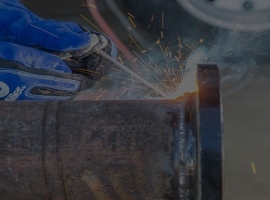
Shielded Metal Arc Welding, or "stick welding," is renowned for its versatility and portability. The flux is the external coating on the consumable electrode. When the arc is struck, this coating decomposes to create a shielding gas and a liquid slag that covers the weld puddle.
Behavior and Removal
SMAW slag is typically thick, dense, and can be very adherent to the weld surface. Its removal often requires vigorous mechanical action, such as chipping with a hammer, grinding, or wire brushing. This is a labor-intensive and time-consuming process, especially in multi-pass welds where all slag must be meticulously cleaned between each pass to prevent inclusions.
The difficulty of removal depends heavily on the type of electrode used. For example:
- Rutile Electrodes (e.g., E6013): These electrodes, such as our popular aws e6013 welding electrodes, are known for a softer arc and a slag that is generally easier to remove than that from other electrode types. The bead profile is smoother, which contributes to better slag release.
- Cellulosic Electrodes (e.g., E6010): These produce a thin, friable slag that is often irregularly deposited and can be difficult to clean from the weld toes.
- Low-Hydrogen Electrodes (e.g., E7018): These produce a heavy, convex bead with a slag that can be difficult to remove, particularly while it's still warm. However, it often releases more cleanly once it has fully cooled.
For operations prioritizing portability over post-weld cleanup speed, SMAW remains an excellent choice. However, the labor costs associated with slag removal must be factored into any productivity calculation.
Comparing Slag in Flux-Cored Arc Welding (FCAW)
Flux-Cored Arc Welding is a semi-automatic process that uses a continuously fed tubular wire containing a core of flux. It offers higher deposition rates than SMAW and is widely used in construction and heavy fabrication. FCAW is divided into two main categories, each with distinct slag characteristics.
FCAW-S (Self-Shielded)
In this variant, the flux core generates all the necessary shielding gas and slag, requiring no external shielding gas. It is excellent for outdoor work where wind can disrupt a gas shield.
Slag Behavior: FCAW-S typically produces a large volume of slag. The slag system is robust and designed for all-position welding, often with fast-freezing characteristics. This can make the slag more tenacious and sometimes more difficult to remove than its gas-shielded counterpart. It often requires mechanical cleaning similar to SMAW, though the continuous nature of the process means there are fewer starts and stops to clean.
FCAW-G (Gas-Shielded)
This process uses an external shielding gas (typically CO2 or an Argon/CO2 blend) in addition to the flux core. The flux has fewer gas-forming responsibilities and can be optimized for deoxidation and bead shape.
Slag Behavior: FCAW-G generally produces a thinner slag layer that is much easier to remove. In many flat and horizontal applications, the slag will "peel" or lift away from the weld on its own as it cools. On some welds, it can be removed with a simple wire brush. This easy cleanup is a major advantage in high-production environments where minimizing inter-pass cleaning time is crucial. When selecting flux-cored wire, the choice between self-shielded and gas-shielded often comes down to a trade-off between outdoor versatility and indoor cleanup efficiency.
The Unique Nature of Slag in Submerged Arc Welding (SAW)
Submerged Arc Welding is a high-productivity process used for long, continuous welds in flat or horizontal positions. The arc is completely "submerged" under a blanket of granular flux, which melts to create a protective liquid slag layer. This method is common in shipbuilding, pressure vessel manufacturing, and structural steel fabrication.
Behavior and Removal
The welding slag generated by the SAW process is perhaps the easiest to manage of all flux-based processes. Because the entire process happens under a thick layer of flux, the cooling rate is very slow and uniform. This controlled cooling allows a thick, glassy slag to form that contracts at a different rate than the metal underneath.
As a result, SAW slag is often described as "self-peeling" or "self-releasing." As the weld cools, the slag blanket will often lift away from the bead in large, continuous pieces with little to no effort required from the operator. Any remaining slag is typically very easy to chip or brush away. This near-elimination of post-weld cleaning labor is a primary reason for SAW's high efficiency in production settings.
The performance of the flux is critical. A high-quality flux, such as our submerged arc welding flux hj431, is engineered for optimal slag detachability, consistent bead profile, and excellent mechanical properties. For companies in demanding markets like Brazil, Thailand, and Australia, relying on a consistent supply of quality flux is essential. With six production lines capable of supplying 100 tons per day, we are equipped to support large-scale projects that depend on the high-deposition, low-cleanup advantages of the SAW process.
Factors Influencing Slag Detachability
Beyond the choice of welding process, several other factors can influence how easily slag is removed:
- Flux Basicity: The basicity index (BI) of a flux affects the slag's properties. Basic fluxes generally produce welds with better mechanical toughness but may have more adherent slag. Acidic or rutile fluxes often provide better operator appeal and easier slag release.
- Welding Parameters: Incorrect voltage, amperage, or travel speed can lead to poor bead shape and trapped slag. A smooth, well-formed bead with clean tie-ins at the toes will always release slag more easily than a rough, convex, or undercut bead.
- Joint Design: Narrow grooves and tight angles can make it physically difficult to access and remove slag, leading to a higher risk of inclusions.
- Cooling Rate: A very rapid cooling rate can cause the slag to adhere more tightly. Preheating, where applicable, can slow the cooling rate and promote better slag release.
Selecting the Right Process for Your Welding Operation
Choosing the right welding process involves balancing deposition rates, equipment cost, operator skill, and weld quality requirements. The behavior of the welding slag is a crucial part of this equation, directly impacting labor costs and overall throughput.
For Maximum Portability and Versatility: SMAW is the go-to choice, but be prepared to invest significant labor in post-weld cleaning.
For High Deposition with Flexibility: FCAW offers a significant productivity boost over SMAW. Choose FCAW-G for environments where easy slag removal is a priority; opt for FCAW-S when outdoor work is required.
For Ultimate Productivity in Flat/Horizontal Positions: SAW is unmatched. Its high deposition rates combined with minimal to no post-weld cleaning make it the most efficient choice for heavy fabrication.
At Oldwelders, we supply a comprehensive range of welding materials to support all of these processes. With a minimum order quantity of just 1 ton and a standard lead time of 30 days, we can equip your operation with the high-quality consumables needed to optimize your workflow, whether you are in Malaysia or right here at home. By understanding the nuances of slag, you can better control your costs and improve the efficiency and quality of your welding operations.