
How to Vet a Welding Flux Exporter for SAW Projects
How to Properly Vet a Welding Flux Exporter for Your SAW Projects
For procurement managers overseeing large-scale industrial projects, the choice of a consumables supplier is a critical decision that impacts timelines, budgets, and the structural integrity of the final product. When it comes to Submerged Arc Welding (SAW), the quality of the flux is paramount. Selecting a reliable international welding flux exporter is not merely a transactional step; it is a risk mitigation strategy. An unqualified supplier can introduce catastrophic weld failures, costly project delays, and logistical nightmares. Therefore, a structured vetting process is essential before issuing a request for quotation (RFQ) or placing an initial order.
This guide outlines a comprehensive framework for evaluating potential flux suppliers, ensuring they meet the stringent technical, quality, and logistical demands of your SAW projects. By focusing on manufacturing capabilities, quality assurance systems, export documentation, and logistical expertise, you can confidently build a resilient and dependable supply chain.
Assessing Manufacturing Capabilities and Production Scale
The first step in vetting a potential supplier is to verify their manufacturing capacity and infrastructure. A supplier's ability to consistently produce high volumes of flux to a uniform standard is fundamental for large projects. A small workshop may produce excellent quality on a small scale, but they cannot guarantee supply chain stability for an operation that requires tons of material on a strict schedule.
Key questions to ask include:
- What is the size of your manufacturing plant and how many production lines do you operate? A significant physical footprint is a strong indicator of a serious industrial operation. For example, a plant covering 1000 square meters with six dedicated production lines demonstrates a substantial investment in infrastructure, capable of handling concurrent orders without compromising quality or lead times.
- What is your daily or monthly production capacity? This figure is crucial for gauging their ability to meet your demand. A supplier with a capacity of 100 tons per day can confidently service large-scale international orders, providing a buffer against unforeseen spikes in demand. This ensures your project timelines are not jeopardized by supply shortages.
- What is your Minimum Order Quantity (MOQ)? Understanding the MOQ is vital for planning initial trial orders and subsequent bulk purchases. A reasonable MOQ, such as one ton, allows for a substantial enough sample for testing without requiring a massive initial commitment.
A transparent supplier will readily provide this information. The answers will help you differentiate between trading companies, small-scale producers, and established industrial manufacturers capable of becoming long-term strategic partners.
Verifying Quality Control, Certifications, and Material Sourcing
The performance of a SAW flux is directly tied to the purity of its raw materials and the precision of its manufacturing process. A top-tier welding flux exporter will maintain rigorous quality control from raw material intake to final product packaging. This is where you must scrutinize their quality management systems and material science expertise.
Raw Material Purity and Processing
The chemical composition of the flux determines its metallurgical properties, slag detachability, and arc stability. Inquire about the source and quality of their raw materials. High-performance fluxes are created from carefully selected ores. A reputable manufacturer will be transparent about their inputs, which often include excellent-grade dolomite, bauxite, cryolite, silica, and fluorine ore. The manufacturing process itself is also a key quality indicator. For instance, melting these raw materials at extremely high temperatures, such as 2000°C, is a process that ensures homogeneity and removes impurities, resulting in a stable, high-purity final product. This high-temperature fusion process is characteristic of a manufacturer committed to producing superior quality welding fluxes.
Essential Quality Certifications
Independent certifications provide objective validation of a company's quality management processes. The most critical certification to look for is ISO 9001. This international standard confirms that the supplier has a robust Quality Management System (QMS) in place, covering everything from design and development to production and service. When a supplier states they are ISO 9001 certified, request a copy of their certificate. Verify that it is current and that its scope covers the manufacturing of welding consumables. This certification is a non-negotiable trust signal, demonstrating a commitment to consistent quality and continuous improvement.
Evaluating Export Experience and Logistical Competence
Manufacturing a quality product is only half the battle; getting it to your project site on time and in perfect condition is the other. A prospective welding flux exporter must have demonstrable experience in international logistics, customs clearance, and packaging for long-haul sea freight.
Their experience in specific target markets is a significant advantage. A supplier who has successfully and repeatedly shipped to regions like Brazil, Thailand, Australia, and Malaysia will already be familiar with the unique import regulations, documentation requirements, and logistical challenges of those countries. This pre-existing knowledge drastically reduces the risk of customs delays, documentation errors, and transit damage.
Key logistical parameters to confirm include:
- Standard Lead Time: Ask for the typical lead time from order confirmation to shipment. A standard lead time of around 30 days is a realistic benchmark for a manufacturer balancing production schedules and export preparation.
- Packaging Standards: How is the flux packaged to protect it from moisture during a long sea voyage? Look for multi-layer, moisture-proof bags, often plastic-lined paper or woven polypropylene, securely palletized and shrink-wrapped. Improper packaging can lead to moisture absorption, which is detrimental to SAW flux performance and can cause weld porosity.
- Incoterms Offered: Clarify which Incoterms (e.g., FOB, CIF) they typically work with. This will define the responsibilities for shipping, insurance, and risk transfer, which is critical for accurate cost calculation and supply chain management.
Key Documentation to Request Before Placing an Order
Before committing to a purchase, especially a trial order, you must request and review key technical and quality documents. This step is a crucial part of your due diligence and helps verify the claims made by the sales team. A professional welding flux exporter will have these documents readily available.
1. Certificate of Conformance (CoC)
A CoC is a formal declaration from the manufacturer that the product meets the required standards and specifications (e.g., AWS A5.17). It confirms that the batch being supplied conforms to the properties outlined in their technical data sheet.
2. Mill Test Report (MTR) or Certificate of Analysis (CoA)
This is one of the most important documents for technical validation. The MTR provides detailed results of the specific chemical and physical tests performed on the exact production lot you will receive. For SAW flux, this report should include:
- Chemical Composition: A breakdown of the key oxides like SiO₂, CaO, MnO, Al₂O₃, and MgO. This allows you to verify its classification and suitability for your base material.
- Basicity Index (BI): A critical parameter that influences the weld metal's mechanical properties, particularly toughness.
- Particle Size Distribution: The granulometry of the flux affects how it flows and feeds through the SAW system. The MTR should confirm that the particle size is within the specified range for consistent welding performance.
3. Material Safety Data Sheet (MSDS/SDS)
This document is essential for health, safety, and environmental compliance. It provides information on handling, storage, and emergency measures related to the product. Your logistics team and on-site safety officers will require this information to handle the shipment correctly upon arrival.
Beyond Flux: The Value of a Comprehensive Welding Partner
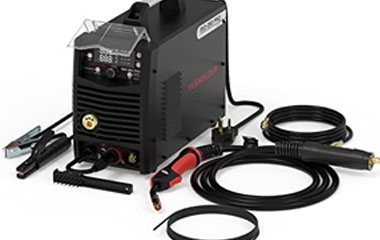
Finally, consider the supplier's broader product portfolio. While your immediate need may be for flux, partnering with a manufacturer who offers a complete range of welding solutions can create significant long-term value. A supplier who also produces a high-quality welding machine, electrodes, and wires has a deeper, more holistic understanding of the entire welding process.
This integrated expertise means they can provide more valuable technical support. They can offer recommendations on the optimal pairing of flux with specific wires, such as flux-cored wire, and suggest machine parameters for your specific application. A supplier with a comprehensive catalog of welding materials can become a one-stop shop, simplifying your procurement process, consolidating shipments, and ensuring compatibility across all your welding consumables.
By systematically working through these vetting stages—from assessing production capacity and quality certifications to scrutinizing export documentation and logistical experience—you can confidently select a welding flux exporter that will be a reliable partner. This diligence up front will safeguard your project's quality, budget, and timeline, ensuring strong, sound welds every time.