
How to Select a Welding Electrode for Steel and Position
How to Select the Right Welding Electrode for Your Steel and Position
Selecting the correct welding electrode is a critical decision that directly impacts the quality, strength, and integrity of a final weld. For fabrication managers, engineers, and procurement teams, making the right choice is not just about compatibility; it's about ensuring structural soundness, operational efficiency, and cost-effectiveness. The vast array of available consumables can be daunting, but a systematic approach based on base metal and welding position can simplify the process significantly.
This guide provides a professional framework for choosing the ideal Shielded Metal Arc Welding (SMAW) consumable for your specific application. By understanding the key variables, you can confidently source materials that meet precise engineering specifications and deliver consistent, high-quality results for any project.
Understanding Welding Electrode Classification (AWS A5.1/A5.5)
To make an informed decision, one must first understand the language of electrode classification. The American Welding Society (AWS) has established a numbering system that provides essential information about each electrode's capabilities. This system is typically printed on the side of the rod and follows a format like E-XXXX.
Let's break down a common example, E7018:
- E: This simply stands for 'Electrode' and indicates that it is a consumable for arc welding.
- First two digits (70): This represents the minimum tensile strength of the deposited weld metal, measured in thousands of pounds per square inch (psi). In this case, '70' means the weld will have a minimum tensile strength of 70,000 psi. Common values include 60 (60,000 psi) and 70 (70,000 psi).
- Third digit (1): This crucial number indicates the welding positions in which the electrode can be used.
- 1: All positions (Flat, Horizontal, Vertical, Overhead)
- 2: Flat and Horizontal positions only
- 4: Flat, Horizontal, Overhead, and Vertical-down
- Fourth digit (8): This digit relates to the type of flux coating, the required polarity, and other operational characteristics. For example, an '8' indicates a low-hydrogen, iron powder coating that works with AC or DCEP (Direct Current Electrode Positive). This digit is vital for understanding penetration, bead appearance, and slag removal.
Understanding this system is the first step in narrowing down your options from a broad category to a specific product tailored to your needs. It transforms a generic search for a welding electrode into a precise request for a consumable with defined mechanical properties and operational capabilities.
Step 1: Matching the Electrode to Your Base Metal
The fundamental rule of electrode selection is that the filler metal must be compatible with the base metal. The mechanical and chemical properties of the electrode should, at a minimum, match those of the material being welded. Using an incompatible rod can lead to weak, brittle welds that are prone to cracking and failure.
Mild Carbon Steel
Mild steel is the most common material in structural and general fabrication. For these applications, electrodes from the E60xx and E70xx series are the industry standard.
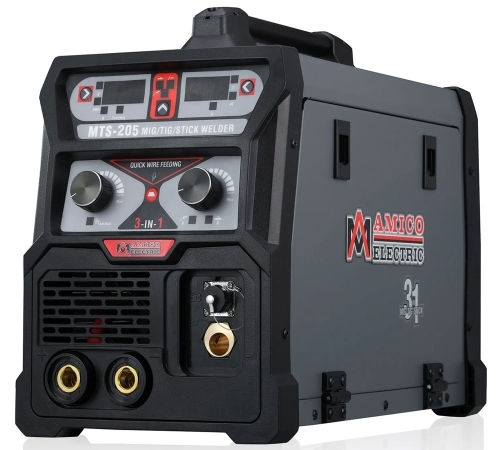
- E6010/E6011: These are cellulosic-coated electrodes known for deep penetration and the ability to cut through rust, oil, and paint. They are excellent for root passes in pipe welding and general repairs. E6011 is designed to run on AC power sources, making it versatile for use with a standard arc welding machine.
- E6013: A versatile, all-purpose rutile-coated electrode. It offers a soft arc, minimal spatter, and easy slag removal, making it a favorite for sheet metal and general fabrication where appearance is important. Our aws e6013 welding electrodes are a popular choice for these applications.
- E7018: This is a low-hydrogen electrode that produces strong, ductile, and crack-resistant welds of X-ray quality. It is the go-to choice for critical structural applications, thick sections, and steels with higher carbon content where hydrogen-induced cracking is a concern.
Low-Alloy Steels
When welding low-alloy steels (such as chromoly), the electrode must contain similar alloying elements to ensure the weld metal's mechanical properties match the base material. The AWS A5.5 specification covers these consumables. For example, an electrode classified as E8018-B2 will deposit a weld with a tensile strength of 80,000 psi and contains chromium and molybdenum, making it suitable for welding 1.25% Cr - 0.50% Mo steels used in high-temperature service.
Stainless Steels
Stainless steel requires electrodes specifically designed for it, covered by the AWS A5.4 specification. The classification typically reflects the grade of stainless steel it is intended for. For example, an E308L-16 electrode is used for welding 304L stainless steel. The 'L' indicates low carbon content to prevent carbide precipitation and subsequent corrosion at the weld boundaries.
Step 2: Considering the Welding Position
Gravity plays a significant role in welding. The ability to control the molten weld pool is paramount, especially in out-of-position work. The third digit in the AWS classification directly informs the user about an electrode's suitability for different positions.
The four primary welding positions are:
- 1G/1F (Flat): The easiest position, as gravity helps keep the molten metal in the joint. Almost any electrode can be used in the flat position.
- 2G/2F (Horizontal): The weld is performed on a horizontal seam on a vertical surface. This requires more skill to prevent the molten metal from sagging.
- 3G/3F (Vertical): The weld is made on a vertical surface. Welding can be performed uphill (bottom to top) or downhill (top to bottom). Uphill welding generally produces stronger welds, while downhill is faster. Electrodes designed for this position have faster-freezing slag to hold the weld pool in place.
- 4G/4F (Overhead): The most difficult position, requiring the welder to work against gravity. Only electrodes with an '1' or '4' in the third position are suitable, as they have strong arc force and fast-freezing slag to prevent the metal from falling.
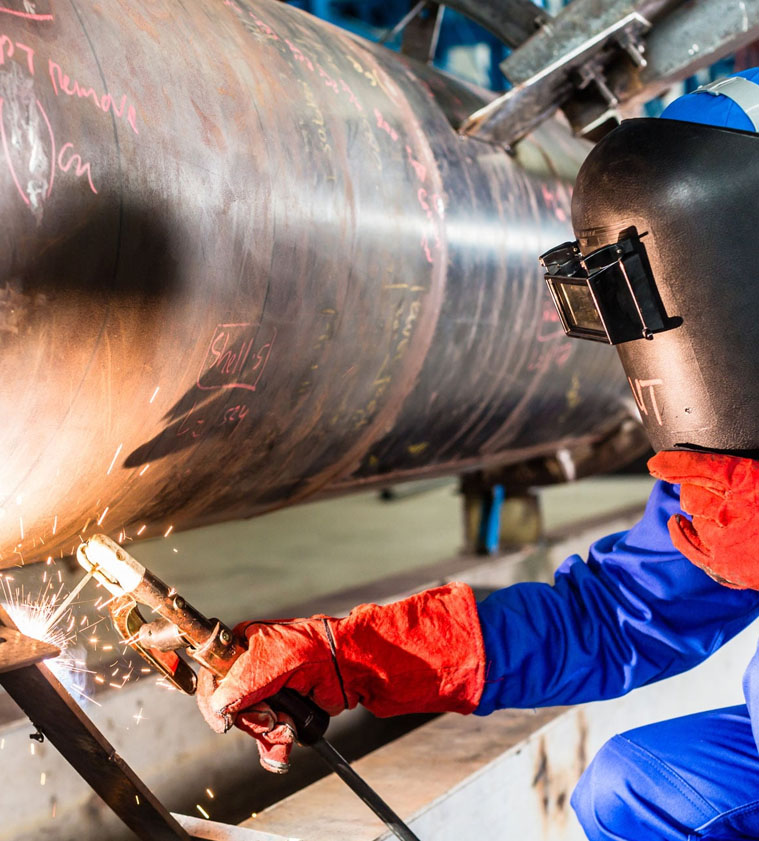
For shop fabrication where workpieces can be manipulated with positioners, an electrode rated only for flat and horizontal positions (like an E7024) can be used. These "fast-fill" electrodes offer high deposition rates, increasing productivity. However, for field repairs or on-site construction where welding must be performed in various positions, an all-position electrode (like E6010 or E7018) is essential.
Step 3: Evaluating Flux Coating and Weld Characteristics
The flux coating is the chemical engine of the electrode. When burned, it serves multiple purposes: it generates a shielding gas to protect the molten weld pool from atmospheric contamination, creates a slag to shape and protect the cooling weld bead, provides deoxidizers and alloying elements, and influences the arc's stability. At Oldwelders, we produce our own high-quality welding fluxes using excellent raw materials like dolomite, bauxite, and silica, all melted at 2000 °C to ensure purity and consistency.
The coating type, indicated by the last digit of the AWS classification, determines the electrode's operational characteristics:
- Cellulosic Coatings (e.g., E6010, E6011): These coatings are high in cellulose and produce a forceful, digging arc with deep penetration. The shielding gas is rich in hydrogen, which requires specific welding techniques. They are ideal for welding on dirty or painted surfaces.
- Rutile Coatings (e.g., E6013): These have a high percentage of titanium dioxide (rutile). They produce a soft, quiet arc with a smooth bead appearance and easily removable slag. They are general-purpose electrodes that are very user-friendly.
- Basic or Low-Hydrogen Coatings (e.g., E7018, E7016): These coatings are low in moisture and hydrogen. They are mandatory for welding high-strength steels, thick sections, and other applications where hydrogen-induced cracking is a risk. They require proper storage (e.g., in a rod oven) to maintain their low-hydrogen properties and produce highly ductile, crack-resistant welds.
- Iron Powder Coatings (e.g., E7014, E7024): These coatings contain a high percentage of iron powder, which becomes part of the deposited weld metal. This increases deposition rates and welding speed, making them highly efficient for production work, primarily in the flat and horizontal positions.
Sourcing Welding Electrodes for Industrial Production
For businesses involved in large-scale fabrication, the consistency and reliability of consumable supply are just as important as the technical specifications. When sourcing a welding electrode for ongoing production, procurement managers must consider the manufacturer's capabilities.
At Oldwelders, we understand the demands of industrial clients. Our commitment to quality is validated by our ISO 9001 certification, ensuring that every batch of electrodes meets stringent standards. Our state-of-the-art plant, covering 1000 square meters with six production lines, has the capacity to supply 100 tons of product per day. This robust production capability allows us to reliably fulfill large-volume orders and maintain a consistent supply chain for our partners.
We have a proven track record of serving diverse international markets, including Brazil, Thailand, Australia, and Malaysia, demonstrating our expertise in logistics and our ability to meet global quality standards. With a standard lead time of 30 days and a minimum order quantity of 1 ton, we are structured to support both project-based needs and continuous production lines. By partnering with a manufacturer that has proven capacity and a commitment to quality, you can mitigate supply chain risks and ensure your fabrication processes run smoothly and efficiently.