
How to Compare a Flux Manufacturer by Batch Traceability
Choosing a Flux Manufacturer Requires a Deep Dive into Batch Traceability
For quality assurance managers and procurement specialists in heavy industry, the selection of welding consumables is a decision with far-reaching consequences. While price and availability are crucial factors, the underlying quality systems of a supplier are what truly determine the long-term success and safety of critical welding applications. When evaluating a potential partner, one of the most revealing indicators of quality and process control is their system for batch traceability. A robust traceability program is not merely a documentation exercise; it is the backbone of consistent product performance, risk mitigation, and regulatory compliance. It provides a verifiable chain of custody from raw material to finished product, ensuring that every drum of welding flux meets the exact specifications required for your project, time and time again.
Understanding how to assess a supplier's traceability capabilities allows you to look beyond marketing claims and verify their commitment to quality. This evaluation process protects your operations from the costly repercussions of weld defects, rework, and potential structural failures. For any organization that relies on high-integrity welds, partnering with a flux manufacturer that prioritizes and can demonstrate comprehensive traceability is a non-negotiable aspect of supply chain management.
What is Batch Traceability and Why is it Critical for Welding Flux?
Batch traceability, in the context of industrial manufacturing, is the ability to track a specific group of products (a batch) through all stages of production, processing, and distribution. For welding flux, this means having a complete history of each batch—from the moment raw minerals are received to the final packaging and shipment. Each stage is documented, creating a transparent record that links the finished product back to its origins.
The importance of this process cannot be overstated. Welding flux is a complex chemical compound designed to perform several functions during welding, such as shielding the molten weld pool from atmospheric contamination, cleaning and deoxidizing the metal, and influencing the chemical composition and mechanical properties of the finished weld. Even minor variations in its formulation can have a significant impact:
- Inconsistent Weld Quality: Fluctuations in flux composition can lead to issues like porosity, slag inclusions, cracking, or inconsistent bead appearance. This compromises the structural integrity of the weld and can lead to costly and time-consuming rework.
- Mechanical Property Failures: The flux directly affects the final tensile strength, toughness, and ductility of the weld metal. A non-conforming batch could result in a weld that fails to meet engineering specifications, posing a serious safety risk in applications like pressure vessels, structural steel, or shipbuilding.
- Compliance and Certification Issues: In many industries, welding procedures must adhere to strict codes and standards (e.g., AWS, ASME, ISO). Full traceability is essential for providing the documentation needed to certify that the materials used comply with these regulations. Without it, an entire project could fail an audit.
A capable flux manufacturer understands that traceability is fundamental to quality assurance. It enables rapid root cause analysis if a problem arises. If a specific batch is suspected of being non-conforming, the manufacturer can quickly isolate it, identify all affected customers, and prevent its further use. This level of control is a hallmark of a mature and reliable production operation, providing customers with confidence in every order.
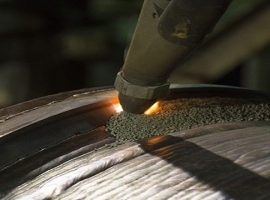
Key Components of a Robust Traceability System
A truly effective traceability system is not a single action but a series of interconnected processes integrated throughout the manufacturing lifecycle. When you are assessing a potential flux manufacturer, look for evidence of a comprehensive system that includes the following components.
Raw Material Sourcing and Control
Traceability begins long before production. It starts with the meticulous sourcing and verification of raw materials. A top-tier manufacturer will have established relationships with qualified suppliers of key ingredients. For high-performance welding fluxes, these raw materials include excellent dolomite, bauxite, cryolite, silica, and fluorine ore. Each incoming shipment of these materials should be assigned a unique lot number, quarantined, and tested against strict quality specifications before being released into the production inventory. This initial step ensures that any potential variability is caught at the source, preventing it from impacting the final product.
Controlled Production and Batch Numbering
Once approved raw materials enter the production phase, they are carefully weighed and blended according to precise formulations. At Oldwelders, these materials are melted at temperatures of 2000 °C in a highly controlled environment to ensure homogeneity and consistent chemical properties. During this process, a unique batch number is assigned. This number acts as the primary identifier for the batch and will follow it through every subsequent step. It is the key that unlocks the entire production history, linking the final product to specific raw material lots, the production line it was on, the date and time of manufacture, and the operators involved.
In-Process and Final Quality Testing
Throughout the manufacturing process, samples should be taken from the batch at critical control points for testing. This can include chemical analysis, particle size distribution, and moisture content tests. The results of these in-process checks are recorded and tied to the batch number. After the flux is produced and packaged, a final sample is taken for comprehensive testing to verify that it meets all required chemical and mechanical property specifications. This produces the data that will appear on the final certification documents. Our facility, with six production lines and a capacity to supply 100 tons a day, integrates these quality checks seamlessly into our high-volume workflow.
Comprehensive Documentation and Certification
The final component of traceability is the documentation that is delivered to the customer. Every shipment should be accompanied by a Certificate of Conformance (CoC) or a Mill Test Report (MTR). This document should clearly state the product name, the unique batch number, and the certified results of the quality tests performed on that specific batch. This provides the end-user with objective, verifiable proof that the material they have received meets the required standards. For specialized products like our submerged arc welding flux hj431, this documentation is critical for procedure qualification records (PQRs).
How to Evaluate a Flux Manufacturer's Traceability Capabilities
As a sourcing professional, you need a practical methodology for vetting suppliers. Going beyond their brochures and websites to scrutinize their quality systems is essential. Here are key steps and questions to ask when evaluating a flux manufacturer on their traceability.
1. Request Quality Management System (QMS) Certifications
The first and most important piece of evidence is their QMS certification. Ask for a copy of their ISO 9001 certificate. An ISO 9001 certification is not just a piece of paper; it is third-party validation that the manufacturer has established, documented, and maintains a systematic approach to quality management. At Oldwelders, our ISO 9001 certification is a cornerstone of our operations, ensuring that processes like traceability, process control, and continuous improvement are embedded in everything we do. This certification demonstrates a serious, long-term commitment to quality.
2. Inquire About Their Production Process and Capacity
Ask for details about their facility and processes. How do they control the blending and melting of raw materials? What is their production capacity? A supplier with a well-defined process and significant capacity, such as a 1000 square meter plant with multiple production lines, is more likely to have the sophisticated systems required for robust traceability. They should be able to clearly articulate how a batch is tracked from raw material intake to final packaging. Discuss their typical lead times and minimum order quantities—for instance, a 30-day lead time and a 1-ton MOQ are common indicators of an industrial-scale producer.
3. Request Sample Documentation for a Recent Batch
Ask the potential supplier to provide a sample Mill Test Report or Certificate of Conformance from a recent production run. Do not accept a generic template. Review the document carefully. Does it include a unique batch or lot number? Are the chemical and physical properties clearly listed? Does it reference the relevant industry standards (e.g., AWS A5.17)? A detailed and professional MTR is a strong indicator of a diligent quality control department.
4. Discuss Their Procedure for Handling Non-Conformances
Even the best manufacturers can encounter issues. What truly sets a great supplier apart is how they handle them. Ask them to describe their process if a batch is found to be out of specification. A proficient flux manufacturer will have a documented procedure for quarantining the affected material, conducting a root cause analysis, implementing corrective actions, and notifying any customers who may have received the product. Their response will reveal the maturity of their quality system.
The Global Impact of Traceability and Supplier Reliability
In today's interconnected global economy, supply chains span continents. This makes supplier reliability and product consistency more important than ever. When sourcing welding flux from an international partner, robust traceability provides a universal language of quality that transcends geographical and cultural boundaries. It ensures that the product you receive in Brazil or Australia is manufactured to the exact same standard as the one delivered in Thailand or Malaysia. This consistency is vital for multinational corporations seeking to standardize their welding procedures and ensure uniform quality across all their global operations.
A supplier with a proven track record of serving diverse international markets demonstrates an understanding of the complexities of global logistics, customs, and regulatory requirements. This experience, backed by a transparent traceability system, minimizes risks and builds the trust necessary for a strong, long-term partnership. When you choose a supplier, you are not just buying a product; you are investing in their processes, their systems, and their commitment to quality. A partner who can provide a complete range of welding materials, including wires, rods, and fluxes, all under the same rigorous quality system, offers significant advantages in supply chain simplification and quality assurance.
Ultimately, the ability to trace every batch of flux back to its source is the foundation of a reliable supply chain. It empowers you to meet the stringent demands of modern industrial projects and provides the assurance that your critical welds are built on a foundation of proven quality. From manual welding stations to integration with an automatic welding machine, the consistency provided by a traceable flux is paramount.