
How to Choose a Welding Rod for Structural Steel
Selecting the Right Welding Rod for Structural Steel Applications
Choosing the correct welding rod for structural steel is a critical decision that directly impacts the integrity, safety, and longevity of buildings, bridges, and heavy machinery. For fabrication buyers and welding supervisors, this selection process goes beyond simple cost analysis; it involves a technical understanding of base metals, project specifications, and consumable performance. An incorrect choice can lead to weld defects, costly rework, and potentially catastrophic structural failure. This comprehensive guide provides the essential criteria for evaluating and selecting the optimal electrode for your structural steel projects, ensuring compliance with industry standards and delivering superior results.
The right consumable ensures a strong, durable bond that meets or exceeds the mechanical properties of the steel itself. Factors such as tensile strength, ductility, welding position, and environmental conditions all play a crucial role. By understanding the American Welding Society (AWS) classification system and the properties of different flux coatings, procurement managers can make informed decisions that align with engineering requirements and operational efficiency.
Understanding Structural Steel and Its Welding Requirements
Structural steel is a category of steel used as a construction material for making structural shapes. Common grades include ASTM A36, A572 Grade 50, and A992. While these materials are known for their strength and weldability, they have specific chemical compositions and mechanical properties that dictate the choice of filler metal. The primary goal is to create a weld that has mechanical properties—particularly strength and toughness—that are compatible with the base material.
Key considerations for welding structural steel include:
- Matching Strength: The filler metal must produce a weld with a minimum tensile strength that matches or slightly exceeds that of the base steel. This is known as "matching" the base metal. Using an electrode that is significantly stronger ("overmatching") can sometimes create a brittle heat-affected zone (HAZ), while "undermatching" can compromise the joint's load-bearing capacity.
- Hydrogen Control: Structural steel applications, especially with thicker sections or higher-strength steels, are susceptible to hydrogen-induced cracking. This phenomenon occurs when hydrogen from moisture in the flux, on the base metal, or in the atmosphere gets trapped in the weld and the HAZ. Using low-hydrogen electrodes and following proper storage and handling procedures is paramount to prevent this.
- Code Compliance: Most structural welding is governed by codes such as AWS D1.1 (Structural Welding Code — Steel). These codes specify acceptable filler metals, procedures, and quality control measures. Your choice of welding rod must be pre-approved or qualified according to the governing code for the project.
Key Factors in Electrode Selection for Structural Steel
Beyond matching the base metal, several factors influence the ideal electrode choice. A systematic evaluation of these criteria ensures optimal performance, productivity, and weld quality for any given application.
1. Base Metal Properties and Tensile Strength
The first step is always to identify the specific grade of structural steel being used. The material test report (MTR) will provide the exact chemical composition and mechanical properties, including its minimum tensile strength. The AWS classification for electrodes clearly indicates their strength. For example, in an E7018 electrode, the "70" signifies a minimum tensile strength of 70,000 pounds per square inch (psi). This should be matched with the base steel. For A36 steel, which has a tensile strength range of 58,000 to 80,000 psi, a 70,000-psi electrode like E7018 is a standard and reliable choice.
2. Welding Position
Structural fabrication doesn't always happen on a flat workbench. Welding may be required in horizontal, vertical, or overhead positions. The third digit in the AWS classification indicates the positions in which an electrode can be used.
- EXX1X: All positions (Flat, Horizontal, Vertical, Overhead)
- EXX2X: Flat and horizontal positions only
- EXX4X: Flat, horizontal, overhead, and vertical down
3. Joint Design and Material Thickness
The thickness of the steel and the design of the joint (e.g., butt, lap, T-joint) influence the required penetration profile.
- Deep Penetration: For thick sections or joints requiring deep root penetration, an electrode like E6010 is ideal. Its forceful, digging arc can burn through rust, mill scale, and contaminants, making it a favorite for pipe and field work.
- Shallow to Medium Penetration: For thinner materials or applications where burn-through is a concern, an electrode like E6013 provides a softer arc and shallower penetration.
- Low-Hydrogen for Thick Sections: As material thickness increases, the risk of hydrogen cracking rises due to faster cooling rates and increased residual stress. For sections over ¾ inch thick, a low-hydrogen electrode such as E7018 is typically mandatory to ensure a crack-free weld.
4. Power Source and Polarity
The available welding equipment determines which electrodes can be used. The fourth digit of the AWS classification indicates the type of flux coating and the correct current to use. Some electrodes can run on AC and DC, while others are DC-specific. For instance, E6010 electrodes are designed to run exclusively on Direct Current Electrode Positive (DCEP), whereas E6011 is a similar alternative designed to run on AC as well. E7018 electrodes perform best on DCEP but can often be run on AC. Always ensure your arc welding machine is compatible with the requirements of your chosen electrode.
Common AWS Classifications for Structural Steel
While numerous electrodes exist, a few specific classifications are workhorses in the structural steel industry. Understanding their individual characteristics is key to making the right choice.
AWS E6010/E6011
These are fast-freezing, deep-penetrating electrodes with a cellulosic flux coating. The E6010 is for DC only, while the E6011 can be used with AC. Their forceful arc is excellent for cutting through surface contaminants and achieving deep root passes in open-groove joints. They are widely used in pipeline construction and general repair work but produce a rougher weld bead and require a higher level of welder skill to manage.
AWS E6013
Known for its versatility and ease of use, the E6013 is a rutile-based electrode that produces a soft, stable arc with minimal spatter and a smooth weld bead. It has shallow penetration, making it suitable for sheet metal and general-purpose fabrication on thinner structural shapes where appearance is important. Oldwelders offers a range of high-quality AWS E6013 welding electrodes designed for consistent performance.
AWS E7018
The E7018 is the most common electrode for critical structural steel applications. It is a low-hydrogen, iron powder electrode that produces high-quality, X-ray-grade welds with excellent ductility and crack resistance. The flux coating is specifically designed to minimize moisture content, which is crucial for preventing hydrogen-induced cracking in medium-to-high carbon and low-alloy steels. E7018 electrodes require strict storage in a heated oven to maintain their low-hydrogen properties. They offer a smooth arc, low spatter, and a uniform bead appearance.
AWS E7024
This "jet rod" is a high-iron-powder electrode designed for high-speed, high-deposition welding in the flat and horizontal positions only. The heavy flux coating contains up to 50% iron powder, which becomes part of the deposited weld metal, dramatically increasing deposition rates. It's an excellent choice for long, straight welds on thick plates in a shop setting, such as fabricating large I-beams or base plates, where productivity is a primary driver.
The Role of Flux and Supplier Quality
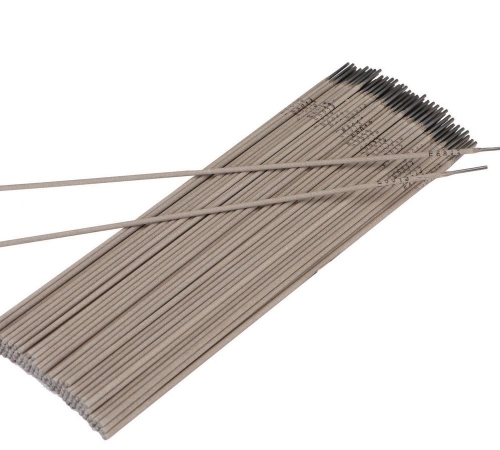
The flux coating on a welding rod is not just a protective layer; it is a complex chemical compound that performs multiple functions. It provides a gas shield to protect the molten weld pool from atmospheric contamination, creates a slag to shape and cool the weld bead, and can add alloying elements to enhance the weld's mechanical properties. The quality of the raw materials in the flux is directly proportional to the performance of the electrode.
At Oldwelders, our flux products are produced from excellent raw materials like dolomite, bauxite, cryolite, and silica, which are melted at 2000 °C to ensure purity and consistency. This meticulous process results in stable arcs, easy slag removal, and reliable weld chemistry. When selecting a supplier for your welding materials, it is vital to consider their manufacturing standards and quality control processes.
Vetting Your Supplier: Ensuring Reliability and Consistency
Your choice of electrode is only as good as the manufacturer that produces it. For critical structural applications, partnering with a reliable supplier is non-negotiable. Look for a manufacturer with robust quality management systems and a proven track record.
As an ISO 9001 certified company, Oldwelders adheres to stringent international standards for quality, ensuring every batch of electrodes meets precise specifications. This certification provides our clients—from Brazil to Thailand and Australia to Malaysia—with the confidence that they are receiving a product with consistent performance and traceability.
Furthermore, for large-scale projects, supply chain reliability is paramount. Delays in receiving consumables can bring an entire project to a standstill. Our 1000 square meter plant, equipped with six production lines, has the capacity to supply 100 tons of welding consumables per day. This ensures we can meet the demands of even the largest fabrication projects, with a standard minimum order quantity of 1 ton and a typical lead time of just 30 days. When you partner with a supplier with this level of capacity, you are not just buying a product; you are securing your project's timeline and budget.
Ultimately, selecting the right welding rod for structural steel is a technical decision that balances material science, application requirements, and operational logistics. By carefully considering the base metal, joint design, welding position, and the quality of your supplier, you can ensure every weld is strong, safe, and built to last.