
How Does Flux Screening Affect Weld Deposit Quality?
How flux screening directly impacts the quality of your weld deposits
For welding engineers and production managers overseeing submerged arc welding (SAW) operations, chasing the root cause of inconsistent weld quality can be a significant challenge. Variables like voltage, amperage, and travel speed are often the first to be adjusted. However, a frequently overlooked but critical factor is the physical condition of the welding flux itself. The process of flux screening—or particle size analysis and control—is fundamental to achieving a stable arc, a uniform bead, and a defect-free weld deposit. Understanding its impact is essential for diagnosing process issues and ensuring repeatable, high-quality results.
When weld beads appear ropey, slag removal becomes difficult, or porosity rears its head, the cause may not be in your welding parameters but in the bag of flux. This guide will explore the mechanics of flux particle sizing, how deviations affect the final weld, and the best practices for managing this crucial consumable.
Understanding Welding Flux and Particle Size Distribution
In submerged arc welding, the granular flux is more than just a protective blanket. It performs several vital functions that directly influence the metallurgical and physical properties of the finished weld.
The Role of Flux in Submerged Arc Welding
As the flux is fed into the weld joint ahead of the arc, it melts to create a protective layer of molten slag. This layer performs several key tasks:
- Shielding: It protects the molten weld pool from atmospheric contaminants like oxygen and nitrogen, which can cause porosity and embrittlement.
- Arc Stabilization: The chemical composition of the flux provides electrically conductive elements that help stabilize the high-current welding arc.
- Alloying: Flux can contain deoxidizers and alloying elements that are transferred to the weld metal to refine its grain structure and enhance its mechanical properties.
- Bead Shaping: The viscosity and surface tension of the molten slag shape the final weld bead and influence its appearance.
- Thermal Insulation: It insulates the completed weld, slowing the cooling rate to produce a more refined microstructure and reduce the risk of cracking.
What is Particle Size Distribution (PSD)?
Welding flux is not a uniform powder. It is a granular material composed of particles of various sizes. Particle Size Distribution (PSD) is the statistical representation of the range of particle sizes within a given batch of flux. Manufacturers control this distribution carefully because it has a direct effect on the flux's bulk density, flowability, and melting characteristics.
As an ISO 9001 certified manufacturer, we recognize that stringent process control is paramount. For welding fluxes, this control begins with the selection of premium raw materials—like dolomite, bauxite, and cryolite—and extends through the high-temperature melting process at 2000°C, all the way to the final particle sizing. The goal of flux screening is to ensure the PSD falls within a specific, optimal range defined by industry standards and application requirements.
The Mechanics of the Flux Screening Process
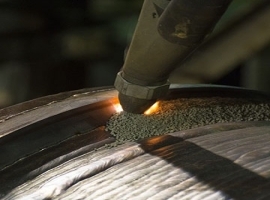
The term flux screening refers to the industrial process of sifting granular flux through a series of sieves or screens with progressively smaller mesh sizes. This mechanical separation process sorts the particles by size, allowing manufacturers and end-users to verify that the PSD of a flux batch meets the required specifications.
Sieve Analysis: The Standard for Measurement
The standard method for determining PSD is sieve analysis. A measured sample of flux is placed in the top sieve of a stacked column. Each sieve in the stack has a specific mesh size, with the largest openings at the top and the smallest at the bottom, ending with a solid collection pan.
The stack is then placed in a mechanical shaker, which agitates the particles, causing them to fall through the sieves until they reach a screen with openings too small to pass through. After a set period, the material retained on each sieve is weighed. These weights are then calculated as a percentage of the total sample weight, providing a clear picture of the particle size distribution. This data confirms whether the flux meets the manufacturer's grade, such as a 12x48 mesh, which indicates that nearly all particles will pass through a 12-mesh screen but be retained by a 48-mesh screen.
Why This Matters in Production
For a high-volume facility, consistency is key. At Oldwelders, our 1000-square-meter plant is equipped with six production lines capable of supplying 100 tons of flux per day. To maintain this output without compromising quality, automated and rigorous particle size analysis is integrated into our quality management system. This ensures that every bag of welding fluxes we ship to our partners in markets like Brazil, Thailand, and Australia delivers the same predictable performance.
How Inconsistent Flux Sizing Cripples Weld Quality
When the particle size distribution strays from the optimal range, it introduces variables that directly undermine the stability of the SAW process. Both an excess of fine particles and an excess of coarse particles create distinct problems.
The Problem with Too Many Fines (Small Particles)
"Fines" are very small flux particles that can be generated during manufacturing, transport, or through the breakdown of recycled flux. An excessive amount of fines leads to several critical issues:
- Arc Instability and "Flashing": Fines can be drawn directly into the arc, causing it to become erratic. They can also pack tightly, trapping gases that expand rapidly when heated, leading to "flashing" or small explosions that disrupt the molten slag cover and expose the weld pool to the atmosphere.
- Increased Porosity: The poor gas permeability of a flux bed with too many fines prevents welding gases from escaping smoothly. This trapped gas becomes porosity in the solidified weld metal, a critical defect that compromises joint integrity.
- Clogged Delivery Systems: In automated setups, fines can clog the hoses and nozzles of the flux delivery system, leading to inconsistent flux deposition and production downtime. This is a major concern for operations using an automatic welding machine.
- Difficult Slag Removal: A flux with excessive fines often produces a slag that is difficult to detach, increasing post-weld cleaning time and labor costs.
The Problem with Too Many Coarse (Large) Particles
On the other end of the spectrum, a flux with too many oversized particles is also detrimental:
- Poor Arc Initiation and Stability: Large particles require more energy to melt. This can make the arc difficult to start and maintain, especially at lower current settings. The arc may wander as it struggles to establish a consistent conductive path.
- Inadequate Shielding: The large gaps between coarse particles can create an insufficient burden depth, allowing the arc flash to become visible and compromising the protective slag blanket. This can lead to atmospheric contamination and result in defects.
- Uneven Bead Appearance: An unstable arc caused by oversized particles often results in a rough, uneven, or "ropey" weld bead with poor tie-in at the toes of the weld.
Best Practices for Flux Management on the Production Floor
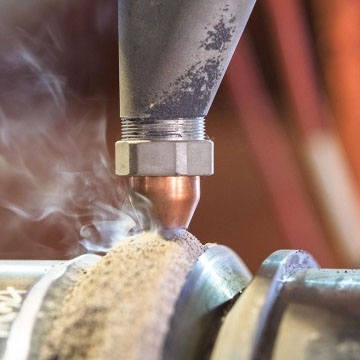
While sourcing high-quality flux is the first step, proper handling and management on-site are essential to preserve its integrity. A perfect batch of flux can be rendered useless by poor practices.
Handling Recycled Flux
Fused fluxes, due to their glass-like structure, are durable and can often be recycled. However, the process of vacuuming unused flux, handling it, and feeding it back into the hopper causes mechanical breakdown. This crushing action generates fines. Unused flux should always be passed through a screen before being mixed with new flux. The ratio of new-to-recycled flux should also be carefully controlled, typically not exceeding a 50:50 mix, to maintain the correct overall PSD.
Proper Storage is Non-Negotiable
Welding flux is hygroscopic, meaning it will absorb moisture from the air. Damp flux not only introduces hydrogen—leading to a high risk of cracking—but can also cause particles to clump together. These clumps will not flow properly and will disrupt the particle distribution. Flux should be stored in its original, sealed packaging in a dry, temperature-controlled environment. Opened bags should be stored in heated holding ovens according to the manufacturer's recommendations.
Vet Your Supplier's Quality Control
Ultimately, the most effective way to ensure consistent weld quality is to partner with a manufacturer that demonstrates a robust commitment to quality control. Inquire about their processes for flux screening and particle size analysis. A reputable supplier should be able to provide documentation and testing data for their products, verifying that each batch meets stringent specifications.
This commitment to quality is the foundation of our entire range of welding materials. By controlling every step, from raw ore melted at extreme temperatures to the final screening and packaging, we provide consumables that deliver predictable and reliable performance for demanding industrial applications worldwide, including in key markets like Malaysia and Thailand.
Conclusion: Screening is a Pillar of Weld Quality
The process of flux screening is far from a minor manufacturing detail; it is a critical quality control measure that has a direct and profound impact on the performance of submerged arc welding. An incorrect particle size distribution can be the hidden cause of persistent issues like arc instability, porosity, poor bead appearance, and difficult slag removal.
By understanding the role of particle size, implementing best practices for flux handling and recycling, and partnering with a quality-focused supplier, welding engineers and production managers can eliminate a major source of process variability. This ensures not only the integrity of each weld deposit but also enhances overall productivity, reduces rework, and lowers operational costs.