
High Temp Smelting: Reducing Metal Oxides
Understanding How High Temp Smelting Reduces Metal Oxides for Industrial Applications
The field of metallurgy relies heavily on fundamental chemical processes to transform raw ores into usable metals. Among these, high-temperature smelting stands as a cornerstone technology, indispensable for extracting metals from their oxide forms. This process is critical not only for primary metal production but also for ensuring the quality of materials used in subsequent manufacturing, including welding applications. For industrial buyers and technical teams seeking to understand the intricacies of metal extraction and material purity, a deep dive into the mechanisms of high temp smelting offers invaluable insights.
High temp smelting involves heating metal oxides with reducing agents at extremely elevated temperatures. This intense thermal environment facilitates chemical reactions that strip oxygen atoms from the metal compounds, leaving behind a purer metallic form. The efficiency and success of this process are paramount for industries ranging from construction to automotive, where the integrity and performance of metal components are non-negotiable.
The Fundamental Principles of Metal Oxide Reduction
At its core, the reduction of metal oxides at high temperatures is a thermochemical process governed by principles of thermodynamics and kinetics. Metal oxides are stable compounds, meaning they require a significant energy input to break the strong bonds between metal and oxygen atoms. High temp smelting provides this energy, typically through electric arc furnaces, blast furnaces, or reverberatory furnaces, reaching temperatures that can exceed 2000 °C.
The primary goal is to shift the chemical equilibrium in favor of metal production. This is achieved by introducing a reducing agent, which has a higher affinity for oxygen than the metal itself at the smelting temperature. Common reducing agents include carbon (in the form of coke or coal), carbon monoxide, hydrogen, and even certain active metals. When heated, these agents react with the oxygen in the metal oxide, forming stable gaseous compounds (like CO, CO₂, or H₂O) that escape the system, thereby driving the reaction forward and isolating the desired metal.
The choice of reducing agent and the specific temperature profile are critical for optimizing the reduction process for different metal oxides. For instance, iron oxides are typically reduced using carbon monoxide in a blast furnace, while more refractory oxides might require higher temperatures or stronger reducing agents. Understanding these fundamental principles is crucial for designing and operating efficient and environmentally responsible smelting operations.
Key Reactions and Reducing Agents in High-Temperature Smelting
The chemical reactions involved in high-temperature smelting are complex and often occur in multiple stages. Let's consider some common scenarios:
Carbon-Based Reduction
Carbon is perhaps the most widely used reducing agent, particularly in the production of iron and steel. In a blast furnace, coke (a form of carbon) reacts with oxygen to produce carbon monoxide (CO), which then acts as the primary reducing agent for iron oxides. The reactions can be summarized as:
- 2C + O₂ → 2CO (Combustion of coke)
- Fe₂O₃ + 3CO → 2Fe + 3CO₂ (Indirect reduction of iron oxide)
- Fe₂O₃ + 3C → 2Fe + 3CO (Direct reduction at higher temperatures)
The carbon monoxide not only reduces the iron oxides but also helps to maintain the high temperatures necessary for the process. This method is highly effective for large-scale production due to the abundance and cost-effectiveness of carbon.
Hydrogen-Based Reduction
Hydrogen can also serve as a potent reducing agent, especially for specific metal oxides where carbon contamination is undesirable or for direct reduced iron (DRI) processes. The reaction is typically:
- MO + H₂ → M + H₂O
While hydrogen reduction offers the advantage of producing water vapor as a byproduct (easily separated), its industrial application can be more challenging due to hydrogen's flammability and storage requirements.
Aluminothermic and Silicothermic Reactions
For certain high-melting-point metals or those with very stable oxides, more reactive metals like aluminum or silicon can be used as reducing agents. These reactions, known as thermite reactions (e.g., aluminothermic), are highly exothermic and generate intense heat, facilitating the reduction. For example:
- Cr₂O₃ + 2Al → 2Cr + Al₂O₃
These processes are often used for producing specialty alloys or pure metals where traditional carbon reduction is insufficient or leads to undesirable impurities.
The selection of the appropriate reducing agent and understanding the specific reaction mechanisms are crucial for optimizing metal recovery, minimizing energy consumption, and controlling the purity of the final metal product. This precision is vital for industries that demand specific material properties, such as those relying on high-grade welding materials.
The Role of Fluxes in High Temp Smelting Processes
Beyond the primary metal oxide reduction, high temp smelting operations frequently employ fluxes to enhance efficiency and purity. Fluxes are substances added to the furnace charge that react with impurities in the ore and the reducing agent, forming a molten slag. This slag is typically lighter than the molten metal and immiscible with it, allowing for easy separation.
The functions of fluxes are multifaceted:
- Impurity Removal: Fluxes chemically combine with gangue minerals (unwanted materials in the ore, such as silica or alumina) to form a low-melting-point slag. This slag floats on top of the molten metal, preventing impurities from dissolving into the refined metal.
- Lowering Melting Points: By forming eutectic mixtures with impurities, fluxes can lower the overall melting point of the gangue, reducing the energy required for the smelting process.
- Controlling Viscosity: Fluxes are carefully chosen to ensure the slag has an optimal viscosity. A slag that is too viscous can trap metal particles, while one that is too fluid might not effectively capture impurities.
- Protecting the Molten Metal: The slag layer can also act as a protective barrier, preventing the re-oxidation of the molten metal by the furnace atmosphere.
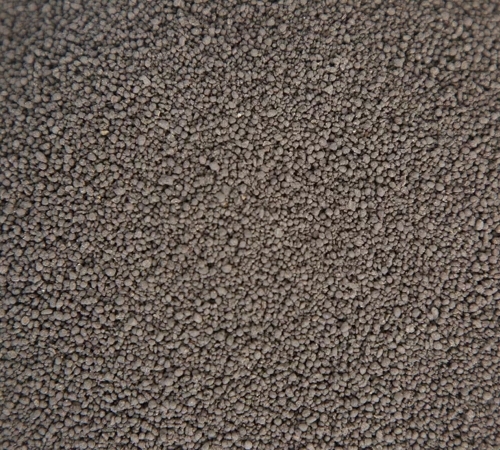
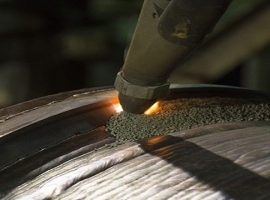
Oldwelders understands the critical role of fluxes in high-temperature applications. Our specialized welding fluxes, essential in many high-temperature processes, are produced using excellent dolomite, bauxite, cryolite, silica, and fluorine ore. These high-quality raw materials are melted at a precise 2000 °C, ensuring the consistent performance and purity required for demanding industrial applications. This meticulous process directly impacts the quality of the final weld, highlighting the interconnectedness of high-temperature material science and welding technology.
Industrial Applications and Quality Assurance in Smelting
The principles of high temp smelting are applied across a vast spectrum of industrial sectors. From the enormous blast furnaces producing steel for infrastructure to specialized electric arc furnaces yielding high-purity non-ferrous metals, the technology underpins modern material civilization. The quality of the output from these smelting processes directly impacts the performance, safety, and longevity of countless products and structures.
For industries, consistency and reliability are paramount. This is where robust quality assurance protocols become essential. At Oldwelders, our commitment to quality is reflected in our ISO 9001 certification, demonstrating our adherence to internationally recognized standards for quality management systems. This certification applies to the production of our extensive range of products, including welding machine, welding wire, welding rod, and welding fluxes, all of which benefit from meticulous material sourcing and processing.
Our operational capabilities underscore our capacity to meet diverse industrial demands. With a robust production capacity of 100 tons per day across six production lines within our 1000 square meter facility, we consistently meet the demands of industrial clients globally. This includes serving key markets such as Brazil, Thailand, Australia, and Malaysia, providing them with reliable and high-quality welding solutions derived from precisely processed materials. Our minimum order quantity stands at 1 ton, with a standard lead time of 30 days, ensuring efficient supply chain management for our partners.
The meticulous control over raw materials, such as the excellent dolomite, bauxite, cryolite, silica, and fluorine ore used in our fluxes, and the precise melting at 2000 °C, ensures that our products meet the stringent requirements of high-temperature applications. This level of detail in manufacturing directly contributes to the superior performance and durability of welding operations, from general fabrication to specialized industrial projects.
Optimizing Efficiency and Sustainability in Smelting Operations
Beyond the technical aspects of metal oxide reduction, modern high-temperature smelting operations are increasingly focused on optimizing efficiency and ensuring environmental sustainability. The energy intensity of smelting processes necessitates continuous innovation in furnace design, waste heat recovery, and process control. Reducing energy consumption not only lowers operational costs but also significantly reduces the carbon footprint associated with metal production.
Improvements in raw material preparation, such as pelletizing and sintering, can enhance the permeability of the furnace charge, leading to more uniform heating and reaction rates. Advanced process control systems, utilizing real-time data and artificial intelligence, allow operators to fine-tune parameters for optimal performance, minimizing waste and maximizing yield.
Furthermore, the management of byproducts, particularly slag, is a key area of focus. While slag is essential for impurity removal, its safe disposal or beneficial reuse is critical for environmental protection. Research into converting slag into construction materials or fertilizers offers promising avenues for circular economy initiatives in the metallurgical industry.
For Oldwelders, our commitment to efficient and responsible manufacturing extends to every product. By implementing rigorous quality control and efficient production methods across our 1000 square meter plant with six production lines, we ensure that our welding fluxes, produced from raw materials melted at 2000 °C, are not only effective but also contribute to more sustainable industrial practices. Our ability to supply 100 tons a day reflects a streamlined operation designed for both performance and environmental consideration.
In conclusion, high temp smelting is a complex yet vital process for transforming metal oxides into usable metals. Its effectiveness hinges on a deep understanding of thermochemistry, the strategic use of reducing agents, and the critical role of fluxes in purifying the final product. As industries continue to evolve, the demand for high-quality, sustainably produced metals and welding materials will only grow, making the continuous advancement of smelting technologies a priority. Oldwelders remains at the forefront, providing the essential materials that empower these industrial advancements globally.