
Flux Manufacturer: Calculating Your Landed Cost Per Kilogram
Find Your True Cost by Partnering with the Right Flux Manufacturer
For procurement managers and engineers in heavy industry, sourcing welding consumables is a critical task where numbers matter. When comparing quotes, the price per kilogram of welding flux often stands out as the primary decision factor. However, this figure is merely the beginning of the story. The true cost—the landed cost per usable kilogram—is a far more complex and important metric. A strategic partnership with a reliable flux manufacturer focuses on minimizing this total cost, not just the initial price tag. Understanding the components of this true cost is essential for making a purchasing decision that benefits your bottom line and your production quality.
This guide will break down the factors that influence your final cost, from international shipping logistics to the granular details of flux quality that determine how much of your purchase is actually converted into sound welds. By analyzing these variables, you can move from simple price comparison to a comprehensive cost-benefit analysis, ensuring you select a supplier that delivers value, consistency, and reliability.
Deconstructing the Quote: Beyond the Ex-Works Price
When you receive a quotation from an international supplier, it will be based on a specific Incoterm (International Commercial Term). These terms define the responsibilities of the seller and buyer regarding shipping, insurance, and risk. Understanding them is the first step in calculating your total landed cost.
EXW (Ex-Works)
This is the most basic price a flux manufacturer can offer. It represents the cost of the product packed and available at the seller's factory or warehouse. Under EXW terms, the buyer is responsible for all subsequent costs and risks, including:
- Loading the goods onto a truck at the manufacturer's facility.
- Inland transportation to the port of departure.
- Export customs clearance and associated fees.
- All freight charges (ocean or air).
- Insurance for the entire journey.
- Import customs clearance, duties, and taxes in the destination country.
- Inland transportation from the destination port to your facility.
FOB (Free On Board)
FOB is one of the most common terms in international trade. The FOB price includes the cost of the product plus all the expenses required to get it loaded onto the vessel at the designated port of origin. The seller's responsibility ends once the goods are on board the ship. From that point forward, the buyer assumes all costs and risks, including the main ocean freight, insurance, and all import-related charges. This term offers a good balance, as it leverages the supplier's local logistics expertise for export while giving the buyer control over the main international shipping leg.
CIF (Cost, Insurance, and Freight)
Under CIF terms, the seller is responsible for the cost of the goods, the main freight to the named destination port, and arranging for a minimum level of insurance coverage. The risk transfers from seller to buyer once the goods are on board the vessel, but the cost responsibility for the seller continues until the destination port. While convenient, buyers should be aware that the insurance procured by the seller is typically minimal. For high-value or critical shipments, supplementing this with additional coverage is often a prudent decision. Buyers are still responsible for all costs and procedures after the ship arrives, including unloading, import clearance, duties, and final delivery.
Calculating Your Total Landed Cost: The Hidden Variables
Once you understand the Incoterm, you can begin to assemble the full picture of your landed cost. The a la carte price from the flux manufacturer is just one piece of a much larger puzzle. Here are the other critical cost components to account for.
Freight and Insurance
Ocean freight rates are notoriously volatile, influenced by global demand, fuel prices, and port congestion. When budgeting, it's wise to get current quotes from a freight forwarder. The total volume and weight of your order will determine whether you need a Full Container Load (FCL) or Less than Container Load (LCL), with FCL generally offering a lower cost per kilogram for larger orders. For buyers ordering our 1-ton minimum order quantity, LCL is a common and effective shipping method.
Import Duties, Tariffs, and Taxes
This is a highly country-specific cost that can significantly impact your final price. Each country has its own tariff schedule (HS codes) for imported goods. For example, the duties and taxes for importing welding flux into Brazil will differ substantially from those in Australia or Thailand. It is crucial to work with a customs broker or research your country's official customs database to determine the exact percentage you will need to pay based on the product's value. These fees are non-negotiable and must be factored into your total cost from the outset.
Local and Ancillary Charges
Your costs don't end when the ship docks. You must also account for:
- Port Fees: Terminal handling charges, docking fees, and other administrative costs at the destination port.
- Customs Brokerage Fees: The fee for the professional service of clearing your goods through customs.
- Inland Transportation (Drayage): The cost of trucking the container from the port to your warehouse or production facility.
- Demurrage/Detention: Potential fees if your container is not picked up or returned to the port within the allotted free time.
The "Usable Kilogram": Why Quality from Your Flux Manufacturer Matters Most
The most sophisticated landed cost calculation is meaningless if the product that arrives is inconsistent or compromised. The ultimate measure of value is the cost per *usable* kilogram. A cheap flux that causes weld defects, production delays, and rework is exponentially more expensive than a high-quality, consistent product. This is where partnering with a technically proficient flux manufacturer becomes a competitive advantage.
At Oldwelders, our commitment to quality is validated by our ISO 9001 certification. We understand that consistency is paramount. Our process begins with the selection of excellent raw materials, including high-purity dolomite, bauxite, cryolite, and silica. These materials are then melted at an extreme temperature of 2000°C in our state-of-the-art facility. This high-temperature fusion process ensures the removal of impurities and creates a chemically homogenous, stable glass-like structure. This meticulous production method directly impacts the usability and performance of the final product.
Factors Affecting Usable Flux
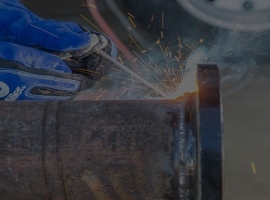
Moisture Absorption: Welding flux is hygroscopic, meaning it readily absorbs moisture from the air. Improperly manufactured or poorly packaged flux can arrive with high moisture content. This moisture breaks down in the heat of the arc, releasing hydrogen that becomes trapped in the solidifying weld metal, leading to hydrogen-induced cracking and porosity—two critical and costly defects. Our robust, multi-layer, moisture-proof packaging is designed to protect our welding fluxes during long sea voyages to demanding climates in Malaysia or Brazil, ensuring they arrive in pristine, ready-to-use condition.
Chemical Consistency: Batch-to-batch variation in flux chemistry can wreak havoc on automated or proceduralized welding operations. Inconsistent slag detachability, arc stability, or weld metal chemistry forces operators to constantly adjust parameters, leading to lost time and a higher likelihood of defects. Our ISO 9001-certified quality control system, from raw material inspection to final product testing, guarantees that the chemical and physical properties of our flux remain within tight specifications, order after order.
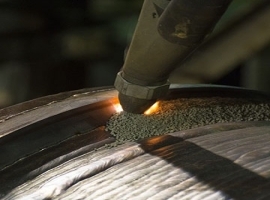
Particle Size Distribution (PSD): For submerged arc welding (SAW), the size and shape of the flux granules are critical. An inconsistent PSD can lead to poor feeding in automated systems, an unstable arc, and an uneven layer of flux coverage, resulting in defects. We employ advanced screening and grading processes to ensure a consistent PSD, promoting smooth operation and flawless weld beads. Choosing a specific, reliable product like our submerged arc welding flux hj431 means you are getting a product engineered for optimal performance.
Partnering for Supply Chain Stability and Predictable Costs
Beyond product quality, a capable flux manufacturer provides supply chain reliability, which is another crucial component of total cost. Unpredictable lead times and stock-outs can halt your production line, leading to costs that dwarf any initial savings on material price.
Our facility is built for scale and reliability. Covering 1000 square meters and equipped with six modern production lines, we have the capacity to produce up to 100 tons of flux per day. This industrial scale allows us to serve high-volume clients in markets from Australia to Thailand without compromising our standard 30-day lead time. This capacity ensures that we can be a stable, long-term partner for your most critical projects, providing a predictable supply of essential welding materials.
Choosing a supplier is more than a transaction; it's a strategic decision. By looking past the sticker price and calculating your true landed cost per usable kilogram, you can identify a flux manufacturer that offers genuine value. A partner with certified processes, a commitment to quality raw materials, and the production capacity to ensure supply chain stability will ultimately lower your total cost of ownership and contribute to the quality and integrity of your final product.