
Electroslag Welding: When Single-Pass ESW Fits Your Project
Understanding When a Single-Pass Electroslag Welder is the Right Choice
For project managers and fabrication planners overseeing the joining of thick metal sections, process selection is a critical decision that impacts timelines, costs, and structural integrity. While conventional multi-pass welding methods are reliable, they can become a significant bottleneck in high-volume production. This is where specialized processes come to the forefront. An Electroslag Welder offers a compelling solution for specific applications, capable of joining plates several inches thick in a single, continuous pass. However, its productivity is balanced by unique operational and metallurgical characteristics.
Understanding the precise conditions where Electroslag Welding (ESW) excels is key to leveraging its full potential. This guide provides a detailed framework for evaluating whether ESW is the optimal choice for your heavy fabrication project. As an ISO 9001 certified manufacturer, Oldwelders is committed to providing not only high-quality equipment and consumables but also the expert knowledge to help our partners make informed decisions that drive efficiency and quality in demanding industries worldwide.
The Core Principle of Electroslag Welding (ESW)
Unlike conventional arc welding processes that use an electric arc to melt the base and filler metals, ESW is a progressive melting and welding process that relies on electrical resistance. The process is performed in a vertical or near-vertical position. To begin, a small arc is struck at the bottom of the joint to create an initial pool of molten flux. Once a sufficient volume of electrically conductive molten slag is established, the arc is extinguished.
From this point forward, the heat required for welding is generated by the electrical current passing through the molten slag bath, which has high resistance (Joule heating). The temperature of this slag bath, typically around 2000 °C, is high enough to melt the continuously fed filler wire and the edges of the base material being joined. A pair of water-cooled copper shoes, or dams, are positioned on either side of the joint to contain the molten weld pool and slag. As the weld metal solidifies from the bottom up, the entire welding head assembly, including the wire guide and copper shoes, moves vertically up the joint.
The result is a single, homogeneous weld bead that fills the entire joint cross-section. The layer of molten slag remains on top of the weld pool, protecting it from atmospheric contamination and refining the weld metal as it solidifies. This fundamental difference—no arc and a single vertical pass—is what gives the process its distinctive advantages and limitations.
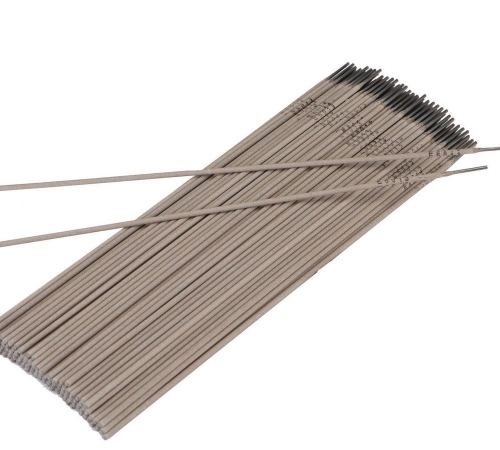
Key Deciding Factors for Adopting an Electroslag Welder
The decision to implement ESW should be based on a careful analysis of the project's technical requirements, production goals, and quality specifications. It is a highly specialized method, and its suitability hinges on several key factors.
Material Thickness and Joint Geometry
The primary driver for considering ESW is material thickness. The process is generally not economical or practical for materials thinner than 25 mm (1 inch). Its true strength lies in joining plates from 50 mm (2 inches) to over 300 mm (12 inches) thick. For these substantial cross-sections, traditional multi-pass methods like Submerged Arc Welding (SAW) would require extensive joint preparation (beveling) and dozens of passes, leading to long welding times and a higher risk of defects between layers.
An Electroslag Welder, by contrast, uses a simple square-edge or slightly gapped butt joint. This minimal preparation significantly reduces pre-welding labor and material costs. The process is most commonly applied to:
- Butt Joints: The most frequent application, used for joining thick plates end-to-end.
- T-Joints: Effective for creating flange-to-web connections in heavy structural beams.
- Corner Joints: Applicable in the fabrication of large box sections or similar structures.
The critical constraint is that the joint must be oriented vertically to allow the process to progress upwards. This may require specialized manipulators or fixtures to position the workpiece correctly, a factor that must be included in any implementation plan.
Production Volume and Deposition Rate Requirements
ESW is a high-productivity process defined by its exceptional deposition rate. Deposition rates can range from 15 to 45 kg/hr (35 to 100 lb/hr) per electrode, far exceeding most other welding processes. Because the entire joint is completed in a single pass, the overall welding time is drastically reduced compared to multi-pass alternatives. This makes the Electroslag Welder an ideal candidate for fabrication shops with high-volume production schedules involving repetitive, thick-section welds.
For large-scale projects, a reliable supply of high-quality consumables is paramount. The consistency of the welding flux is particularly critical to maintaining a stable process and achieving the desired weld chemistry. At Oldwelders, we support high-volume operations with a robust supply chain. Our 1000-square-meter plant features six production lines capable of supplying up to 100 tons of welding fluxes per day. By using excellent raw materials like dolomite, bauxite, and silica melted at 2000 °C, we ensure each batch provides the stable, protective slag bath essential for successful electroslag welding.
Metallurgical and Mechanical Property Considerations
The high heat input and slow cooling rate inherent to the ESW process produce a unique weld microstructure. The resulting weld and heat-affected zone (HAZ) are characterized by a very large, coarse grain structure. In the as-welded condition, this can lead to lower toughness and ductility compared to welds made with lower heat-input processes.
This is a critical consideration for project managers. For applications where the primary load is static compression (e.g., press frames, building columns), the as-welded properties may be perfectly acceptable. However, for structures subject to dynamic loading, fatigue, or low-temperature service where high fracture toughness is required (e.g., pressure vessels, bridges), a post-weld heat treatment (PWHT) is almost always necessary. Normalizing the weldment refines the coarse grain structure, significantly improving its mechanical properties. The cost and time associated with PWHT must be factored into the overall project plan when evaluating ESW.
Comparing ESW with Alternative Welding Processes
To fully appreciate where ESW fits, it is helpful to compare it directly with other common heavy fabrication processes.
ESW vs. Submerged Arc Welding (SAW)
SAW is often the default process for thick-plate welding. The key difference is the single-pass versus multi-pass approach. For a 100 mm thick plate, SAW would require a deep V-groove preparation and numerous passes, whereas ESW would use a simple square-edge joint and one single pass. ESW offers higher productivity in this scenario, but SAW provides a finer grain structure and generally better as-welded toughness due to the reheating and refining effect of subsequent passes. The choice often comes down to a trade-off between productivity and the need for post-weld heat treatment. A high-quality flux like submerged arc welding flux hj431 is essential for consistent results in SAW.
ESW vs. Flux-Cored Arc Welding (FCAW)
FCAW is a versatile semi-automatic or automatic process with good deposition rates, but it still falls short of ESW for very thick sections. While FCAW can be used for vertical-up welding, it requires multiple passes and significant operator skill to avoid defects. An Electroslag Welder automates the vertical-up process, largely removing operator variability from the equation. For fabricators focused on repeatability and maximum throughput on sections thicker than 50 mm, ESW provides a clear advantage in speed and consistency.
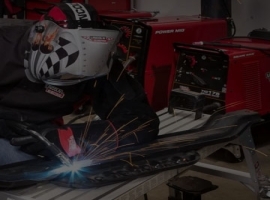
Essential Equipment and Consumables for an Electroslag Welder Setup
A complete ESW system consists of several key components working in concert. Understanding this setup is crucial for planning implementation.
The core of the system is the welding machine, which includes a constant voltage (CV) DC power source, a wire feed system, and a control unit that manages voltage, amperage, and travel speed. The welding head itself contains the guide tube that delivers the filler wire into the joint and the mounting for the water-cooled copper shoes.
Consumables are just as important as the equipment. The process uses a specific filler metal, typically a solid wire or, in some variants, a flux-cored wire. However, the most critical consumable is the welding flux. The flux is formulated to create a slag with the correct viscosity, conductivity, and melting temperature to maintain a stable process, protect the weld pool, and provide the desired chemical composition. We offer a comprehensive range of welding materials, with minimum order quantities starting at 1 ton, suitable for the large-scale industrial projects that benefit most from the high deposition rates of electroslag welding.
Global Applications and Oldwelders' Experience
The unique capabilities of the Electroslag Welder make it a valuable tool in several heavy industries where joining thick sections efficiently is a primary concern. Common applications include:
- Shipbuilding: Welding thick hull plates and structural components.
- Heavy Structural Fabrication: Fabricating large box columns for buildings and heavy-duty girders for bridges.
- Pressure Vessels: Joining thick shell courses, though this almost always requires PWHT.
- Heavy Machinery: Manufacturing frames for large presses, rolling mills, and mining equipment.
Oldwelders has experience supporting clients in these demanding sectors across the globe. We have provided welding solutions and consumables to partners in key industrial markets, including Brazil, Thailand, Australia, and Malaysia. This international experience gives us insight into the diverse challenges and quality standards required for successful heavy fabrication projects worldwide.
In conclusion, the Electroslag Welder is not a universal solution, but an incredibly powerful one when applied correctly. For project managers and planners, the decision comes down to a clear-eyed assessment of material thickness, joint configuration, production volume, and the final mechanical property requirements. When the parameters align—thick vertical joints, high-volume production, and a plan for managing the resulting microstructure—ESW offers a level of productivity that few other processes can match. Contact our experts to discuss your specific application and determine if an Electroslag Welder is the right fit to enhance your fabrication capabilities.