
Cut Welding Consumable Costs by Tracking Deposit Yield
How to Cut Your Welding Consumable Costs by Tracking Deposit Yield
In the competitive world of industrial fabrication, managing operational costs is paramount. For purchasing managers and fabricators, the price of welding consumables—electrodes, wires, and fluxes—represents a significant and recurring expense. The common approach is to compare the cost per kilogram or pound from various suppliers. However, this method only reveals a fraction of the total cost. The true financial impact of your consumables is determined not by what you buy, but by how much of it becomes part of the final, finished weld.
This is where the concept of deposit yield, or deposition efficiency, becomes a critical metric for cost control. By understanding and tracking this key performance indicator, businesses can move beyond simple price comparisons to a more sophisticated total cost of ownership (TCO) analysis. This allows for smarter purchasing decisions that enhance both profitability and productivity. A reliable supply chain partner is crucial, as consistent product quality is the bedrock of predictable performance and accurate cost calculation.
What is Deposit Yield and Why Does It Matter?
In simple terms, deposit yield is the percentage of a welding consumable that is actually deposited into the weld joint. It represents the ratio of the weight of the weld metal that becomes part of the finished product to the total weight of the consumable used to create it. The portion of the consumable that does not end up in the weld is lost to various factors.
Consider these common sources of loss:
- Slag: The protective layer that forms over the weld, particularly in processes like Shielded Metal Arc Welding (SMAW) and Flux-Cored Arc Welding (FCAW), is discarded after the weld cools.
- Spatter: Small molten droplets that are ejected from the weld pool and do not become part of the finished weld. Excessive spatter not only represents wasted material but also increases post-weld cleanup time and labor costs.
- Fume: A portion of the consumable vaporizes during the welding process, contributing to the welding fume.
- Stub Loss (for SMAW): The unused end portion of a stick electrode that must be discarded. This can account for a significant percentage of waste if not properly managed.
Why is this so important for your bottom line? A consumable with a low deposit yield means you are paying for material that literally goes up in smoke or is swept off the floor. Two products with the same sticker price can have vastly different real-world costs. A consumable with a higher deposit yield translates directly to more finished weld per dollar spent, reducing the total amount of material you need to purchase over a project's lifecycle.

Calculating the True Cost of Your Welding Consumables
To accurately assess the financial impact of your material choices, you must calculate the cost per unit of deposited weld metal, not just the cost per unit of purchased consumable. The formula is straightforward but powerful:
True Cost per kg = (Price per kg of Consumable) / (Deposit Yield as a decimal)
Let's illustrate this with a practical example. Imagine you are evaluating two different SMAW electrodes for a large-scale project:
- Electrode A: Costs $3.00 per kg. The manufacturer's data sheet indicates an average deposit yield of 60% (or 0.60).
- Electrode B: Costs $3.45 per kg, making it appear 15% more expensive. However, it is a higher-quality electrode with a deposit yield of 75% (or 0.75).
Now, let's calculate the true cost of the metal deposited in the weld:
- True Cost of Electrode A: $3.00 / 0.60 = $5.00 per kg of deposited weld
- True Cost of Electrode B: $3.45 / 0.75 = $4.60 per kg of deposited weld
The result is clear: Electrode B, despite its higher initial purchase price, is actually 8% cheaper to use. Over thousands of kilograms of consumables, this difference translates into substantial savings. This calculation empowers procurement teams to make value-based decisions. When evaluating the full spectrum of welding materials, this TCO approach provides a much clearer picture than price tags alone.
Furthermore, this calculation doesn't even account for secondary cost savings. A high-yield consumable often produces less spatter, which reduces the labor hours required for grinding and cleanup. It can also lead to higher travel speeds, improving overall productivity. When all these factors are considered, the benefits of choosing a high-performance consumable become even more compelling.
Factors Influencing the Deposit Yield of Different Consumables
Deposit yield is not a universal constant; it varies significantly based on the welding process and the specific type of consumable being used. Understanding these differences is key to optimizing your operations.
Shielded Metal Arc Welding (SMAW) Electrodes
SMAW, or stick welding, typically has the lowest deposit yields among common arc welding processes. The flux coating, which provides shielding and adds alloy elements, forms a slag that is discarded, representing a significant portion of the electrode's weight. Stub loss is another major factor.
- Cellulosic Electrodes (e.g., E6010): These have very low deposit yields, often in the 50-60% range, due to a forceful arc and thin flux coating.
- Rutile Electrodes (e.g., E6013): These offer slightly better yields, typically around 60-68%. Our popular aws e6013 welding electrodes are designed for a stable arc and reliable performance.
- Low-Hydrogen Iron Powder Electrodes (e.g., E7018): These offer the highest yields in the SMAW category, often exceeding 70-75%, because the iron powder in the coating becomes part of the deposited weld metal.
Gas Metal Arc Welding (GMAW) and Flux-Cored Arc Welding (FCAW) Wires
Wire-fed processes generally offer much higher deposition efficiencies than SMAW because they eliminate stub loss.
- GMAW (MIG) Solid Wires: This process is highly efficient. With minimal spatter (when parameters are set correctly) and no slag, deposit yields for solid wire are typically in the 95-98% range.
- FCAW (Flux-Cored) Wires: This process is a hybrid, offering the high productivity of wire-feeding with a flux that provides shielding and slag protection. Due to the slag system, deposit yields are slightly lower than GMAW, usually between 82-90%. However, FCAW often allows for higher deposition rates, making it very productive for certain applications.
Submerged Arc Welding (SAW) Wires and Fluxes
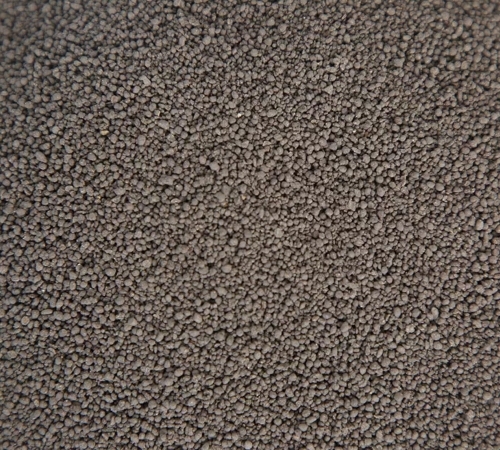
SAW is an industrial powerhouse known for its extremely high deposition rates and exceptional weld quality. It is also the champion of deposit yield. In this process, the arc is hidden, or "submerged," under a blanket of granular flux. This completely eliminates spatter and fume loss. The wire deposit yield is virtually 100%. Furthermore, much of the unfused flux can be collected and reused, making the entire process highly economical for heavy fabrication. The quality of the flux is critical, which is why our submerged arc welding flux hj431 is produced from superior raw materials like dolomite and bauxite, melted at 2000 °C to ensure purity and performance.
Selecting a Supplier for Consistent Performance and Value
Tracking deposit yield is only effective if the welding consumables you purchase perform consistently from one batch to the next. A low-cost supplier whose product quality varies can negate any potential savings by introducing unpredictability into your workflow, making accurate cost projections impossible and potentially leading to costly rework due to weld defects.
A strategic partnership with a reliable manufacturer is the foundation of a successful cost-management program. When selecting a supplier, consider their commitment to quality, production capacity, and logistical capabilities. At Oldwelders, we build trust through transparency and proven performance.
Our operations are governed by a strict quality management system, as demonstrated by our ISO 9001 certification. This ensures that every product, whether it's an electrode, wire, or flux, adheres to rigorous international standards for consistency and reliability. You can be confident that the performance characteristics you test today will be the same in the shipment you receive months from now.
For international buyers in markets like Brazil, Thailand, Australia, and Malaysia, supply chain reliability is non-negotiable. Our state-of-the-art plant, covering 1000 square meters with six production lines, has a formidable capacity of 100 tons per day. This scale allows us to fulfill large-volume orders dependably, ensuring your projects are never delayed by material shortages. We accommodate businesses of various sizes with a reasonable minimum order quantity (MOQ) of 1 ton and a standard lead time of 30 days, facilitating efficient inventory and project planning.
By partnering with a manufacturer that prioritizes quality control and has a robust production infrastructure, you secure more than just a product; you secure the consistency required to optimize your operations and truly control the cost of your welding consumables.
Ultimately, the path to significant cost savings lies in a holistic view of procurement. By shifting focus from the initial price tag to the true deposited cost, fabricators and purchasing managers can unlock hidden value, reduce waste, and improve their bottom line. It begins with understanding the numbers and ends with choosing a partner you can trust to deliver quality, consistently.