
BFA Powder: Specifying by Micron Size & Purity for RFQs
Brown Fused Alumina powder is defined by its precise micron size and purity.
Brown Fused Alumina, commonly known in the industry as BFA, is a cornerstone material for countless manufacturing and finishing processes. Valued for its exceptional hardness, toughness, and thermal stability, this synthetic corundum is the abrasive of choice for applications ranging from aggressive sandblasting and precision grinding to the production of high-performance refractory materials. However, its effectiveness is not inherent; it is unlocked by specifying the material correctly.
For procurement managers, engineers, and production supervisors, preparing a Request for Quotation (RFQ) for BFA requires more than just a name. The two most critical parameters that dictate performance, finish quality, and cost are particle size distribution (micron size) and chemical purity. An imprecise specification can lead to process inefficiencies, subpar results, and unnecessary expenditure. This guide provides a detailed framework for understanding and defining your requirements, ensuring you source the exact grade of material your application demands. As a dedicated manufacturer, we understand that precision in raw materials translates directly to quality in finished products.
Understanding Brown Fused Alumina Production and Properties
To specify Brown Fused Alumina effectively, it is essential to first understand its origin and inherent characteristics. The quality of the final product is a direct result of a controlled, high-temperature manufacturing process that transforms select raw materials into a powerful industrial tool. At its core, BFA is created by melting high-quality calcined bauxite in an electric arc furnace at temperatures approaching 2000 °C. This intensive process, which we manage under strict ISO 9001 certified protocols, smelts the bauxite and allows impurities to be separated, resulting in a solidified ingot of high-purity aluminum oxide.
This ingot is then meticulously crushed, milled, and screened into precise grit sizes. The primary properties that make this material so valuable are:
- Hardness: With a rating of 9 on the Mohs scale, it is second only to diamond. This extreme hardness allows it to effectively cut, grind, and etch even the toughest metals and surfaces.
- Toughness: Unlike some other hard materials that can be brittle, BFA possesses high toughness and fracture resistance. This means the particles can withstand significant impact and pressure without shattering, making it ideal for recycling in blasting applications and for use in bonded abrasives like grinding wheels.
- Thermal Stability: Its high melting point and low thermal expansion make it an excellent aggregate for producing refractory bricks, castables, and mortars used in furnaces and kilns.
- Chemical Inertness: Brown Fused Alumina is highly resistant to chemical attack, ensuring it does not contaminate the workpiece or react with other components in a refractory mix.
The careful control of the smelting and crushing process allows for the production of BFA with varying levels of purity and in a vast range of particle sizes, each tailored for specific industrial tasks. BFA is also a critical component in many advanced welding materials, where its properties contribute to the performance of specialized fluxes.
The Critical Role of Particle Size Distribution (Micron Sizing)
When specifying particle size, it is a common misconception to think of a single number. In reality, every batch of abrasive grain consists of a distribution of particle sizes. This is why industry standards are so crucial for clear communication between buyer and supplier. The most widely recognized standards for grading abrasives are those established by the Federation of European Producers of Abrasives (FEPA) and the Japanese Industrial Standards (JIS).
These standards use a "grit number" (e.g., F36, P80) that corresponds to a specific range of particle sizes, measured in microns (µm). A smaller grit number indicates a coarser particle, while a larger number signifies a finer particle. Understanding how these grades relate to application performance is key to making the right choice.
Categorizing Grit Sizes by Application
The required surface finish, material removal rate, and process type will determine the appropriate micron size for your BFA powder.
- Coarse Grades (FEPA F12 – F36): These large, aggressive particles are designed for heavy-duty work where rapid material removal is the primary goal. They create a deep, coarse surface profile.
- Common Uses: Pressure blasting of heavy scale and rust, preparing surfaces for thermal spray coatings, manufacturing heavy-duty grinding wheels, and as an aggregate in non-slip flooring.
- Medium Grades (FEPA F40 – F90): This is the most versatile and widely used range. It offers a balance between aggressive cutting action and the ability to produce a more refined surface finish.
- Common Uses: General-purpose sandblasting and surface preparation before painting or bonding, scale removal, and manufacturing of vitrified grinding wheels.
- Fine Grades (FEPA F100 – F220): As the particles get smaller, their action becomes less aggressive and more focused on finishing. They are used to create smooth, uniform surfaces with low roughness.
- Common Uses: Lapping metals and ceramics, precision grinding, surface texturing, and cleaning delicate components without significant material removal.
- Microgrits (FEPA F240 and finer): These ultra-fine powders are used in applications requiring the highest levels of precision and the smoothest possible surface finishes.
- Common Uses: Polishing optical glass and lenses, superfinishing of metal components, and as a fine filler in certain composites.
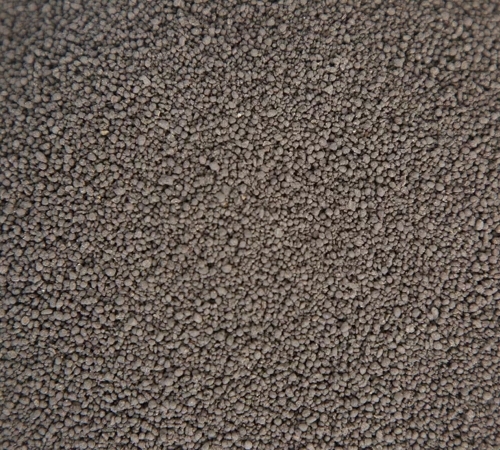
In your RFQ, always specify the grit size using a recognized standard like FEPA or JIS. If your process requires a non-standard or highly specific particle size distribution (PSD), you should provide target values for key distribution points like D10, D50, and D90 to ensure the supplier can meet your needs.
How Purity Levels Define BFA Powder Performance
The second pillar of a precise BFA specification is purity, which primarily refers to the concentration of aluminum oxide (Al₂O₃). While all Brown Fused Alumina is predominantly Al₂O₃, the exact percentage and the nature of the remaining trace elements significantly influence its performance, especially its toughness and color.
Our 1000 square meter facility, with a daily production capacity of 100 tons, is equipped to produce consistent batches of BFA powder to your exact purity specifications, starting with a minimum order quantity (MOQ) of 1 ton.
Common Purity Grades and Their Impact
- Standard Abrasive Grade (~95% Al₂O₃): This is the most common and cost-effective grade. The remaining percentage is mostly titanium dioxide (TiO₂), which is not an undesirable impurity. In fact, TiO₂ contributes to the material's renowned toughness, making it more resistant to fracturing under impact. This grade is the workhorse for the vast majority of sandblasting, grinding, and general abrasive applications. It is also suitable for many refractory products.
- Refractory & High-Purity Grade (>96-97% Al₂O₃): For more demanding applications, a higher purity BFA is required. In this grade, the smelting process is more tightly controlled to reduce the levels of TiO₂ and other oxides like silica (SiO₂) and iron oxide (Fe₂O₃). This results in a material that is slightly harder and has a higher melting point, making it ideal for high-performance refractory shapes and monolithics. It is also preferred for manufacturing high-end vitrified bonded abrasives where chemical consistency is paramount.
When selecting a purity level, consider the specific demands of your process. For most blasting and cutting operations, the toughness imparted by the TiO₂ in standard 95% grade BFA is a significant advantage. However, if you are manufacturing a refractory product that will be exposed to extreme temperatures or a chemically reactive environment, the higher stability of a 97% grade may be necessary. Specifying a higher purity than required can lead to unnecessary costs without a tangible performance benefit.

Specifying Your BFA Powder Requirements for a Precise RFQ
Creating a detailed and unambiguous RFQ is the final step to ensuring you receive accurate quotes for the correct material. A well-prepared specification sheet minimizes back-and-forth communication and prevents costly errors from sourcing the wrong product. As a supplier with a standard 30-day lead time, we appreciate clear specifications that allow us to efficiently process orders for our clients in markets such as Brazil, Thailand, and Australia.
Use the following checklist when preparing your inquiry:
- Application Details: Briefly describe the intended use (e.g., "pressure blasting of structural steel," "lapping of ceramic seals," "component for refractory castable"). This context helps the supplier recommend the most suitable product if there are any ambiguities in your specification.
- Particle Size Specification:
- Standard: State the required grit size according to a recognized standard (e.g., FEPA F-46, JIS #100).
- Custom Distribution: If needed, provide the full particle size distribution curve or key D-values (D10, D50, D90).
- Chemical Purity Specification:
- Primary Component: Define the minimum acceptable Al₂O₃ percentage (e.g., Min. 95.0%).
- Trace Elements: If critical, specify the maximum allowable percentages for other oxides like TiO₂, SiO₂, and Fe₂O₃. This is particularly important in high-tech and refractory applications.
- Other Physical Properties:
- Bulk Density: Specify the required tapped or loose bulk density if it is a critical parameter for your equipment or process.
- Particle Shape: Most BFA is angular, but if you require a more blocky shape, this should be noted.
- Logistical Requirements:
- Quantity: State the total required quantity (e.g., 20 metric tons). Remember our MOQ is 1 ton.
- Packaging: Specify your preferred packaging (e.g., 25 kg multi-wall paper bags on pallets, 1-ton bulk bags).
By providing this level of detail, you empower your supplier to provide a precise and competitive quotation for the exact BFA powder that will optimize your production process. The same principle of precise specification applies to other engineered consumables, such as a high-quality submerged arc welding flux hj431, where composition dictates performance.
In conclusion, the successful procurement of Brown Fused Alumina hinges on a clear understanding and communication of your technical requirements. By carefully considering the interplay between micron size and purity, you can source a material that delivers consistent, reliable, and cost-effective results. As an experienced manufacturer serving a global client base, we are prepared to meet your most exacting specifications.
Contact our technical sales team today to discuss your specific BFA powder needs, request a sample, or submit your detailed RFQ for a comprehensive quotation.