
A Guide to Structural Steel SAW Miter Limits by Profile
Understanding the Miter Cutting Limits of Your Structural Steel SAW by Profile
In the world of steel fabrication, precision is not a luxury; it is the foundation of structural integrity, project efficiency, and profitability. A critical step in this process is the initial cut. While a straight 90-degree cut is commonplace, the real test of a fabrication shop's capability often lies in its ability to execute accurate miter cuts on various profiles. Understanding the inherent limitations of a structural steel SAW based on the shape and size of the material is paramount for project planning, quoting, and execution. An improper cut leads to poor fit-up, increased welding time, excessive consumption of consumables, and potentially compromised joint strength.
This guide is designed for fabricators, engineers, and procurement managers to assess whether a band saw can handle the specific angled cuts required for a project before committing resources. We will explore the miter limits for common structural profiles, helping you make informed decisions that streamline your workflow from the saw to the final weld. Because a perfect cut is the first step toward a perfect weld, ensuring your equipment and processes are aligned is key to delivering high-quality results for clients in demanding markets from Brazil to Australia.
Key Concepts in Miter Sawing Capabilities
Before diving into specific profiles, it's essential to establish a common vocabulary and understanding of how a saw's design dictates its capabilities. The specifications on a machine's data sheet can be misleading if not interpreted correctly in the context of real-world applications.
Defining the Cut: Miter vs. Bevel
While often used interchangeably, "miter" and "bevel" refer to different types of angled cuts. In the context of a horizontal band saw, the primary machine used for heavy sections:
- Miter Cut: An angle cut across the width of the material. The saw head swivels left or right of the standard 90-degree position. A 45-degree miter cut on a rectangular tube is a classic example.
- Bevel Cut: An angle cut through the thickness of the material. This is less common for structural band saws and more typical of plasma or oxy-fuel cutting for weld preparation. For our purposes, we will focus on miter cuts.
Saws can be single-miter (swiveling in one direction, e.g., 0-60 degrees) or double-miter (swiveling in both directions, e.g., 45 degrees left and 60 degrees right), offering greater flexibility without needing to re-orient heavy workpieces.
The Capacity Envelope
Every saw has a "capacity envelope," which is the maximum size of material it can cut at a given angle. A saw advertised with a 20-inch capacity is almost always referring to its 90-degree (straight cut) capacity. As you introduce a miter angle, this capacity decreases significantly. The blade must travel a much longer path to get through the material. For example, a saw that can cut a 20-inch round tube at 90 degrees might only be able to handle a 12-inch round tube at 45 degrees. Always consult the manufacturer's capacity chart, which provides the maximum dimensions for various angles (typically 90°, 45°, and 60°).
Miter Limits for Common Structural Steel Profiles
The geometry of the steel profile has a profound impact on the miter capacity of a structural steel SAW. The interaction between the saw blade and the various elements of a profile—flanges, webs, and walls—determines the true cutting limit.
I-Beams and Wide Flange (W-Beams)
I-beams are the backbone of countless construction projects. Their shape, with a central web and two parallel flanges, presents a unique challenge for miter cutting. When cutting at an angle, the blade must pass through the top flange, the tall web, and the bottom flange simultaneously. The diagonal distance the blade must travel is far greater than the beam's nominal height or width.
Limiting Factor: The primary limitation is the saw's "throat," or the distance from the blade to the column of the saw frame. As the beam is angled, its effective width increases. A W18x60 beam (roughly 18 inches tall) might fit comfortably for a 90-degree cut on a 20-inch saw. However, when you try to cut it at 45 degrees, its new diagonal width could easily exceed 25 inches, making the cut impossible on that machine. The saw head must be able to clear the entire angled profile as it descends.
Considerations:
- Orientation: Always check if the capacity chart specifies cutting the beam standing up (on its flanges) or lying down (on its web). The capacity can differ significantly between these two orientations.
- Blade Path: At steep angles, the blade is engaged with the material for a longer duration, generating more heat and stress. Proper blade selection and coolant application are critical to prevent blade wander and ensure a square, accurate cut.
Channels (C-Channels and U-Channels)
Channels are similar to I-beams but with one open side. This asymmetry affects both clamping and cutting. The miter capacity for a channel is often limited by its height and flange width, much like an I-beam.
Limiting Factor: The main challenge is securing the workpiece properly. The open C-shape can be prone to vibration or movement if not clamped securely against both the back fence and the top or side clamps. The saw's capacity is again determined by the diagonal dimension created when the channel is angled for the miter cut. A C12x20.7 channel might measure 12 inches tall, but at a 60-degree angle, the blade needs to traverse a much wider path.
Considerations:
- Clamping: Ensure the saw's vise can firmly grip the channel without deforming it. Hydraulic top clamps are highly recommended for holding the profile steady during the cut.
- Blade Entry: The blade enters the leading flange first, then the web, and finally the trailing flange. This interrupted cut can cause vibration, so a slower feed rate may be necessary to maintain accuracy.
Hollow Structural Sections (HSS) - Square and Rectangular Tubing
HSS is widely used for frames, columns, and trusses. Its closed, geometric shape provides excellent strength-to-weight ratios. When miter cutting HSS, the saw blade must pass through two vertical walls and two horizontal walls.
Limiting Factor: The limiting factor for HSS is typically the diagonal dimension of the tube's cross-section. A 10" x 10" square tube requires the saw to cut through a 10-inch width at 90 degrees. At 45 degrees, that same tube presents a diagonal width of over 14 inches to the blade. This is a simple trigonometric calculation that must be done to ensure the piece will fit within the saw's 45-degree capacity envelope.
Considerations:
- Wall Thickness: Thicker-walled tubing places more demand on the saw blade and motor. Ensure the blade pitch is appropriate for the wall thickness to prevent tooth stripping or slow cutting.
- Coolant Flow: Proper coolant is vital to flush chips from inside the tube and keep the blade cool, especially on long cuts through large-dimension HSS.
The Critical Impact of Bundling on Miter Capacity
To increase throughput, fabrication shops often bundle-cut multiple smaller pieces at once. While highly efficient for 90-degree cuts, bundling dramatically reduces the effective miter capacity of any structural steel SAW. This is a frequently overlooked factor that can lead to significant production bottlenecks.
Imagine you need to cut a bundle of 4" x 4" square tubes. A single tube at 45 degrees has a diagonal width of about 5.6 inches. Now, consider a tight 3x3 bundle (9 pieces total). The bundle's width is 12 inches. At a 45-degree angle, the diagonal the blade must cut is nearly 17 inches, plus the space between the tubes. A saw that can easily handle a single 4-inch tube at 45 degrees may be completely incapable of cutting this bundle. The entire bundle must fit within the saw's reduced capacity at that specific angle.
Before planning a bundled miter cut, always lay out the bundle's cross-section and calculate the maximum diagonal dimension at the desired angle. Compare this figure against your saw's capacity chart. It is common for a saw's bundle-cutting capacity at 45 degrees to be less than half of its single-piece capacity at the same angle.
From Precision Cut to Structural Weld: Ensuring End-to-End Quality
Achieving a precise miter cut is a critical first step, but it is only part of the equation for creating a sound structural connection. The ultimate goal of an accurate cut is to create a joint with optimal fit-up, minimizing gaps and ensuring proper alignment for the welding process that follows. A poor fit-up forces welders to spend excess time filling large gaps, which consumes more filler metal, introduces unnecessary heat, and can compromise the integrity of the final weld.
This is where the quality of your welding consumables becomes non-negotiable. A perfectly mitered joint deserves a high-quality weld executed with superior materials. As a globally recognized supplier serving markets in Thailand, Malaysia, and beyond, we understand the demands of heavy fabrication. Our production facility, spanning 1000 square meters with six production lines, can supply up to 100 tons of welding products per day, ensuring we can meet the needs of large-scale projects. When specifying consumables, partnering with an ISO 9001 certified manufacturer guarantees consistency and performance. Our range of welding materials is produced from excellent raw ores like dolomite and bauxite, melted at 2000 °C to create fluxes and wires that deliver clean, strong, and reliable welds.
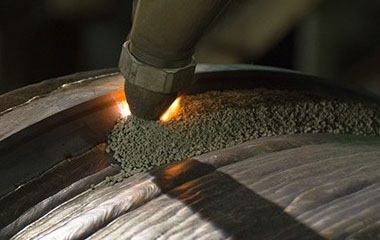
Whether your project requires high-deposition submerged arc welding for heavy beams or versatile GMAW/FCAW for complex frame assemblies, the quality of the wire and flux is paramount. For instance, after preparing joints on heavy sections, using a product like our submerged arc welding flux hj431 ensures deep penetration and a smooth bead profile, complementing the precision of your initial cut. This holistic approach—from the saw to the final weld—is what separates acceptable work from exceptional engineering.
For fabricators looking to equip their teams, a versatile mig-mag-tig welding machine can handle the variety of joints created by complex miter cuts. Ultimately, a successful project relies on a supply chain committed to quality at every stage. With a minimum order quantity of 1 ton and a standard lead time of 30 days, we are structured to be a reliable partner for your fabrication needs.
In conclusion, meticulously checking the miter cutting capacity of your structural steel SAW against the specific profiles and angles your project demands is a foundational step for success. It prevents costly errors, rework, and delays. By pairing this mechanical precision with high-quality welding consumables, you ensure that the integrity designed on paper is fully realized in the final steel structure.