
A Guide to Controlling Heat Input in Shipyard Welding
Mastering Heat Input for Superior Shipyard Welding Integrity
In the demanding environment of modern shipbuilding, the structural integrity of every weld is paramount. The immense scale of hull plates, stiffeners, and complex assemblies means that even minor deviations in welding quality can lead to significant rework, costly delays, and compromised safety. A critical, yet often misunderstood, parameter governing this quality is heat input. Effective control of heat input is the cornerstone of successful shipyard welding, directly influencing everything from metallurgical properties to final component dimensions. For welding engineers and production supervisors, mastering this variable is not just a technical exercise; it is a fundamental requirement for building safe, durable, and cost-effective marine vessels.
This comprehensive guide explores the principles of heat input control, its profound impact on shipbuilding fabrication, and the practical strategies for managing it effectively. We will delve into calculation methods, the role of process selection, and how high-performance consumables and modern equipment provide the precision needed to meet stringent maritime standards.
The Critical Role of Heat Input in Shipbuilding
Heat input is a measure of the thermal energy transferred to the workpiece per unit length of weld. It is not merely about how hot the arc is, but rather how much of that energy is concentrated over a specific distance. In the context of shipyard welding, where massive steel plates, often several meters long, are joined together, the consequences of uncontrolled heat are magnified.
The primary concerns associated with excessive heat input include:
- Distortion: As the weld metal and adjacent base material heat and cool, they expand and contract. High heat input creates a larger volume of heated material, leading to greater thermal expansion and subsequent contraction stresses upon cooling. This can cause angular distortion, bowing, and buckling of large plates and sub-assemblies, creating significant fit-up problems for subsequent construction stages and requiring extensive, time-consuming flame straightening.
- Degradation of Mechanical Properties: The area of base metal next to the weld, known as the Heat-Affected Zone (HAZ), undergoes a thermal cycle without melting. Excessive heat input slows the cooling rate, which can lead to grain coarsening in the HAZ of many high-strength steels used in shipbuilding. This larger grain structure can drastically reduce the material's toughness and impact strength, a critical safety factor for vessels operating in harsh sea conditions.
- Increased Residual Stress: All welding induces residual stresses in the structure. However, higher heat input generally leads to higher and more widespread tensile residual stresses. These stresses can reduce the fatigue life of welded joints and, in some cases, contribute to an increased risk of brittle fracture or stress corrosion cracking.
Conversely, insufficient heat input can also be detrimental, leading to a lack of fusion, incomplete penetration, and an increased risk of cracking. Therefore, the goal is not simply to minimize heat, but to control it within a precise, predetermined range specified in the Welding Procedure Specification (WPS).
Calculating and Specifying Heat Input
To control heat input, one must first be able to measure it. The industry-standard formula for calculating heat input provides a quantifiable value that can be specified, monitored, and documented for quality assurance. The formula is as follows:
Heat Input (H) = (Voltage (V) × Amperage (A) × 60) / Travel Speed (S)
Let's break down the components:
- Voltage (V): Measured in volts, voltage is related to the arc length. Higher voltage generally results in a wider, flatter weld bead.
- Amperage (A): Measured in amperes, amperage controls the melting rate of the electrode or wire and influences the depth of penetration.
- Travel Speed (S): Measured in millimeters or inches per minute, this is the rate at which the arc travels along the joint. This is the most influential variable; doubling the travel speed while keeping electrical parameters constant will halve the heat input.
- The "60" Constant: This factor is used to convert the travel speed (typically measured per minute) and electrical power (measured per second) to common units, resulting in Joules per unit length (e.g., J/mm).
In practice, a thermal efficiency factor is sometimes included in the calculation, as not all of the arc's energy is transferred to the workpiece. This efficiency varies by welding process (e.g., Submerged Arc Welding is highly efficient, while Gas Tungsten Arc Welding is less so). For a given shipyard welding procedure, engineers will determine the acceptable heat input range based on the material type, thickness, and required mechanical properties, and these limits will be mandated in the WPS for the welders and inspectors to follow.
Key Factors Influencing Heat Input Control
Achieving consistent heat input on the shop floor requires a multi-faceted approach. It involves careful selection of the welding process, precise control of parameters, and the use of reliable, high-quality materials. As an ISO 9001 certified manufacturer, we understand that consistency is the foundation of quality control in large-scale fabrication.
Welding Process Selection
The choice of welding process has a fundamental impact on typical heat input levels. Processes used in shipbuilding each have their own characteristics:
- Submerged Arc Welding (SAW): Known for its very high deposition rates and deep penetration, SAW is often used for long, straight seams on flat panels. It can be a high heat input process, but its highly stable and efficient arc allows for excellent control when automated.
- Flux-Cored Arc Welding (FCAW): A highly productive and versatile semi-automatic process, FCAW is a workhorse in shipyard welding. It generally operates at higher heat inputs than Shielded Metal Arc Welding but offers excellent control and is suitable for all-position welding.
- Gas Metal Arc Welding (GMAW/MIG/MAG): This process offers good deposition rates and is easily automated. Modern variants, like pulsed GMAW, provide exceptional control over heat input, making it ideal for thinner materials or distortion-sensitive applications. You can explore a range of mig-mag-tig welding machine options suitable for these advanced applications.
- Shielded Metal Arc Welding (SMAW): A manual process that offers unmatched versatility but is slower and more operator-dependent. Heat input can vary significantly with operator technique, requiring highly skilled welders to maintain consistency.
Welding Parameters and Operator Technique
Beyond process selection, the day-to-day control of heat input lies in managing the variables of the formula. For semi-automatic and automated processes, voltage and amperage (via wire feed speed) are set on the machine. Travel speed, however, is often the most difficult parameter to keep constant in manual or semi-automatic welding. A consistent, steady travel speed is crucial. A slight hesitation by the operator can dramatically increase the heat input in that localized area, potentially creating a metallurgical weak spot.
The Importance of High-Quality Consumables
The consistency of welding consumables—wires, rods, and fluxes—is a critical and often overlooked factor in maintaining a stable process. Inconsistent wire diameter or chemical composition can lead to fluctuations in the arc, forcing operators to make constant adjustments that affect heat input. This is particularly true for flux-based processes.
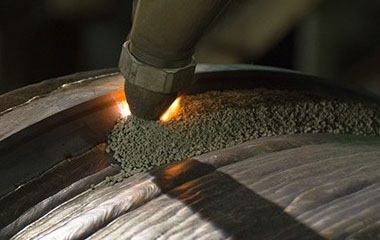
At Oldwelders, our submerged arc welding flux hj431 and other flux products are manufactured from premium raw materials like dolomite, bauxite, and cryolite, which are melted at 2000 °C to ensure exceptional chemical homogeneity. This process guarantees that every batch provides a stable arc, consistent slag detachability, and a predictable weld profile, enabling operators to maintain steady parameters and, consequently, controlled heat input for every weld.
Advanced Strategies for Heat Management
For shipyards striving for maximum efficiency and quality, advanced technologies offer even greater control over the thermal cycle during welding fabrication.
Pulsed Welding and Waveform Control
Modern inverter-based power sources offer sophisticated waveform control. In pulsed GMAW, the current rapidly alternates between a high peak current (for melting and penetration) and a low background current (to maintain the arc but reduce heat). This allows the molten weld pool to cool slightly during the background phase of each cycle. The net effect is a significant reduction in the overall heat input compared to a conventional spray transfer process at the same wire feed speed. This technology is invaluable for welding thinner plates, root passes, and materials sensitive to heat, minimizing distortion and preserving the properties of the HAZ.
Automation and Mechanization
The most effective way to control travel speed—the most sensitive variable in the heat input equation—is to remove human inconsistency. Mechanized solutions like welding tractors for SAW or FCAW, or fully robotic welding cells for repetitive sub-assemblies, provide perfectly consistent travel speeds. This ensures that the specified heat input is delivered uniformly along the entire length of the joint, resulting in unparalleled consistency and quality. Investing in an automatic welding machine can transform a shipyard's ability to manage heat input on critical components.
Partnering for Success in Large-Scale Shipbuilding Projects
Effectively managing heat input in shipyard welding is a complex challenge that requires a holistic approach, encompassing procedure development, process selection, operator training, and the use of reliable, high-performance equipment and consumables. A failure in any one of these areas can compromise the integrity of the entire structure.
As a trusted supplier to major shipbuilding markets in Brazil, Thailand, Australia, and Malaysia, Oldwelders understands the immense scale and quality demands of the industry. Our 1000-square-meter plant, equipped with six production lines, has the capacity to supply up to 100 tons of high-quality welding consumables per day, ensuring we can meet the demands of even the largest projects. With a standard lead time of 30 days and a manageable minimum order quantity of 1 ton, we are positioned to be a flexible and reliable partner in your supply chain.
By focusing on the fundamentals of heat input and partnering with a supplier committed to quality and consistency, shipyards can enhance structural integrity, reduce costly rework, and build vessels that are truly sea-worthy.