
What Is Electrode Core Wire Used For in Industrial Welding?
Understanding the Function and Application of Electrode Core Wire
In the world of industrial fabrication and construction, efficiency, quality, and reliability are paramount. The choice of welding consumable is a critical decision that directly impacts project timelines, structural integrity, and overall cost. While solid wires have their place, the versatility and high productivity of flux-cored wires make them an indispensable tool. Understanding the purpose and composition of an electrode core wire is the first step for any technical buyer or welding engineer looking to optimize their welding operations.
This comprehensive guide will break down the fundamental components of cored wires, explain how they function, and explore their most common industrial applications. As an ISO 9001 certified manufacturer with a global footprint, we understand the technical nuances that define a high-performance welding consumable.
What is an Electrode Core Wire? A Fundamental Breakdown
At its most basic, an electrode core wire is a composite, tubular welding electrode consisting of a metal sheath surrounding a core of flux and/or powdered metal and alloying elements. This construction is fundamentally different from a solid wire, which is a single, homogeneous piece of metal. This seemingly simple difference in design unlocks a wide range of performance characteristics that make cored wires exceptionally effective for specific applications.
Think of it as a highly engineered delivery system. The outer metal sheath, or strip, conducts the welding current and melts to become a significant part of the weld metal. The inner core, however, is where the true "science" happens. This carefully formulated mixture of materials performs multiple functions simultaneously during the welding process, from shielding the weld pool to refining its chemical and mechanical properties.
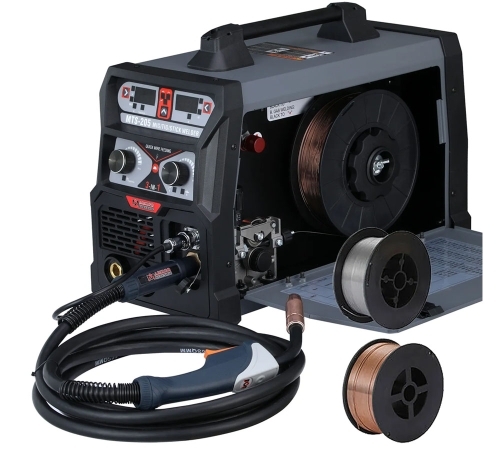
This tubular design allows for a much higher "fill percentage"—the ratio of core material to the total weight of the wire—than is possible with the thin coating on a shielded metal arc welding (SMAW) stick electrode. This high fill percentage enables higher deposition rates, meaning more weld metal can be put down in less time, directly boosting productivity on the shop floor or in the field.
The Role of Core Components in Welding Performance
The true advantage of a cored wire lies in its complex inner fill. While the outer sheath provides the current path and filler metal, the core materials are what control the arc characteristics, weld metallurgy, and overall quality of the finished joint. The formulation of this core is a precise science, utilizing high-quality raw materials to achieve consistent and reliable results.
The Outer Metal Sheath
The sheath is the component that makes contact with the welding gun's contact tip and carries the electrical current to the arc. It is typically made from a strip of mild or low-alloy steel that is formed into a tube and filled with the core ingredients. During welding, the sheath melts along with the core, contributing to the final weld deposit. The composition of the sheath is crucial as it forms the base of the weld metal's chemistry.
The Inner Core Fill: The "Brains" of the Wire
The inner core is a granular mix of various compounds, each with a specific purpose. At our 1000 square meter production facility, we utilize excellent raw ores like dolomite, bauxite, cryolite, and silica, which are melted at 2000 °C to produce the high-purity flux products that form the basis of these core materials. This ensures a consistent and slag-free performance. The core fill is responsible for several critical functions:
- Shielding: In self-shielded wires, components in the core vaporize in the arc to create a protective cloud of gas around the molten weld pool. This shielding gas displaces atmospheric oxygen and nitrogen, preventing porosity and embrittlement.
- Slag Formation: Other core elements melt to form a layer of slag that floats on top of the molten weld pool. This slag system protects the cooling weld metal from contamination, helps shape the weld bead, and can hold the molten puddle in place during out-of-position welding. It also slows the cooling rate, which can improve the mechanical properties of the weld.
- Deoxidizers and Denitrifies: Elements like silicon, manganese, aluminum, and titanium are often included in the core. They act as "scavengers," combining with any oxygen and nitrogen present in the weld pool to form harmless compounds that float out into theslag. This purifies the weld metal, resulting in a stronger, more ductile joint.
- Arc Stabilizers: Certain elements, such as potassium and sodium compounds, are added to help create a smooth, stable, and consistent welding arc. This reduces spatter and makes the wire easier for the welder to control, leading to higher-quality welds.
- Alloying Elements: The core is the perfect vehicle for introducing alloying elements like chromium, nickel, and molybdenum. This allows a single mild steel sheath to be used to create a wide variety of weld deposits with specific properties, such as increased strength, corrosion resistance, or high-temperature performance.
- Deposition Rate Enhancement: Some cores contain a high percentage of iron powder. This powder adds to the weld deposit without needing to pass through the arc, dramatically increasing the deposition rate compared to solid wires of the same diameter.
Types of Cored Wires and Their Shielding Mechanisms
Cored wires are broadly categorized into two main types based on how they shield the weld pool from the atmosphere: gas-shielded and self-shielded. The choice between them depends entirely on the application, environment, and desired outcome.
Gas-Shielded Flux-Cored Arc Welding (FCAW-G)
As the name implies, gas-shielded wires require an external supply of shielding gas, typically 100% CO2 or a mixture of Argon and CO2. The core in these wires contains fluxing agents, deoxidizers, and alloying elements, but relies on the external gas for primary shielding. This dual-protection system results in a very smooth and stable arc, low spatter levels, and excellent weld bead appearance, often resembling the finish of a spray-transfer GMAW (MIG) weld.
FCAW-G is favored for high-quality fabrication in shops and factories where environmental conditions can be controlled. It is widely used in pressure vessel manufacturing, heavy equipment production, and structural steel fabrication. The process is often performed using a versatile mig-mag-tig welding machine configured for flux-cored welding.
Self-Shielded Flux-Cored Arc Welding (FCAW-S)
Self-shielded wires are designed for simplicity and portability. The core contains all the necessary ingredients to generate a protective shielding gas cloud from the heat of the arc. This completely eliminates the need for an external gas cylinder, regulator, and hose, making it the ideal choice for outdoor and field applications where wind can easily blow away an external shielding gas.
While the arc may be less smooth and produce more spatter than gas-shielded wires, FCAW-S offers robust performance, deep penetration, and very high deposition rates. It excels in windy conditions and is the go-to process for bridge construction, high-rise building erection, outdoor equipment repair, and pipeline welding. Certain self-shielded wires, much like some of our popular aws e6013 welding electrodes, are designed for exceptional all-positional capabilities.
Key Industrial Applications and Advantages
The unique characteristics of the electrode core wire make it suitable for a wide range of demanding industries. Its ability to deliver high deposition rates translates directly into increased productivity, a critical factor in large-scale projects. We have seen this firsthand in supplying welding consumables to major industrial markets in Brazil, Thailand, Australia, and Malaysia, where project timelines are often aggressive.
Common applications include:
- Structural Steel Fabrication: The high deposition rates and deep penetration are perfect for welding the thick plates used in buildings and infrastructure.
- Shipbuilding and Offshore Platforms: Cored wires provide the strength and toughness required for marine applications, and self-shielded versions are invaluable for on-site construction and repair.
- Heavy Equipment Manufacturing: The process is used extensively for fabricating frames and components for earthmoving equipment, cranes, and agricultural machinery.
- Bridge Construction: The portability of the self-shielded process and its tolerance for outdoor conditions make it a primary choice for this sector.
- General Repair and Maintenance: The versatility of cored wires allows for effective repairs on a variety of steel thicknesses and types, often with minimal surface preparation.
Selecting the Right Wire for Your Application
Choosing the correct electrode core wire is crucial for achieving optimal results. The decision should be based on a thorough analysis of the project requirements. Factors to consider include:
- Base Material Composition: The wire's chemistry must be compatible with the metal being welded.
- Mechanical Property Requirements: Ensure the wire can produce a weld with the necessary tensile strength, impact toughness, and ductility specified by the engineering design.
- Welding Position: Some wires are designed for flat and horizontal welding only, while others are formulated for all-position capabilities.
- Welding Environment: Choose a self-shielded wire for windy outdoor conditions and a gas-shielded wire for controlled indoor environments where bead appearance is critical.
- Available Equipment: Confirm that your welding machine has the appropriate voltage, amperage, and polarity settings for the selected wire.
Beyond these technical factors, supply chain reliability is essential. For large-scale operations, partnering with a manufacturer capable of consistent output is non-negotiable. With six production lines and a capacity to supply 100 tons per day, Oldwelders provides the supply chain security that major industrial projects demand. Our commitment to quality is validated by our ISO 9001 certification, ensuring that every spool of wire meets stringent performance standards.
Ultimately, the electrode core wire is a powerful tool for modern welding. Its sophisticated design offers a blend of high productivity, excellent weld quality, and remarkable versatility that solid wires cannot match in many applications. By understanding its components and functions, you can make an informed decision that enhances the quality and efficiency of your welding operations.