
How to Source SJ101 Flux for EL8 and EM12K Wire?
Understanding How to Source SJ101 Flux for EL8 and EM12K Wire Combinations
For B2B buyers engaged in submerged arc welding (SAW) for structural steel applications, selecting the correct flux-wire combination is paramount. The choice directly impacts weld quality, productivity, and ultimately, project success. This guide focuses on a critical component: welding fluxes, specifically addressing how to source SJ101 Flux for optimal performance with EL8 and EM12K wires. Understanding the technical specifications and procurement considerations for these consumables is essential for preparing robust RFQs and qualifying suppliers effectively.
What is SJ101 Flux and Its Key Characteristics?
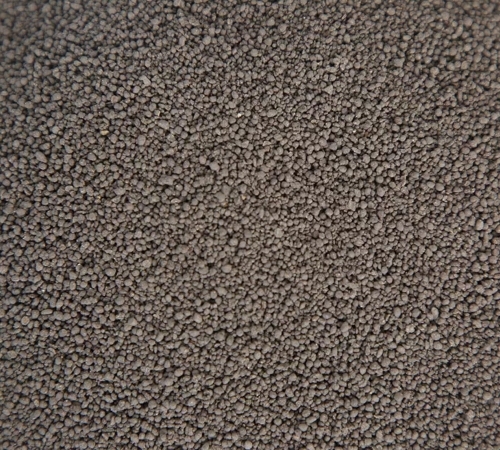
SJ101 Flux is a widely recognized fused flux, primarily designed for submerged arc welding. Its unique chemical composition and granular structure contribute significantly to its performance. Fused fluxes, like SJ101, are manufactured by melting raw materials at high temperatures, then crushing and sieving the resulting glass-like product. This process ensures homogeneity and reduces moisture absorption, leading to stable arc performance and consistent weld metal chemistry.
Key characteristics of SJ101 Flux include:
- Composition: Typically a neutral to slightly basic flux, featuring a manganese-silicate base. This composition promotes good deoxidation and desulfurization, leading to sound weld metal with excellent mechanical properties. It often contains specific additions to enhance arc stability and bead appearance.
- Grain Size: The controlled grain size of SJ101 Flux ensures consistent flow and coverage, which is crucial for uniform slag removal and preventing porosity. Different applications might benefit from slight variations in grain size, though standard grades are designed for broad utility.
- AC/DC Operation: SJ101 Flux is generally suitable for both AC and DC welding operations. Its robust formulation provides stable arc characteristics regardless of the current type, offering flexibility in welding procedures. This versatility makes it a preferred choice for various industrial applications, from shipbuilding to heavy fabrication.
- Slag Release: Fused fluxes are known for their excellent slag detachability, and SJ101 Flux is no exception. This characteristic contributes to faster post-weld cleaning, reducing overall production time and costs.
The consistent quality and performance of SJ101 Flux are critical for achieving reliable welds. As an ISO 9001 certified manufacturer, Oldwelders ensures that our welding materials, including fluxes, meet stringent international standards. Our meticulous approach begins with the selection of excellent raw materials such as dolomite, bauxite, cryolite, silica, and fluorine ore, which are melted at 2000 °C to create our high-quality flux products, demonstrating our commitment to superior manufacturing practices.
Matching SJ101 Flux with EL8 and EM12K Wires for Optimal Performance
The synergy between the flux and the welding wire is the cornerstone of successful submerged arc welding. SJ101 Flux is commonly paired with solid wires such as EL8 and EM12K, each offering distinct advantages depending on the application and desired mechanical properties.
Understanding EL8 Wire Compatibility
EL8 is a low-carbon, manganese-silicon solid wire, commonly used for welding mild and low-alloy steels. When combined with SJ101 Flux, it typically yields welds with good strength and ductility, suitable for general structural fabrication. This combination is often chosen for single-pass and multi-pass welding of thinner sections where moderate strength is acceptable. Key considerations:
- Steel Grades: Ideal for ASTM A36, A283 Grade C, A570 Grade 36, and similar mild steels.
- Mechanical Properties: Expect tensile strengths in the range of 60-70 ksi (415-485 MPa) and yield strengths around 50-60 ksi (345-415 MPa), with elongation typically above 22%.
- Polarity: Compatible with both AC and DC electrode positive (DCEP) welding, offering flexibility.
- Applications: General structural welding, pressure vessels, automotive components, and light fabrication.
Understanding EM12K Wire Compatibility
EM12K is a higher manganese-silicon solid wire compared to EL8, designed for welding medium-strength steels. Its combination with SJ101 Flux provides enhanced tensile and yield strength, making it suitable for more demanding applications. This pairing is often preferred for thicker sections and structural components requiring superior mechanical properties.
- Steel Grades: Excellent for ASTM A572 Grade 50, A516 Grade 70, and other medium-strength, low-alloy structural steels.
- Mechanical Properties: Delivers higher tensile strengths, typically 70-80 ksi (485-550 MPa), and yield strengths of 60-70 ksi (415-485 MPa), with good impact toughness.
- Polarity: Primarily used with DCEP for deeper penetration and better bead control, though AC can also be employed.
- Applications: Heavy structural fabrication, bridge construction, shipbuilding, pressure vessel fabrication, and industrial machinery.
When selecting between EL8 and EM12K with SJ101 Flux, consider the base metal's mechanical property requirements, joint design, and welding procedures. Pre-qualification testing with specific steel grades and joint configurations is always recommended to validate the chosen flux-wire combination for your specific application.
Ensuring Quality and Consistency in Your SJ101 Flux Supply Chain
The integrity of your welding operations hinges on the consistent quality of your consumables. Sourcing high-quality SJ101 Flux necessitates a careful evaluation of potential suppliers, focusing on their manufacturing processes, quality control, and supply chain reliability. Oldwelders is committed to providing customers in markets like Brazil, Thailand, Australia, and Malaysia with welding consumables that meet exacting standards.
Supplier Qualification and Manufacturing Standards
A reputable supplier will adhere to international quality management systems. Our ISO 9001 certification underscores our dedication to consistent product quality and customer satisfaction. This certification verifies that our processes, from raw material inspection to final product testing, are systematically controlled and continuously improved. When evaluating suppliers, inquire about their certifications, internal quality audits, and procedures for handling non-conformities.
The manufacturing process for SJ101 Flux involves precise control over raw material selection, melting temperatures, and granulation. Our plant, covering an area of 1000 square meters, features six production lines, enabling us to supply up to 100 tons a day. This extensive capacity ensures that large-scale orders can be fulfilled efficiently without compromising quality. We pride ourselves on using only excellent dolomite, bauxite, cryolite, silica, fluorine ore, and other high-grade ores, which are melted at 2000 °C to produce our flux products. This rigorous material selection and high-temperature processing guarantee the chemical homogeneity and consistent performance critical for SJ101 Flux.
Quality Control and Testing
Robust quality control measures are non-negotiable. For SJ101 Flux, this includes:
- Chemical Analysis: Regular testing of the flux composition to ensure it meets specifications and provides the desired weld metal chemistry.
- Physical Properties: Verification of grain size distribution, bulk density, and flow characteristics to ensure consistent feeding and coverage during welding.
- Welding Performance Tests: Actual welding trials with compatible wires (like EL8 and EM12K) to assess arc stability, slag detachability, bead appearance, and mechanical properties of the weld metal. This often involves destructive and non-destructive testing (NDT) of test coupons.
- Moisture Content: Checking for low moisture absorption, which is critical for preventing hydrogen-induced cracking and porosity in welds. Proper packaging also plays a vital role in maintaining low moisture levels during storage and transit.
Engaging with suppliers who can provide detailed Certificates of Analysis (CoA) and demonstrate a proactive approach to quality assurance will significantly reduce risks in your supply chain. We recommend requesting sample batches for internal testing and qualification before committing to bulk orders, especially for critical applications.
Practical Considerations for SJ101 Flux Application and Qualification
Beyond sourcing, the effective application and qualification of SJ101 Flux with EL8 and EM12K wires require a comprehensive understanding of welding parameters, pre-qualification processes, and post-weld evaluation. These steps ensure that the chosen consumables deliver the expected performance in real-world production environments.
Optimizing Welding Parameters
The performance of any flux-wire combination, including SJ101 Flux with EL8 or EM12K, is highly dependent on optimized welding parameters. Factors such as current (amperage), voltage, travel speed, and electrode stick-out must be carefully balanced to achieve the desired weld profile, penetration, and mechanical properties. Manufacturers often provide recommended parameter ranges, but fine-tuning is typically required based on specific joint designs, base metal thickness, and equipment capabilities.
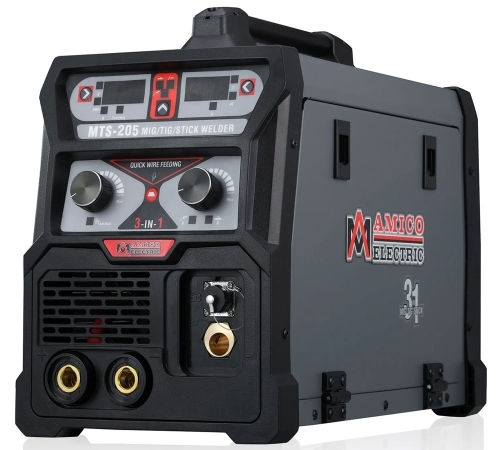
- Current: Higher currents generally increase penetration and deposition rates. For specific applications, a arc welding machine with precise current control is essential.
- Voltage: Voltage primarily influences arc length and bead width. Higher voltages result in a wider, flatter bead and shallower penetration.
- Travel Speed: Slower speeds increase heat input and penetration, while faster speeds can lead to narrower beads and potential undercut.
- Electrode Stick-out: Affects resistance heating of the wire and can influence deposition rates and penetration.
It is crucial to establish a robust Welding Procedure Specification (WPS) that details all parameters and ensures repeatability across your production lines. This document serves as a guide for welders and a reference for quality control.
Pre-Qualification and Post-Weld Testing
Before full-scale production, a rigorous pre-qualification process is essential. This involves welding test coupons using the chosen SJ101 Flux and wire (EL8 or EM12K) on the target base material, followed by comprehensive testing. Testing typically includes:
- Visual Inspection: Checking for surface defects such as porosity, undercut, and proper bead profile.
- Non-Destructive Testing (NDT): Radiography, ultrasonic testing, magnetic particle testing, or dye penetrant inspection to detect internal defects.
- Destructive Testing:
- Tensile Tests: To measure ultimate tensile strength and yield strength.
- Bend Tests: To assess ductility and fusion.
- Impact Tests (e.g., Charpy V-notch): To evaluate toughness at various temperatures, especially critical for low-temperature service applications.
- Hardness Tests: To measure the hardness of the weld metal, heat-affected zone (HAZ), and base metal.
These tests confirm that the flux-wire combination, when applied with your specific welding procedures, meets all applicable industry codes and project specifications. Documenting these results is vital for compliance and future reference.
Why Choose Oldwelders for Your SJ101 Flux Requirements
Selecting the right partner for your welding consumables is as critical as selecting the consumables themselves. At Oldwelders, we understand the demands of B2B procurement and the necessity for reliability, quality, and technical support. Our position as a trusted supplier of welding fluxes, including SJ101 Flux, is built on a foundation of rigorous standards and extensive manufacturing capabilities.
We are an ISO 9001 certified manufacturer, a testament to our unwavering commitment to quality management systems across all operations. Our state-of-the-art facility spans 1000 square meters and houses six advanced production lines, providing a daily capacity of 100 tons. This substantial infrastructure ensures we can meet high-volume orders for SJ101 Flux and other welding products, guaranteeing consistent supply to our clients worldwide.
Our dedication to quality begins at the source. We meticulously select excellent raw materials such as dolomite, bauxite, cryolite, silica, and fluorine ore, processing them at temperatures up to 2000 °C to produce fluxes with superior chemical homogeneity and performance characteristics. This meticulous approach ensures that every batch of SJ101 Flux you receive delivers predictable and reliable results when paired with EL8 and EM12K wires.
Oldwelders serves a global clientele, with established markets including Brazil, Thailand, Australia, and Malaysia. We understand the specific requirements and logistical challenges of international supply chains, offering professional support to ensure seamless procurement and delivery. When you choose Oldwelders, you are partnering with a knowledgeable and reliable supplier dedicated to optimizing your submerged arc welding operations with high-quality SJ101 Flux.