
Verify HJ431 Flux Suppliers by Fusion and Sieve Records
Industrial Buyers Can Verify HJ431 Flux Suppliers by Reviewing Fusion and Sieve Records
For industrial buyers and importers, the consistent quality of welding consumables is paramount to operational efficiency and the integrity of finished products. Among these, welding fluxes, particularly the HJ431 Flux, play a critical role in Submerged Arc Welding (SAW) applications. Ensuring a reliable supply of high-quality HJ431 Flux requires more than just reviewing product specifications; it demands a deep dive into a supplier's manufacturing processes and quality control documentation. This article outlines how to effectively vet potential HJ431 Flux suppliers by focusing on crucial production records related to fusion consistency and particle size distribution.
At Oldwelders, our commitment to quality is foundational, reflected in our ISO 9001 certification, which assures our partners of rigorous quality management systems. Understanding the intricacies of manufacturing processes, such as the precise melting of raw materials at 2000 °C, allows us to deliver welding materials that consistently meet stringent industrial demands.
Understanding the Critical Role of HJ431 Flux in Submerged Arc Welding
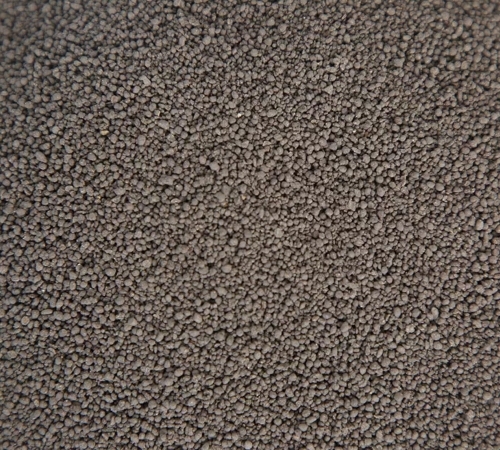
The HJ431 Flux is a fused type flux, widely recognized for its excellent welding performance and metallurgical properties in submerged arc welding. Fused fluxes are produced by melting a mixture of raw materials at high temperatures, followed by cooling and crushing into granular particles. This process ensures a homogeneous composition, which is vital for stable arc performance, consistent weld bead appearance, and reliable mechanical properties of the weld metal.
Specifically, HJ431 Flux contributes to several key aspects of the SAW process:
- Arc Stability: A consistent flux composition promotes a stable arc, reducing spatter and ensuring smooth material transfer.
- Weld Metal Quality: The chemical composition of the flux directly influences the chemical composition and mechanical properties of the weld metal, including tensile strength, impact toughness, and ductility.
- Slag Detachability: Proper flux formulation ensures that the slag formed during welding is easily removable, reducing post-weld cleaning time.
- Bead Shape and Appearance: Consistent flux properties contribute to uniform weld bead geometry and a desirable surface finish.
The raw materials that constitute high-quality HJ431 Flux are meticulously selected. For instance, at Oldwelders, we utilize excellent dolomite, bauxite, cryolite, silica, and fluorine ore. These materials undergo a precise melting process at 2000 °C to create a perfectly fused product, ensuring the optimal performance characteristics that industrial applications demand.
Why Fusion Consistency is Paramount for HJ431 Flux Performance
The fusion process is at the heart of producing high-quality fused fluxes like HJ431 Flux. It involves melting the various raw ingredients together into a homogeneous liquid, which is then cooled and granulated. This melting ensures that all elements are uniformly distributed throughout the flux particles, preventing segregation and ensuring consistent performance from one batch to the next.
Inconsistent fusion can lead to significant problems in welding operations:
- Variable Chemical Composition: If the raw materials are not fully and uniformly melted, different particles within the same batch may have varying chemical compositions. This directly impacts the metallurgical properties of the weld metal, leading to unpredictable strength, hardness, or corrosion resistance.
- Poor Arc Stability: Non-homogeneous flux can cause erratic arc behavior, leading to increased spatter, porosity, and an uneven weld bead.
- Inconsistent Slag Removal: Variations in slag properties due to poor fusion can make slag removal difficult, increasing cleanup time and potentially leading to defects if slag inclusions occur.
- Reduced Mechanical Properties: Ultimately, inconsistent fusion compromises the mechanical integrity of the weld, potentially leading to premature failure in critical applications.
To verify fusion consistency, industrial buyers should request detailed production records. These include elemental analysis reports for samples taken from different points within a production batch, demonstrating uniform distribution of key elements. Suppliers should be able to provide evidence of controlled melting temperatures and cooling rates, showing adherence to strict process parameters. Consistent data across multiple batches is a strong indicator of a reliable manufacturing process for submerged arc welding flux hj431.
The Importance of Sieve Analysis for Optimal Particle Size Distribution
After the fused material is cooled and crushed, it undergoes a crucial step: sizing through sieve analysis. This process separates the flux particles into specific size ranges, ensuring an optimal particle size distribution (PSD). The PSD of HJ431 Flux significantly influences its flowability, bulk density, coverage over the weld pool, and overall performance.
An improper particle size distribution can lead to several operational challenges:
- Segregation: If there's a wide range of particle sizes, finer particles can segregate from coarser ones during handling and storage. This leads to inconsistent flux delivery to the weld pool, affecting arc stability and weld quality.
- Poor Flowability: Too many fine particles can reduce flux flowability, leading to bridging in the hopper and inconsistent feeding. Conversely, excessively coarse particles might not provide adequate coverage.
- Inconsistent Melting: Particles of different sizes melt at different rates, potentially causing uneven melting, increased spatter, and an irregular weld bead.
- Slag Detachability Issues: The packing density and coverage provided by the flux's PSD can impact the formation and detachability of the slag.
To assess a supplier's control over particle size, buyers should request sieve analysis reports for each production batch. These reports should clearly indicate the percentage of flux particles retained on various sieve sizes, demonstrating adherence to specified ranges. Consistency in these reports across different batches is a strong signal of robust process control. A supplier capable of consistently producing large volumes, such as Oldwelders' capacity of 100 tons a day from its six production lines, typically possesses the advanced equipment and quality control protocols necessary for precise sieve analysis and consistent particle sizing. Furthermore, our minimum order quantity of 1 ton ensures that even smaller-scale industrial operations can access our high-quality materials.
Key Production Records to Request from HJ431 Flux Suppliers
When shortlisting HJ431 Flux suppliers for repeat consumption, requesting comprehensive production records is indispensable. These documents provide objective evidence of a manufacturer's adherence to quality standards and process control. Here are the critical records to demand:
- Certificates of Analysis (CoA): For every batch of HJ431 Flux, a CoA should be provided. This document details the chemical composition, particle size distribution, and other critical physical and metallurgical properties of that specific batch. It should confirm that the product meets or exceeds industry standards.
- Material Safety Data Sheets (MSDS): While not directly related to performance, an up-to-date MSDS is crucial for safety compliance and understanding handling requirements.
- Quality Control (QC) Reports: Request specific QC reports related to fusion consistency and sieve analysis. These reports should ideally show not just pass/fail results but also the raw data and acceptable tolerance ranges. Trend data over time for these parameters can be particularly insightful, revealing the consistency of a supplier's manufacturing process.
- Production Process Documentation: While proprietary, a reputable supplier should be able to provide general documentation outlining their manufacturing process, including details on raw material sourcing, melting temperatures, cooling methods, and granulation techniques. This demonstrates transparency and a structured approach to production.
- ISO 9001 Certification: A valid ISO 9001 certification indicates that the supplier has implemented a robust quality management system, ensuring consistent processes and continuous improvement. Oldwelders proudly holds this certification, underscoring our commitment to quality across all our welding machine and consumable offerings.
By scrutinizing these documents, buyers can gain a clear understanding of a supplier's manufacturing capabilities and their commitment to producing a consistently high-quality HJ431 Flux. This due diligence reduces the risk of receiving inconsistent batches that could negatively impact production quality and efficiency.
Partnering with a Reliable HJ431 Flux Manufacturer for Global Supply
Choosing the right HJ431 Flux supplier is a strategic decision that impacts your long-term operational success. A trustworthy partner offers not only superior product quality but also reliable supply chain management and technical support.
Oldwelders stands as a leading manufacturer of welding consumables, including high-performance HJ431 Flux. Our state-of-the-art plant, covering an area of 1000 square meters and equipped with six production lines, boasts a daily supply capacity of 100 tons. This extensive manufacturing capability ensures that we can meet the demands of large industrial projects and provide consistent supply to our global partners.
We understand the importance of timely delivery, which is why we maintain an efficient lead time of 30 days for our products, ensuring that your operations remain uninterrupted. Our minimum order quantity of 1 ton makes our premium HJ431 Flux accessible to a wide range of industrial clients, from specialized workshops to large-scale fabrication facilities. Our established presence in target markets such as Brazil, Thailand, Australia, and Malaysia further solidifies our position as a reliable international supplier.
By partnering with Oldwelders, industrial buyers gain access to a supplier that prioritizes:
- Proven Quality: Backed by ISO 9001 certification and meticulous quality control protocols, from raw material selection to final product testing.
- Consistent Performance: Our rigorous processes, including precise fusion at 2000 °C and advanced sieve analysis, guarantee batch-to-batch consistency for our HJ431 Flux.
- Reliable Supply: With a significant production capacity and efficient logistics, we ensure your orders are fulfilled promptly and consistently.
- Global Reach: Supporting your operations wherever you are, with established distribution channels in key industrial regions.
In conclusion, the verification of HJ431 Flux suppliers through detailed examination of fusion and sieve records is not merely a formality; it is a critical step in securing consistent welding quality and operational efficiency. Oldwelders is dedicated to providing transparent documentation and consistently high-quality HJ431 Flux, empowering our partners with the confidence to achieve superior welding results.