
Understanding Welding Flux and Its Shielding Properties | Oldwelders
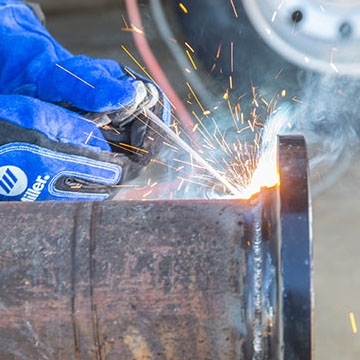
Welding flux is essential for protecting the integrity of molten metal.
In the world of industrial fabrication and construction, the quality of a weld is paramount. A single faulty seam can compromise the structural integrity of an entire project, leading to costly rework or catastrophic failure. At the heart of achieving a sound, durable weld lies a critical, yet often misunderstood, consumable: the welding flux. This granular material is far more than a simple powder; it is a complex chemical compound engineered to perform several vital functions simultaneously. Its primary role is to create a protective barrier around the molten weld pool, shielding it from the harmful effects of the surrounding atmosphere.
Without this protection, atmospheric gases like oxygen, nitrogen, and hydrogen would readily dissolve into the molten metal. This contamination leads to severe defects such as porosity (gas pockets), embrittlement, and reduced tensile strength. Understanding how flux accomplishes this shielding action is crucial for welding engineers, procurement managers, and quality control specialists aiming to optimize their welding processes for maximum strength and reliability. This article will delve into the mechanisms by which flux protects the weld, the different ways it contributes to weld chemistry, and what to look for in a high-quality consumable supplier.
The Dual-Action Shielding Mechanism: Gas and Slag
The protective power of a quality welding flux comes from a sophisticated, two-pronged approach that activates under the intense heat of the welding arc. It creates both a gaseous shield and a liquid slag cover, which work in concert to isolate the weld from the environment completely.
1. Gaseous Shield Formation
As the welding arc is initiated, its extreme temperature—often exceeding several thousand degrees Celsius—causes certain components within the flux to decompose and vaporize. This process, known as thermal decomposition, releases a plume of inert or reducing gases. These gases are denser than the surrounding air and form a protective envelope around the arc and the molten weld puddle.
This gaseous shield displaces the atmospheric air, primarily oxygen and nitrogen, preventing them from coming into contact with the liquid metal. Oxygen is particularly detrimental as it readily forms oxides with the molten iron and alloying elements, creating inclusions that weaken the final weld. Nitrogen can cause porosity and embrittlement, especially in certain types of steel. The gas shield acts as the first line of defense, ensuring the molten metal transfer across the arc and the initial solidification occur in a controlled, non-reactive environment.
2. Slag Layer Formation
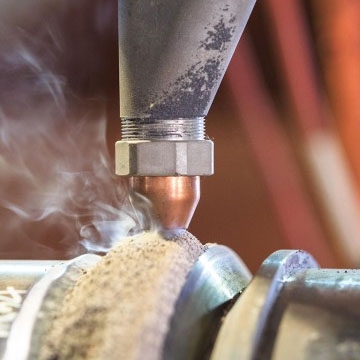
Simultaneously, the remaining mineral components of the flux melt to form a liquid blanket of molten slag. Because the slag is less dense than the molten steel, it naturally floats to the surface of the weld pool, creating a robust physical barrier. This slag layer serves multiple critical purposes:
- Secondary Shielding: It provides a continuous, impenetrable shield over the weld pool, offering protection long after the arc has moved on and while the weld is still hot enough to react with the atmosphere. This is crucial as the weld cools and solidifies.
- Thermal Insulation: The slag blanket slows down the cooling rate of the weld bead. This controlled cooling is essential for refining the grain structure of the weld metal, which improves its mechanical properties, such as toughness and ductility, and reduces the risk of solidification cracking.
- Weld Bead Shaping: The viscosity and surface tension of the molten slag help to shape and support the molten weld metal, resulting in a smooth, uniform bead profile with a clean transition to the base metal. This is especially important in out-of-position welding.
- Impurity Removal: The liquid slag acts as a solvent, drawing out impurities like oxides and sulfides from the molten weld pool, effectively cleaning the metal as it solidifies. These trapped impurities are then removed when the hardened slag is chipped away after cooling.
The effectiveness of this dual-action system depends entirely on the chemical composition of the flux. A reliable manufacturer combines specific minerals to ensure both robust gas generation and the formation of a slag with the ideal melting point, viscosity, and density.
Beyond Shielding: The Chemical Functions of Welding Flux
While shielding is its primary purpose, the role of a high-performance welding flux extends deep into the metallurgy of the welding process. The formulation is carefully designed to actively improve the chemical composition and mechanical properties of the finished weld. This is where the true engineering of flux materials becomes apparent.
Deoxidation and Denitrification
Even with excellent shielding, a small amount of oxygen and nitrogen can enter the weld pool. To counteract this, fluxes are formulated with powerful deoxidizing and denitrifying agents, such as manganese, silicon, aluminum, or titanium. These elements have a higher affinity for oxygen and nitrogen than iron does. They readily react with any dissolved gases to form stable oxides and nitrides, which are then absorbed into the slag layer as microscopic inclusions, effectively purifying the weld metal. This chemical cleaning process is vital for preventing porosity and ensuring the weld achieves its specified mechanical strength.
Alloying Element Compensation and Addition
The intense heat of the welding arc can cause some essential alloying elements in the welding wire or base metal, like manganese and silicon, to be vaporized and lost. A well-designed flux can compensate for these losses by containing these elements in its formulation. As the flux melts, it transfers these elements into the weld pool, maintaining the desired chemical balance.
Furthermore, flux can be used to introduce new alloying elements to the weld, a process known as alloying via the flux. This allows fabricators to modify the properties of the weld metal to meet specific service requirements, such as increased hardness, corrosion resistance, or high-temperature strength, without needing a specialized, and often more expensive, welding wire. This capability provides significant flexibility in welding procedure design. Selecting the right quality welding materials is the first step in controlling this complex metallurgical process.
Manufacturing High-Quality Flux for Global Markets
The performance of any welding flux is directly tied to the quality of its raw materials and the precision of its manufacturing process. Inconsistent composition can lead to unpredictable shielding, poor slag detachability, and defects in the final weld. This is why sourcing from a certified and experienced manufacturer is critical for industrial applications.
At Oldwelders, we leverage a state-of-the-art production facility to ensure every batch of flux meets stringent quality standards. Our process begins with the selection of excellent raw materials, including dolomite, bauxite, cryolite, silica, and fluorine ore. These carefully sourced ores are the building blocks of a stable and effective flux formulation. Our commitment to quality is underscored by our ISO 9001 certification, a testament to our documented and repeatable manufacturing procedures.
The raw materials are melted at an extreme temperature of 2000 °C, ensuring a homogenous, fully fused product. This high-temperature process creates a glassy, non-hygroscopic (moisture-resistant) granular material with uniform chemical and physical properties. Our 1000 square meter plant, equipped with six production lines, has the capacity to supply 100 tons a day, ensuring a reliable supply chain for our partners in demanding markets such as Brazil, Thailand, Australia, and Malaysia. With a minimum order quantity of 1 ton and a typical lead time of 30 days, we are structured to support large-scale industrial projects that depend on consistent, high-volume delivery of consumables like our submerged arc welding flux hj431.
Types of Flux and Their Practical Implications
Fluxes are not a one-size-fits-all product. They are categorized based on their manufacturing method and chemical composition (basicity index), which determines their suitability for different applications and materials.
Fused vs. Bonded (Agglomerated) Fluxes
Fused Fluxes: These are produced by melting all raw ingredients together, as described in our process. The resulting product is chemically uniform, non-hygroscopic, and offers excellent recycling stability because its composition does not change with reuse. Fused fluxes are ideal for high-productivity applications where consistency is key.
Bonded Fluxes: These are made by mixing powdered raw materials with a liquid binder (like potassium silicate) and then baking the mixture at a lower temperature to drive off moisture. This method allows for the easy addition of deoxidizers and alloying elements that would not survive a high-temperature fusion process. However, bonded fluxes are more hygroscopic and require proper storage and handling to prevent moisture absorption, which can introduce hydrogen into the weld and cause cracking.
Basicity Index (BI)
The chemical behavior of a flux is often described by its basicity index, which is the ratio of basic oxides (like CaO, MgO, BaO, CaF₂) to acidic oxides (like SiO₂, TiO₂).
- Acidic Fluxes (BI < 1.0): These fluxes generally offer excellent operational characteristics, such as a stable arc and easy slag removal. However, they provide less deoxidation and result in higher oxygen content in the weld metal, which can reduce toughness. They are often used for general-purpose welding where impact strength is not a critical requirement.
- Neutral Fluxes (BI ≈ 1.0): They offer a balance between operational characteristics and metallurgical properties.
- Basic Fluxes (BI > 1.5): These fluxes provide the best metallurgical properties. Their high concentration of basic oxides leads to a very clean weld metal with low oxygen content and excellent impact toughness, making them the preferred choice for critical applications like pressure vessels, offshore structures, and high-strength steel fabrication. However, they may have a more challenging arc to control and more difficult slag removal.
Choosing the correct type of welding flux is a critical decision that impacts not only the quality of the weld but also the efficiency of the entire welding operation. It requires a thorough understanding of the base material, the welding process (e.g., Submerged Arc Welding, Shielded Metal Arc Welding), and the in-service demands of the final product. Pairing the right flux with a compatible professional welding machine and wire is essential for achieving optimal results.