
Understanding Reuse Limits for Your SAW Flux Container
Understanding Reuse Limits for Your SAW Flux Container
In high-volume Submerged Arc Welding (SAW) operations, the question of reusing unfused flux is a constant balance between economic sense and quality assurance. While reclaiming flux can significantly reduce consumable costs, improper management introduces a substantial risk of weld defects, rework, and catastrophic failures. For quality managers and welding operators, establishing clear, data-driven limits on reclaimed flux is not just best practice—it's essential for maintaining structural integrity and operational efficiency. The key lies in understanding the contaminants, managing the process, and knowing when the contents of a flux container are no longer fit for purpose.
At Oldwelders, we understand the complexities of large-scale welding operations. From our 1000-square-meter plant, featuring six production lines with a capacity of 100 tons per day, we produce virgin welding fluxes of the highest consistency. This deep expertise in flux manufacturing informs our guidance on helping clients in markets from Brazil to Australia manage their entire flux lifecycle, ensuring that every weld meets stringent quality standards.
What is Reclaimed Flux and Why is its Management Critical?
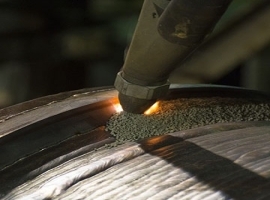
During the Submerged Arc Welding process, a thick layer of granular flux is deposited over the weld area. The heat from the arc melts a portion of this flux, which forms a protective slag blanket over the molten weld pool. Once the weld is complete and has cooled, this slag is removed. The unmelted, or "unfused," flux that remains is what can be collected for potential reuse. This is known as reclaimed flux.
The core challenge with reclaimed flux is that it is no longer in its original, pristine condition. The recovery process inevitably introduces contaminants and alters its physical properties. Failure to manage these changes can directly compromise the mechanical properties and integrity of the weld.
The primary risks associated with improperly managed reclaimed flux include:
- Chemical Contamination: The recovered flux can become mixed with mill scale, rust, grinding dust, oil, moisture, and fine metallic particles from the base material and consumables.
- Slag Entrapment: Crushed slag (fused flux) can be inadvertently mixed back in. Since slag has already undergone a chemical reaction, its reintroduction alters the intended composition of the active flux, potentially leading to porosity and inclusions.
- Changes in Particle Size Distribution (PSD): The mechanical action of recovery, handling, and transport breaks down flux granules, creating an excess of fine particles or "fines." This change in PSD can negatively affect arc stability and current flow, leading to inconsistent weld beads.
A disciplined management system is therefore not optional. It is the only way to harness the cost benefits of flux reclamation without sacrificing the quality and safety of the final product.

Establishing Safe Reuse Ratios and Procedures
There is no universal, one-size-fits-all ratio for mixing reclaimed flux with virgin flux. The appropriate ratio depends on the specific application, the welding code or standard being followed, the base materials, and, most importantly, the cleanliness and condition of the reclaimed flux itself. However, a common starting point in many industries is a mix of 80% new flux to 20% reclaimed flux. Some less critical applications might allow for a 50:50 mix, while critical structural or pressure vessel work may prohibit the use of reclaimed flux entirely.
Developing a Formal Procedure
To ensure consistency and safety, every facility that reclaims flux should operate under a formal, documented procedure. This aligns with the principles of quality management systems like ISO 9001, which we proudly hold. This procedure should meticulously detail every step of the process:
- Collection Method: Specify the use of vacuum systems, brushes, or other methods. Ensure that collection tools are clean and dedicated to this purpose.
- Initial Screening: Outline the process for removing large contaminants like slag chunks, wire clippings, and other debris. This is often done with a coarse mesh screen.
- Contaminant Separation: If applicable, describe the use of magnetic separators to remove metallic particles and fines.
- Storage and Labeling: Mandate the use of a dedicated, sealed, and clearly labeled flux container for reclaimed material. The label should indicate the date of reclamation and the flux type. Never mix different types of reclaimed flux.
- Mixing Ratio and Blending: Define the approved ratio of new-to-reclaimed flux and the method for thoroughly blending them before they are added to the welding machine's hopper.
- Testing and Qualification: For critical applications, the procedure should require periodic testing of welds made with the blended flux. This may involve chemical analysis of the weld deposit or mechanical testing to verify its properties meet specifications.
By formalizing this process, you transform flux reclamation from a risky, ad-hoc activity into a controlled and predictable part of your production workflow.
Key Contaminants That Compromise Weld Integrity
Understanding the specific threats that contaminants pose is crucial for any quality manager. Each type of impurity affects the weld in a distinct way, and recognizing these risks informs the design of an effective flux management program.
Slag and Fused Flux Particles
When melted flux solidifies, it becomes slag. Its chemical composition has been permanently altered. If crushed slag particles are mixed back into the unfused flux, they no longer perform their intended function. They do not provide the proper deoxidizers or alloying elements. Instead, they can become trapped in the weld pool, creating slag inclusions—a serious weld defect that acts as a stress riser and can initiate cracks.
Mill Scale, Rust, and Metallic Fines
Mill scale (iron oxides) from the surface of the steel plate is a very common contaminant. When introduced into the weld, it can increase the oxygen content, leading to porosity. It also can alter the final weld metal chemistry by increasing the silicon and manganese content beyond the specified limits, which can affect strength and toughness. Rust is even more dangerous as it contains hydrated iron oxide, introducing both oxygen and hydrogen.
Moisture and Hydrocarbons
Moisture is one of the most insidious contaminants. It can be absorbed from the atmosphere, especially in humid environments, or introduced via compressed air leaks in recovery systems. When subjected to the heat of the arc, water (H₂O) breaks down, releasing hydrogen. This atomic hydrogen can dissolve into the molten steel and lead to hydrogen-induced cracking (HIC), also known as cold cracking or delayed cracking. This is a particularly high risk in high-strength steels. Proper storage in a sealed flux container is the first line of defense, but for some flux types, re-baking in a calibrated oven may be necessary to drive off absorbed moisture. Our range of high-quality welding materials is manufactured and packaged to minimize moisture absorption from the start.
Excessive Fines and Altered Particle Size
As flux is handled, it degrades, and the proportion of fine particles increases. An excessive amount of fines in the flux burden can disrupt the smooth flow of the flux from the hopper to the weld joint. More critically, it can change the electrical characteristics of the flux blanket, leading to an unstable arc, voltage fluctuations, and an inconsistent weld bead profile. This can result in poor fusion and an undesirable bead shape. Screening the reclaimed flux to remove excessive fines is a critical quality control step.
Best Practices for Handling, Storing, and Testing
A robust flux reclamation program is built on a foundation of disciplined handling and storage practices. These steps are designed to minimize contamination at every stage and provide checkpoints to ensure the flux remains within acceptable limits.
Recovery and Cleaning
The best practice for flux recovery is a dedicated vacuum system. Ideally, the system should incorporate a heating element to keep the flux warm and dry, as well as a filter or separator to remove fines. Magnetic separators are also highly effective at removing ferrous contaminants like mill scale and metal dust. After recovery, the flux should be passed through a sieve or screen to remove any oversized slag particles that were not picked up by the vacuum.
The Importance of the Flux Container
Reclaimed flux should never be stored in open-top bins or bags. Use a dedicated, sealable flux container made of metal or durable plastic. These containers must be clearly labeled "Reclaimed Flux" and should also specify the flux type and brand (e.g., "Reclaimed HJ431"). This prevents accidental mixing of different flux types, which can have unpredictable effects on weld chemistry. Store the containers in a dry, climate-controlled area off the floor to prevent moisture absorption.
Re-baking and Flux Ovens
For certain types of flux, particularly basic fluxes used in high-strength applications, re-baking in a flux oven can be an effective way to remove absorbed moisture. However, this is not a universal solution. Crucially, you must consult the manufacturer's recommendations. Some flux types, especially certain active fluxes, can be damaged by re-baking, as it can alter their chemical composition. Over-baking or baking at the wrong temperature can be just as detrimental as using moist flux. If re-baking is part of your procedure, the oven must be calibrated and the process tightly controlled.
When to Discard Reclaimed Flux
Ultimately, there comes a point when reclaimed flux is no longer viable. Your quality procedure must define clear criteria for disposal. Flux should be discarded if:
- It is visibly contaminated with oil, grease, water, or excessive rust.
- It has been mixed with an unknown flux type.
- Weld qualification tests using the reclaimed blend fail to meet mechanical or chemical property requirements.
- It has been through a predetermined number of reclamation cycles (a policy some companies adopt for maximum safety).
While the goal is to reduce waste, the cost of a single failed weld far outweighs the savings from over-extending the life of your flux. This is a principle we emphasize when working with our partners in demanding markets like Malaysia and Thailand, where quality control is paramount.
Partner with a Flux Expert for Ultimate Weld Quality
Managing a reclaimed flux program requires diligence, expertise, and a commitment to quality. While recycling can offer cost advantages, it introduces variables that must be rigorously controlled. The most reliable path to consistent, high-integrity welds is to start with a superior virgin product.
At Oldwelders, we leverage our ISO 9001-certified processes to produce premium welding fluxes from the finest raw materials, including dolomite, bauxite, and cryolite, all melted at 2000°C for maximum purity and consistency. When you use a product like our submerged arc welding flux hj431, you are starting with a known, certified consumable, eliminating the uncertainties that come with reclaimed materials. Contact us today to learn how our high-performance welding consumables can enhance your operational efficiency and guarantee the quality of your most critical welds.