
How Brown Corundum Grade Affects Blast Profiles
How Brown Corundum Grade Affects Blast Profiles
Surface preparation is a critical foundational step in numerous industrial processes, especially before coating application, bonding, or welding materials. Achieving the correct surface profile, or anchor pattern, is paramount for the longevity and performance of subsequent processes. Among the various abrasive media available, Brown Corundum stands out as a highly effective and versatile choice due to its exceptional hardness and durability. However, the effectiveness of this abrasive is not solely dependent on its inherent properties; the specific grade chosen plays a significant role in determining the resulting blast profile.
For surface preparation engineers and abrasive users, understanding the relationship between Brown Corundum grade and blast profile is essential for optimizing operational efficiency and achieving desired outcomes. This article delves into how different F-grades of this powerful abrasive influence the texture and depth of a blasted surface. We will explore the characteristics of various grades, provide guidance on selecting the appropriate grade for specific applications, and discuss other critical factors that contribute to a successful blast profile. At Oldwelders, our commitment extends beyond providing superior welding machine and welding materials; we understand the foundational role of quality surface preparation. Our operations are governed by ISO 9001 standards, reflecting our dedication to quality across all our manufacturing processes, from advanced welding fluxes, produced from excellent dolomite, bauxite, and other ores melted at 2000 °C, to the general quality standards we uphold for industrial materials. This commitment ensures that partners in markets like Brazil, Thailand, Australia, and Malaysia receive products meeting the highest benchmarks.
Understanding Brown Corundum Abrasives
Brown Corundum, also known as Fused Aluminum Oxide (Al₂O₃), is a synthetic abrasive produced by fusing bauxite at extremely high temperatures in an electric arc furnace. This process creates a tough, angular, and highly durable material with a Mohs hardness of approximately 9. Its crystalline structure and chemical composition impart excellent abrasive qualities, making it ideal for a wide range of blasting applications, from heavy material removal to fine finishing.
The superior hardness of Brown Corundum allows it to effectively cut through various substrates, including steel, alloys, and other hard materials, achieving a clean surface and creating a mechanical anchor pattern crucial for coating adhesion. Its toughness means it resists fracturing, allowing for multiple recycling passes in blast cabinets and rooms, which contributes to cost-effectiveness and reduced waste. This durability makes it a preferred choice over softer abrasives when consistency and performance are paramount.
Beyond its physical properties, the angular shape of individual Brown Corundum particles is key to its abrasive action. When propelled at high velocity, these sharp edges create micro-indentations on the surface, removing contaminants and imparting a textured profile. The size and consistency of these particles, dictated by their grade, directly influence the nature of these indentations and, consequently, the final blast profile.
F-Grade Classification and Its Impact on Abrasive Performance
The particle size of abrasive grains is standardized globally by organizations like FEPA (Federation of European Producers of Abrasives). For fused aluminum oxide, including Brown Corundum, the "F" series (e.g., F12, F36, F120) denotes different grit sizes, primarily used for bonded and coated abrasives but also commonly adopted for blast media. A lower F-number indicates a coarser-grained material, while a higher F-number signifies a finer grit.
The F-grade directly correlates with the average particle size and the distribution of sizes within a batch. This grading is critical because particle size fundamentally dictates the energy transfer upon impact and the resulting surface roughness.
- Coarser Grades (e.g., F12 - F36): These grades consist of larger, heavier particles. When these larger particles strike a surface, they impart more kinetic energy, creating deeper and rougher anchor patterns. They are highly effective for aggressive cleaning, removing heavy rust, scale, old coatings, and preparing surfaces for thick protective coatings that require a significant mechanical bond.
- Medium Grades (e.g., F46 - F80): These grades offer a balance between aggressive cleaning and finer profiling. They are suitable for general surface preparation, removing moderate rust and paint, and achieving a profile suitable for standard coating systems.
- Finer Grades (e.g., F90 - F220): Comprising smaller, lighter particles, these grades produce shallower, smoother blast profiles. They are ideal for light cleaning, cosmetic finishing, deburring, and preparing surfaces for thinner coatings or applications where minimal material removal is desired. Finer grades are also often used for critical applications where precise surface roughness is required, such as aerospace components or delicate machinery parts.
Choosing the correct F-grade ensures that the abrasive action is appropriate for the substrate material and the subsequent application, preventing either insufficient surface preparation or excessive material removal that could compromise structural integrity or aesthetic finish.
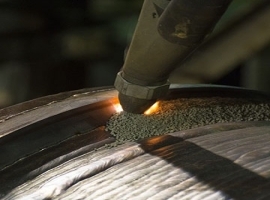
Selecting the Right Brown Corundum Grade for Desired Blast Profiles
To achieve optimal results in surface preparation, a meticulous selection of the Brown Corundum grade is essential. The desired blast profile, often measured in mils or micrometers (µm) of peak-to-valley height, dictates the appropriate abrasive choice. Below is a guide to selecting grades based on common profile requirements:
| Brown Corundum F-Grade | Typical Particle Size (µm) | Blast Profile (Peak-to-Valley) | Primary Application |
|---|---|---|---|
| F12 - F24 | 1700 - 710 | Coarse (100+ µm / 4+ mil) | Heavy scale removal, aggressive rust/paint stripping, preparing surfaces for very thick coatings (e.g., tank linings, heavy epoxy). |
| F30 - F46 | 600 - 355 | Medium-Coarse (50-100 µm / 2-4 mil) | General industrial cleaning, moderate rust/paint removal, preparing for standard-thickness coatings or applying submerged arc welding flux hj431. |
| F54 - F80 | 300 - 180 | Medium (25-50 µm / 1-2 mil) | General surface preparation, light rust/paint removal, decorative finishing, preparing for standard coatings or bonding. |
| F90 - F120 | 150 - 106 | Fine (12-25 µm / 0.5-1 mil) | Light cleaning, deburring, cosmetic finishing, preparing for thin film coatings, or precise mig-mag-tig welding machine applications. |
| F150 - F220 | 85 - 63 | Very Fine (<12 µm / <0.5 mil) | Precision finishing, delicate cleaning, polishing, aerospace components. |
While the F-grade is a primary determinant, operating variables significantly influence the final profile:
- Nozzle Pressure: Higher blast pressure increases particle velocity and impact force, generally leading to deeper and more aggressive profiles for any given grade. However, excessively high pressure can lead to premature abrasive breakdown.
- Nozzle Distance: The distance between the nozzle and the workpiece affects the spread and concentration of the abrasive stream. Closer distances result in more concentrated energy and a more aggressive profile, while greater distances spread the impact, leading to a broader, less aggressive effect.
- Angle of Attack: Blasting perpendicular (90 degrees) to the surface results in maximum impact energy transfer and the deepest profile. Reducing the angle (e.g., 45 degrees) creates a more sweeping action, which is effective for cleaning but produces a shallower profile.
- Dwell Time/Pass Speed: The speed at which the nozzle traverses the surface or the duration of exposure determines the number of abrasive impacts on a given area. Slower speeds or longer dwell times increase the profile depth.
Oldwelders understands the critical role of consistent material quality. Our extensive experience in manufacturing welding fluxes, including those produced from excellent dolomite and bauxite, underscores our expertise in material science and quality control. This dedication ensures that our partners, whether in Brazil, Thailand, Australia, or Malaysia, can rely on the performance of materials used in their applications, including those for surface preparation. Our plant, covering an area of 1000 square meters with six production lines, is capable of supplying 100 tons a day, demonstrating our capacity to meet global demand with consistent quality.
Beyond Grade: Other Factors Influencing Blast Profile
While the grade of Brown Corundum is a pivotal factor, a multitude of other variables interact to define the final blast profile. A comprehensive understanding of these elements is crucial for achieving repeatable and specified results.
Substrate Material Characteristics
The material being blasted significantly affects the outcome. Softer substrates, such as aluminum, will naturally yield a deeper profile with less aggressive media compared to harder materials like hardened steel. The initial surface condition – whether it has heavy mill scale, rust, old paint, or a smooth finish – also dictates the starting point and the amount of abrasive action required. For instance, removing thick, tenacious mill scale often necessitates a coarser grade and higher pressure than simply creating an anchor profile on a clean, previously blasted surface.
Blasting Equipment and Nozzle Configuration
The type of blasting equipment (e.g., direct pressure pot, suction feed cabinet, wheel blast machine) influences the abrasive's velocity and impact energy. Pressure blast systems generally deliver higher velocities and more aggressive profiles than suction systems. Furthermore, the nozzle type and size are critical. Venturi nozzles, for example, accelerate abrasives more efficiently than straight bore nozzles, leading to higher impact energy. The nozzle bore size also affects the air volume and abrasive flow, impacting the blast pattern and intensity. Consistent equipment maintenance, including regular nozzle replacement, is vital to maintain consistent performance.
Operating Parameters
As briefly touched upon earlier, fine-tuning operating parameters is essential.
- Blast Pressure: An increase in blast pressure directly translates to higher particle velocity and, consequently, a deeper and more angular profile. However, excessive pressure can lead to excessive abrasive breakdown, dust generation, and potential substrate damage.
- Standoff Distance: The distance between the nozzle and the workpiece affects the kinetic energy delivered to the surface. A closer distance concentrates the abrasive stream, leading to a more aggressive impact and a deeper profile. Conversely, increasing the standoff distance spreads the abrasive stream, reducing intensity and potentially creating a shallower, broader profile.
- Angle of Attack: The angle at which the abrasive stream hits the surface is critical. A perpendicular impact (90 degrees) maximizes energy transfer, resulting in the deepest profile. As the angle decreases, the impact becomes more glancing, leading to a shallower profile and a more cleaning-oriented action rather than profiling.
- Abrasive Flow Rate: The amount of abrasive introduced into the air stream impacts the density of impacts on the surface. An optimal flow rate ensures even coverage and efficient profiling. Too little abrasive can lead to streaking, while too much can create a cushion effect, reducing impact energy.
Abrasive Recycling and Contamination
For reusable abrasives like Brown Corundum, the recycling process is vital. Proper grit classification and removal of fines and oversized particles are necessary to maintain a consistent working mix. Over time, abrasives can degrade, becoming smaller and less angular, which will alter the blast profile. Contamination from removed coatings, rust, or other debris can also negatively impact performance and lead to inconsistent profiles or even damage to the substrate. Regular monitoring and maintenance of the abrasive media are paramount for sustained quality.
Understanding these interconnected factors allows operators to precisely control surface preparation, ensuring that the chosen Brown Corundum grade performs as expected, delivering the exact profile required for subsequent manufacturing steps.

Quality Assurance in Abrasive Selection
The efficacy of the surface preparation process, and by extension, the quality of the final product, hinges significantly on the consistency and reliability of the abrasive media used. For B2B partners, particularly those operating in demanding industrial sectors across target markets like Brazil, Thailand, Australia, and Malaysia, the assurance of quality is not merely a preference but a fundamental requirement. This is where a robust quality management system becomes indispensable.
At Oldwelders, our dedication to quality is institutionalized through our ISO 9001 certification. This internationally recognized standard for quality management systems ensures that our processes, from raw material sourcing to final product delivery, are rigorously controlled and continuously improved. While our primary product lines include arc welding machine, welding wire, welding rod, and specialized welding fluxes, our comprehensive approach to material science and manufacturing excellence extends to understanding the broader needs of industrial applications, including the critical role of quality abrasives.
Consider our production of welding fluxes: the raw materials—excellent dolomite, bauxite, cryolite, silica, and fluorine ore—are melted at 2000 °C to achieve specific properties. This meticulous control over input materials and manufacturing processes is analogous to the precision required for producing high-quality Brown Corundum. Just as impurities or inconsistencies in flux raw materials would compromise weld integrity, variations in Brown Corundum particle size or purity can lead to unpredictable blast profiles and compromised adhesion for coatings or other critical applications.
Our manufacturing facility, spanning 1000 square meters and housing six production lines, possesses the capacity to supply 100 tons a day. This scale, coupled with stringent quality control, allows us to meet high-volume demands while maintaining consistent product standards. For abrasive users, this translates to the confidence that each batch of Brown Corundum will perform predictably, minimizing rework, reducing material waste, and ensuring project timelines are met. The minimum order quantity of 1 ton also demonstrates our ability to serve businesses of various sizes, with a commitment to a 30-day lead time for general orders, ensuring efficient supply chain management for our partners.
Choosing a supplier committed to verifiable quality standards provides peace of mind. It ensures that the investment in abrasives contributes positively to the overall efficiency and quality of the manufacturing process, rather than introducing variables that could lead to costly failures. Our expertise in delivering reliable industrial products underscores our understanding of these critical B2B requirements.
Conclusion
The selection of the appropriate Brown Corundum grade is a fundamental decision that profoundly impacts the success of any surface preparation task. By understanding the direct correlation between F-grade, particle size, and the resulting blast profile, engineers and operators can make informed choices to achieve precise surface finishes required for optimal coating adhesion, bonding, or pre-welding preparation. However, merely selecting the correct grade is only part of the equation; factors such as blast pressure, nozzle distance, angle of attack, and the characteristics of the substrate material all play crucial roles in shaping the final outcome.
Oldwelders emphasizes the importance of consistent quality in all industrial materials. Our ISO 9001 certification and robust manufacturing processes, evident in our high-capacity production of welding fluxes and other welding materials, reflect our unwavering commitment to excellence. For our B2B partners in target markets like Brazil, Thailand, Australia, and Malaysia, this commitment translates into reliable performance and predictable results, ensuring that their foundational surface preparation steps are as robust as the final applications. By carefully considering both the Brown Corundum grade and operational parameters, industries can unlock superior surface preparation, laying the groundwork for durable and high-performing products.