
Understanding Electrode Flux Coating for Arc Stability
How Does Electrode Flux Coating Control Arc Stability?
For welding engineers and fabricators, achieving a stable, consistent arc is fundamental to producing high-quality, structurally sound welds. An erratic or unstable arc can lead to defects such as porosity, spatter, and incomplete fusion, compromising the integrity of the final product. While factors like power source settings and operator skill play a role, the primary control agent for arc behavior in Shielded Metal Arc Welding (SMAW) is the electrode flux coating. This engineered layer is far more than a simple protective covering; it is a complex chemical system designed to actively manage the physics of the electric arc. Understanding the mechanisms by which it operates is crucial for process selection, troubleshooting, and ensuring repeatable, high-quality results in demanding industrial applications.
This article provides a detailed examination of the functions of the flux coating, breaking down its composition and the specific ways it influences arc initiation, stability, and overall weld quality. By delving into the science of ionization, gas shielding, and slag control, professionals can make more informed decisions when selecting consumables for their specific materials and applications.
The Fundamental Composition of Electrode Flux Coating
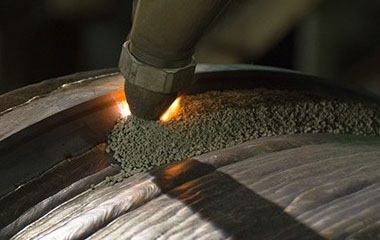
The performance of a welding electrode is dictated by the precise formulation of its outer coating. This coating is a carefully balanced mixture of various minerals, metallic compounds, and organic materials, each serving a distinct purpose. Manufacturing these coatings requires exceptional control over raw material quality and processing, a standard we uphold in our ISO 9001 certified facility. The raw materials, including high-purity dolomite, bauxite, silica, and fluorine ore, are melted at temperatures reaching 2000°C to ensure homogeneity and create the foundational fused flux. This is then crushed and blended with other components to create the final coating mixture.
The primary ingredient categories include:
- Arc Stabilizers: These are typically alkali metal compounds, such as sodium silicate and potassium silicate. These materials have a low ionization potential, meaning they readily release electrons when subjected to the high temperatures of the arc. This abundance of free electrons creates a more conductive path for the welding current, making the arc easier to start and maintain, especially with AC power sources.
- Slag Formers: Ingredients like silica, manganese oxide, rutile (titanium dioxide), and fluorspar melt to form a liquid slag that covers the molten weld pool. This slag serves multiple functions: it protects the hot metal from atmospheric contamination, helps shape the weld bead contour, and controls the cooling rate of the weld, which influences its final metallurgical properties.
- Gas Formers: Materials such as cellulose and calcium carbonate decompose in the intense heat of the arc. This decomposition releases a shield of gases, primarily carbon dioxide (CO2), carbon monoxide (CO), and hydrogen (H2). This gaseous shield displaces the surrounding air (oxygen and nitrogen), preventing the formation of brittle oxides and nitrides in the weld metal.
- Deoxidizers: Elements like ferromanganese and ferrosilicon are included in the coating to react with any oxygen present in the molten weld pool. This process of deoxidation removes dissolved oxygen, preventing it from forming gas pockets (porosity) as the weld solidifies.
- Alloying Elements: For specific applications, metallic powders such as chromium, nickel, or molybdenum can be added to the coating. These elements are transferred across the arc into the weld pool, modifying the chemical composition and mechanical properties of the finished weld to meet specific requirements for strength, corrosion resistance, or hardness.
Key Mechanisms for Arc Stabilization
The carefully formulated components of the flux coating work in concert to stabilize the welding arc through several interconnected physical and chemical mechanisms. A deep understanding of these processes allows welders and engineers to predict electrode behavior and optimize welding parameters.
Ionization of the Arc Plasma
The most direct way the flux coating enhances stability is by controlling the electrical conductivity of the arc plasma. An electric arc is essentially a sustained discharge of electricity through a superheated, electrically conductive gas known as plasma. For the arc to remain stable, this plasma must have a consistent supply of charge carriers (electrons and ions).
This is where arc stabilizers like potassium and sodium compounds are critical. These elements have very low ionization energies. As the flux coating vaporizes in the arc's heat, these elements are introduced into the arc column. The high temperature easily strips electrons from the potassium and sodium atoms, flooding the arc plasma with free electrons. This significantly lowers the voltage required to sustain the arc, resulting in a much smoother, more stable, and less "fluttery" electrical discharge. It also makes arc re-ignition much easier after a momentary interruption, which is essential for techniques like skip welding or tacking.
Gas Shielding and Arc Constriction
The gases produced by the decomposition of components like cellulose and calcium carbonate do more than just protect the weld pool. They also have a profound effect on the arc's physical shape and energy density. As these gases are generated at the electrode tip, they create a high-velocity stream flowing outwards.
This gas flow acts as a constricting force on the arc column, concentrating the arc's energy into a smaller, more focused area on the workpiece. This "arc constriction" leads to a higher energy density, which promotes deeper penetration and a more forceful, directional arc. Cellulosic electrodes (e.g., E6010) are a prime example of this, where the massive volume of gas produced creates a powerful digging arc ideal for root pass welding on pipes. This focused energy stream also helps to propel the molten metal droplets from the electrode to the workpiece, ensuring a smooth and consistent transfer, which is another cornerstone of a stable process.
Slag System and Droplet Transfer
The molten slag formed by the flux is not merely a passive byproduct. Its physical properties—viscosity, surface tension, and electrical conductivity—are engineered to facilitate a stable metal transfer. The slag surrounds the molten droplet as it forms on the electrode tip, and its surface tension influences the size and detachment frequency of these droplets.
A well-designed slag system ensures that droplets detach cleanly and are propelled directly into the weld pool with minimal spatter. If the slag is too viscous, large, irregular droplets can form, leading to an erratic arc and a coarse, uneven weld bead. If it is too fluid, it may not provide adequate coverage or control. The slag's conductivity also plays a role; a conductive slag can help maintain a secondary current path, further stabilizing the arc, especially in AC welding. The ability to control these properties allows for the design of electrodes suitable for all-position welding, where the slag must be viscous enough to hold the molten pool in place against gravity.
Impact of Different Flux Types on Arc Behavior
The balance of the ingredients discussed above leads to different classifications of electrodes, each with distinct arc characteristics tailored for specific applications. Choosing the correct electrode is a critical decision based on the required weld properties, joint design, and welding position.
Rutile Coatings (e.g., AWS E6013)
Dominated by titanium dioxide (rutile), these coatings produce an exceptionally smooth, soft, and stable arc with very low spatter. The arc is easy to initiate and maintain, making these electrodes a favorite for general fabrication, sheet metal work, and applications where a good cosmetic appearance is important. The slag is typically fluid and easy to remove. While they offer moderate penetration, their user-friendly nature makes them highly versatile. For those seeking reliable performance in this category, our range of AWS E6013 welding electrodes provides excellent operability and a fine ripple finish.
Cellulosic Coatings (e.g., AWS E6010, E6011)
Containing a high percentage of cellulose, these electrodes are defined by the large volume of shielding gas they produce. This results in a forceful, deeply penetrating arc with a very fast solidification rate. This "digging" characteristic is ideal for welding on dirty, rusty, or painted surfaces and is the standard for cross-country pipeline welding, particularly for root passes. The arc is more aggressive and requires a higher level of operator skill to control, but its performance in out-of-position welding is unmatched.
Basic / Low-Hydrogen Coatings (e.g., AWS E7018)
These coatings are based on calcium carbonate and fluorspar, which produce a basic slag and a low-hydrogen weld deposit. The arc is moderately forceful and very stable, producing high-quality, crack-resistant welds with excellent mechanical properties, particularly toughness. These electrodes are the top choice for welding high-strength steels, thick sections, and critical structural components where weld integrity is paramount. They require strict storage and handling procedures, often needing to be stored in heated ovens to prevent moisture absorption, which could introduce hydrogen into the weld and lead to cracking.
Sourcing and Quality Control for Consistent Performance
The theoretical benefits of a well-designed flux formulation can only be realized through meticulous manufacturing and stringent quality control. Inconsistency in raw material purity, particle size, or moisture content can lead to significant variations in arc behavior from one batch of electrodes to another. This unpredictability is unacceptable in professional industrial environments.
At Oldwelders, we recognize that consistency is key to our clients' success. Our commitment to quality is validated by our ISO 9001 certification, which governs every step of our production process. Our 1000-square-meter plant, equipped with six modern production lines, enables us to supply up to 100 tons of high-quality welding materials per day. This capacity, combined with a standard lead time of 30 days and a minimum order quantity of 1 ton, allows us to reliably serve diverse international markets, including Brazil, Thailand, Australia, and Malaysia.
By controlling every variable, from the initial melting of raw ores to the final extrusion and baking of the electrodes, we ensure that every product delivers the stable, predictable arc performance that our customers depend on. When you source your welding fluxes and electrodes from a reputable manufacturer, you are investing in a product engineered for consistent results, reducing rework and enhancing productivity.
In conclusion, the electrode's flux coating is a highly engineered component that is central to the success of the SMAW process. Through the precise control of arc ionization, gas shielding, and slag-metal interactions, it transforms a basic core wire into a sophisticated tool capable of producing high-integrity welds. For technical professionals, a thorough understanding of these principles is not just academic—it is a practical necessity for optimizing welding procedures and achieving superior results.