
Troubleshooting Low Alloy Electrode Failures from Jobsite Storage
How to Diagnose and Prevent Weld Failures from Improper Low Alloy Electrode Storage
As a welding supervisor, you are responsible for delivering sound, code-compliant welds on every project. When weld quality suddenly drops—presenting as porosity, cracking, or an unstable arc—the investigation often points to equipment or welder technique. However, a frequently overlooked culprit is the condition of the consumables themselves. For critical applications involving high-strength steels, the proper handling of a low alloy electrode is as crucial as the welding procedure itself. Jobsite storage failures can introduce catastrophic levels of hydrogen, turning a premium consumable into a source of defects.
This guide provides a systematic approach for supervisors and site teams to troubleshoot inconsistent weld quality, tracing the problem back to its source in jobsite storage. We will cover the failure chain from compromised packaging to visible weld defects, and outline the corrective actions needed to restore integrity to your welding operations. Understanding these principles is essential for anyone working with materials where mechanical properties are non-negotiable.
The Critical Role of Low-Hydrogen Control in Low Alloy Welding
Low alloy electrodes are engineered to deposit weld metal with specific mechanical properties, such as increased tensile strength, toughness, and creep resistance, making them essential for welding high-strength steels in structural, pressure vessel, and industrial applications. The "low-hydrogen" designator (typically H4 or H8, indicating ml of diffusible hydrogen per 100g of weld metal) is their most critical feature.
The flux coating on these electrodes is specially formulated to be hygroscopic, meaning it readily absorbs moisture from the atmosphere. When this moisture is exposed to the high heat of the welding arc, it breaks down into hydrogen and oxygen. The molten weld pool easily absorbs this free hydrogen, which then becomes trapped as the metal cools and solidifies.
This trapped hydrogen is the direct cause of several severe problems:
- Hydrogen-Induced Cracking (HIC): Also known as delayed cracking or cold cracking, this is the most significant risk. Hydrogen atoms migrate to areas of high stress in the weld and heat-affected zone (HAZ), causing embrittlement and leading to cracks that may not appear for hours or even days after the weld is completed.
- Porosity: While not as structurally dangerous as HIC, excessive hydrogen can cause porosity (gas pockets) in the weld bead, reducing its cross-sectional area and strength.
- Unstable Arc Characteristics: An electrode with a damp flux coating will often produce an erratic, spattery arc that is difficult for the welder to control, leading to poor bead appearance and inconsistent fusion.
Because of these risks, maintaining the factory-baked dryness of the flux coating is the primary goal of any jobsite storage program for these consumables.
A Diagnostic Guide to Jobsite Storage Failures
When you suspect a consumable-related issue, a methodical inspection from receiving to the point of use is necessary. Follow this diagnostic flow to identify potential points of moisture contamination.
Step 1: Inspecting Packaging on Arrival
Your first line of defense is the manufacturer's packaging. Low-hydrogen electrodes are typically shipped in one of two ways:
- Hermetically Sealed Containers: These are metal or plastic containers that are completely airtight. As long as the seal is not broken, the electrodes inside are considered to be at factory-level dryness and can often be used directly without pre-baking. Inspect every can for dents, punctures, or compromised seals. A seemingly minor dent can be enough to break the vacuum seal and allow moist air to enter.
- Cardboard or Non-Sealed Packaging: Electrodes in cardboard boxes have already been exposed to ambient humidity during shipping and storage. They are not considered "dry" and MUST be baked according to the manufacturer's recommendations before being issued to welders. Check for any signs of water damage, staining, or physical crushing of the boxes.
Any container showing signs of damage should be immediately quarantined. The electrodes within must be considered compromised and should be subjected to a full reconditioning bake before use, if permitted by project specifications.
Step 2: Auditing Oven Procedures and Equipment
Rod ovens are not just for storage; they are a critical piece of quality control equipment. Mistakes in oven management are a common source of hydrogen-related weld defects. Differentiate between your two primary types of ovens:
- Re-baking Ovens: These high-temperature ovens (typically 260°C to 430°C) are used to restore electrodes that have been exposed to the atmosphere. Common failures include incorrect temperature settings, insufficient baking time, and overloading the oven, which prevents even heat circulation.
- Holding Ovens (Quivers): These lower-temperature ovens (typically 120°C to 150°C) are used to keep electrodes dry after they have been re-baked or removed from a sealed container. Welders use portable quivers at their workstations. Common failures include leaving the oven door open, unplugging the unit, or storing electrodes at a temperature that is too low to prevent moisture re-absorption.
Audit your oven logs and calibrate the thermostats regularly. Ensure that welders understand that a holding oven cannot be used to re-bake exposed electrodes; it only maintains their dry condition.
Step 3: Tracking Atmospheric Exposure Time
Once a low alloy electrode is removed from an oven or a sealed can, a clock starts. AWS D1.1 and other codes specify the maximum amount of time a low-hydrogen electrode can be exposed to the atmosphere before it must be re-baked. This time varies depending on the electrode type and the ambient humidity, but it is often around 4 hours for an E7018 and can be even less for more sensitive alloys.
Implementing a simple system, such as color-coding or time-stamping electrodes as they are issued, can help track this exposure. Welders should only take the number of electrodes they can reasonably consume within this time limit. Any unused electrodes at the end of a shift must be returned for re-baking, not left in an open container overnight.
Identifying Weld Defects Linked to Moisture Exposure
If storage protocols have failed, the evidence will appear in your welds. Knowing what to look for can help you quickly connect the defect to the root cause of moisture.
The most obvious sign is a difficult-to-control, sputtering arc. The welder may complain that the rod is "fighting them." Upon inspection of the weld bead, you may find:
- Surface Porosity: Small pinholes or "wormholes" on the face of the weld are a clear indication that gas (in this case, hydrogen) was trapped during solidification.
- A Rough, Uneven Bead Profile: The unstable arc caused by moisture prevents the welder from maintaining a consistent travel speed and weave, resulting in a poor-quality finish.
While these issues are problematic, the most dangerous defect is hydrogen-induced cracking, which may not be visible on the surface. These cracks often form in the heat-affected zone and can be transverse to the weld direction. Because they can take up to 48 hours to form, a weld that passes visual inspection immediately after completion could still fail later. If you suspect hydrogen issues, an increase in non-destructive testing (NDT), such as magnetic particle or ultrasonic testing, is warranted.
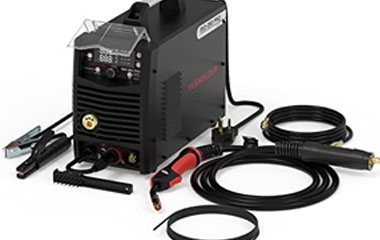
Even a state-of-the-art welding machine with advanced arc controls cannot overcome the fundamental chemical problem of hydrogen contamination from a damp electrode. The solution lies in controlling the consumable.
Corrective Actions and Reconditioning Exposed Electrodes
When you have confirmed that electrodes have been exposed to moisture, you have two options: discard or recondition. The decision depends on the severity of the exposure and your project's quality assurance plan.
For electrodes that have simply exceeded their atmospheric exposure time or were stored in a holding oven that lost power, re-baking is a viable option. The general procedure is as follows:
- Remove from Packaging: Spread the electrodes out in a calibrated re-baking oven to ensure air can circulate freely around each one. Do not re-bake electrodes in a sealed can or a tight bundle.
- Bake at High Temperature: The specific temperature and time will be provided by the manufacturer. A typical cycle for many low-alloy electrodes is 1 to 2 hours at a temperature between 260°C and 430°C. Always follow the manufacturer's specific recommendation printed on the packaging.
- Transfer to Holding Oven: After the re-baking cycle is complete, transfer the hot electrodes directly to a holding oven set at the appropriate temperature (e.g., 120°C) to prevent moisture re-absorption as they cool.
It is important to note that electrodes have a limit to how many times they can be re-baked. Each heating cycle can degrade the flux coating's performance. Most manufacturers recommend re-baking no more than two or three times. The stringent handling required for a low alloy electrode is a stark contrast to more forgiving general-purpose rods like AWS E6013 welding electrodes, which do not have low-hydrogen requirements.
Partnering for Quality from Factory to Field
The best way to prevent jobsite storage failures is to establish a culture of quality control that begins with your supplier. Partnering with a manufacturer that adheres to strict quality standards provides a reliable starting point. At Oldwelders, our ISO 9001 certified processes ensure that every low alloy electrode we produce meets exacting specifications for chemical composition and flux coating integrity.
Our commitment to quality extends to our production capacity. Operating from a 1000 square meter plant with six production lines, we can supply up to 100 tons of welding consumables per day. This scale ensures that our global partners in markets like Brazil, Thailand, Australia, and Malaysia receive fresh, factory-sealed products, minimizing the risk of receiving aged stock that may have been improperly stored elsewhere in the supply chain.
By starting with a high-quality consumable and implementing the rigorous jobsite storage protocols outlined above, you create an unbroken chain of quality from our factory to your final weld. Explore our complete range of certified welding materials to find the right solution for your critical applications.
Ultimately, managing low-hydrogen consumables is a shared responsibility. While we ensure quality at the point of manufacture, your team's diligence on the jobsite is the final guarantee of a sound and durable weld. By implementing these diagnostic and corrective procedures, you can effectively eliminate moisture contamination as a source of weld defects and maintain the highest standards of quality on every project.