
Submerged Arc Flux Grain Size & Weld Bead Shape
Optimizing Weld Bead Shape: How Submerged Arc Flux Grain Size Impacts Quality
In the realm of automated welding, particularly with Submerged Arc Welding (SAW), achieving consistent and high-quality weld bead profiles is a critical objective for welding engineers. While parameters like voltage, current, and travel speed are commonly adjusted, the physical characteristics of the welding fluxes employed often hold subtle yet profound influences on the final weld. Among these, the grain size of the Submerged Arc Flux stands out as a key determinant that directly affects arc stability, molten pool behavior, and ultimately, the configuration of the weld bead.
Oldwelders, a trusted manufacturer in welding consumables, understands the intricate relationship between flux properties and weld outcomes. Our commitment to quality ensures that our products, including welding materials and flux, empower professionals to achieve optimal results. This article delves into the science behind flux grain size and its specific impact on SAW bead shape, providing valuable insights for troubleshooting inconsistencies and refining welding processes.
Understanding Submerged Arc Flux and Its Fundamental Role
Submerged Arc Flux is a granular, fusible material that covers the arc and molten weld pool during the SAW process. Its primary functions are multifaceted: it provides a protective gas shield to prevent atmospheric contamination, stabilizes the arc, contributes alloying elements to the weld metal, and forms a removable slag that shapes the weld bead. The quality of the raw materials used in its production is paramount. At Oldwelders, our flux products are meticulously crafted from excellent dolomite, bauxite, cryolite, silica, fluorine ore, and other select ores. These raw materials are melted at an extremely high temperature of 2000 °C, ensuring a homogenous composition and superior performance characteristics essential for demanding industrial applications.
Fluxes are generally categorized into two main types: fused and agglomerated. Fused fluxes are produced by melting the raw materials together, cooling the melt, and then crushing it to the desired grain size. Agglomerated fluxes, conversely, are manufactured by mixing powdered raw materials with a binder, forming granules, and then baking them at a lower temperature. Both types have distinct characteristics influenced by their manufacturing process and, crucially, by their final grain size distribution.
The Science of Flux Grain Size Distribution
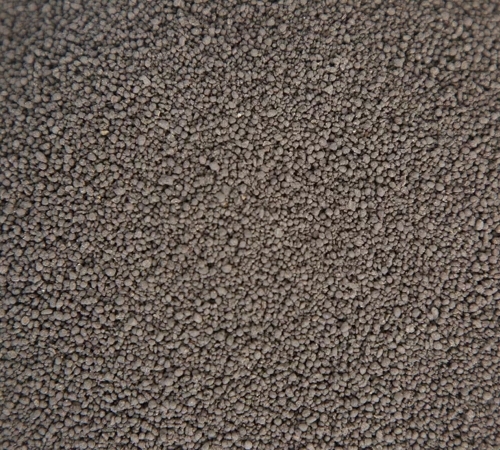
Flux grain size refers to the average diameter of the individual particles that constitute the granular flux. It is not uniform; rather, it’s a distribution ranging from very fine powders to coarser granules. This distribution is typically controlled during the manufacturing process through crushing, sieving, and blending. Standard classifications, often based on mesh sizes, define various ranges of flux grain sizes suitable for different applications.
The significance of grain size lies in how these particles interact with the welding arc and the molten pool. Fine grains behave differently from coarse grains under the intense heat of the arc. This distinction influences several critical aspects of the welding process, including current density, arc stability, gas entrapment and release, and the viscosity of the resulting slag, all of which converge to dictate the final shape of the weld bead.
Fine Grain Fluxes and Their Impact on Bead Shape
Fluxes with a predominance of fine grains tend to pack more densely around the welding arc. This denser packing has several implications:
- Arc Stability: Finer grains provide a more uniform and consistent coverage over the arc. This can lead to a more stable arc, reducing arc wander and promoting a smoother current flow. A stable arc generally translates to a more consistent heat input and, subsequently, a more uniform weld bead.
- Penetration: Denser packing can sometimes lead to a more constricted arc column, increasing current density at the electrode tip. This can result in deeper penetration, producing a narrower and often more convex weld bead with increased reinforcement.
- Slag Formation: Finer particles melt more rapidly and can contribute to a more fluid slag pool. While this can aid in good slag detachability, excessive fluidity might lead to issues like slag run-out on sloped surfaces or difficulties in controlling bead shape in certain joint configurations.
- Gas Entrapment: A drawback of very fine grains is their tendency to trap gases. If gases generated during welding cannot escape easily through the densely packed flux layer, they can become entrapped in the solidifying weld metal, leading to porosity. This can manifest as an irregular or pockmarked bead surface.
Coarse Grain Fluxes and Their Impact on Bead Shape
Conversely, fluxes characterized by coarser grains exhibit different behaviors:
- Arc Stability: Coarser grains create a less dense, more open packed bed around the arc. This can sometimes lead to a slightly less stable arc compared to fine fluxes, potentially resulting in minor fluctuations in heat input. However, this openness also allows for better gas escape, which can be beneficial in preventing porosity.
- Penetration: The less dense packing of coarse grains may allow the arc to spread out more, reducing the current density at the electrode tip. This typically results in shallower penetration but a wider weld bead with less reinforcement, often yielding a flatter, broader bead profile.
- Slag Formation: Coarser particles melt more slowly and can contribute to a more viscous slag. This higher viscosity can be advantageous for welding in challenging positions or for maintaining bead shape on complex geometries, as the slag is less prone to run-out. However, it might also make slag removal slightly more challenging if not properly formulated.
- Gas Release: The larger interstitial spaces between coarse grains facilitate the easier escape of gases generated during welding. This significantly reduces the risk of porosity, a critical factor for achieving sound welds.
Optimizing Flux Grain Size for Desired Weld Characteristics
The selection of the appropriate flux grain size is not a one-size-fits-all decision; it depends heavily on the specific application, desired weld characteristics, and the materials being joined. Welding engineers often need to balance various factors to achieve the optimal bead shape and metallurgical properties.
- For Deep Penetration and Narrow Beads: Applications requiring deep penetration, such as thick plate welding or single-pass welds in certain joints, might lean towards finer grain fluxes. However, careful control of welding parameters is necessary to mitigate the risk of porosity.
- For Wide, Flat Beads and Good Appearance: When a wider, flatter bead with minimal reinforcement is desired, perhaps for aesthetic reasons or to minimize post-weld grinding, coarser grain fluxes are often preferred. Their ability to facilitate gas escape also makes them a strong choice for reducing porosity.
- For High-Speed Welding: In high-speed SAW, the molten pool freezes quickly. Finer fluxes can sometimes be advantageous due to their faster melting rates, contributing to a stable process. However, the risk of porosity due to rapid solidification and gas entrapment must be managed.
- For Specific Joint Designs: Vertical-up or overhead welding, though less common in SAW, would necessitate fluxes that produce a more viscous slag to prevent run-out. This often points towards formulations with a controlled proportion of coarser grains.
It is important to remember that flux grain size interacts with other welding parameters. Adjusting voltage, current, and travel speed in conjunction with flux grain size allows for fine-tuning of the weld bead. For instance, increasing voltage with a finer flux might broaden the arc and flatten the bead, countering some of the constricting effects of the fine grains.
Oldwelders' Commitment to Quality and Global Reach
At Oldwelders, we understand that consistency in flux properties is non-negotiable for industrial clients. Our manufacturing facility, spanning an area of 1000 square meters, houses six state-of-the-art production lines. This robust infrastructure allows us to maintain a daily production capacity of 100 tons, ensuring reliable supply for our global partners. We adhere to stringent quality control, backed by our ISO 9001 certification, which guarantees that every batch of submerged arc welding flux hj431 and other products meets international standards.
Our commitment extends to providing efficient service. With a minimum order quantity (MOQ) of just 1 ton and a typical lead time of 30 days, we are equipped to support projects of varying scales with dependable delivery. We proudly serve a diverse international clientele, with established target markets including Brazil, Thailand, Australia, and Malaysia, demonstrating our capability to meet the demanding requirements of different industrial environments.
Troubleshooting Bead Shape Issues Related to Flux Grain Size
When encountering inconsistent weld bead shapes in SAW, consider the following diagnostic steps related to flux grain size:
- Review Flux Specifications: Always start by verifying that the specified flux grain size is compatible with the intended application and welding parameters. Deviations from recommended ranges can lead to issues.
- Check for Segregation: During transportation or handling, fluxes can sometimes segregate, with finer particles settling at the bottom and coarser ones rising. This can lead to a non-uniform flux feed and inconsistent bead shapes. Ensure proper mixing and handling.
- Assess Porosity: If the bead exhibits porosity, especially uniformly distributed, consider if the flux is too fine, impeding gas escape. Increasing travel speed or slightly reducing current can sometimes help, but a coarser flux might be a more direct solution.
- Monitor Penetration and Reinforcement: If penetration is too shallow or the bead is excessively wide and flat, a coarser flux might be contributing. Conversely, overly deep penetration and a highly convex bead could suggest a flux that is too fine.
- Evaluate Slag Behavior: If slag removal is difficult or the slag is excessively viscous, a coarser flux might be at play. If slag run-out is an issue, a finer flux or one with specific rheological properties might be needed.
While flux grain size is a critical factor, it is part of a larger system. Remember to also consider other variables such as arc welding machine settings, wire type, and joint preparation when troubleshooting.
Conclusion
The grain size of Submerged Arc Flux is a powerful, yet often overlooked, variable in the pursuit of optimal weld bead shapes and metallurgical integrity in SAW. From influencing arc stability and penetration to governing slag fluidity and gas release, its impact is extensive. By understanding the profound impact of Submerged Arc Flux grain size, welding engineers can make informed decisions, troubleshoot effectively, and fine-tune their processes to achieve superior weld quality and consistency.
Oldwelders remains dedicated to providing high-performance welding solutions, supported by our robust manufacturing capabilities and unwavering commitment to quality. Our expertise ensures that our clients receive products that meet the highest standards, empowering them to tackle their most challenging welding applications with confidence.