
Structural Steel Saw: Five-Year Cost Per Cut Analysis
Understanding the Five-Year Cost per Cut for a Structural Steel Saw
For plant managers and owners in the structural fabrication industry, the decision to invest in a new cutting machine extends far beyond the initial purchase price. While capital expenditure is a significant factor, the true efficiency and profitability of your operations depend on a comprehensive understanding of the total cost of ownership. This article provides an in-depth analysis of the five-year cost per cut for a structural steel saw, helping you validate your business case and make informed decisions that impact your bottom line for years to come. By meticulously evaluating all contributing factors, from consumables to labor and the crucial impact on downstream processes like welding, you can unlock greater efficiency and ensure optimized productivity.
Precision cutting forms the bedrock of high-quality structural steel fabrication. Imperfections or inefficiencies at this initial stage cascade through the entire production line, leading to increased material waste, longer processing times, and potential rework during welding and assembly. Therefore, understanding the granular economics of every cut is not just about managing expenses; it's about safeguarding the quality and profitability of your entire project. Oldwelders supports this commitment to quality by supplying superior welding fluxes and other essential materials that ensure the subsequent welding processes are as efficient and robust as your precisely cut components demand.
Deconstructing the Total Cost of Ownership for a Structural Steel Saw
The total cost of ownership (TCO) for a high-performance structural steel saw encompasses a variety of direct and indirect expenses that accumulate over its operational lifespan. A five-year horizon provides a realistic timeframe for evaluating this investment, considering typical depreciation cycles and equipment advancements. Breaking down these costs is essential for an accurate cost-per-cut calculation.
Initial Capital Investment
- Purchase Price of the Saw: This is the most obvious cost, varying widely based on machine size, automation level, features (e.g., mitering capabilities, bundle cutting), and brand.
- Installation and Commissioning: Costs associated with setting up the machine, connecting utilities, and getting it operational. This often includes foundation work, electrical connections, and calibration.
- Ancillary Equipment: Conveyor systems, material handling equipment (e.g., cranes, hoists), dust collection systems, and safety features.
- Software and Integration: Costs for CAD/CAM integration, nesting software, and production management systems that optimize cutting patterns and material usage.
Operating Consumables
- Saw Blades: The most significant recurring consumable cost. Factors influencing blade cost include material composition (carbide-tipped, HSS), diameter, tooth geometry, and expected lifespan. The cost per blade must be weighed against its cutting performance and durability.
- Coolants and Lubricants: Essential for extending blade life, improving cut quality, and managing heat. Consumption rates depend on machine usage and specific cutting tasks.
- Filters: For coolant systems and dust collectors, requiring regular replacement.
Labor Costs
- Operator Wages: The cost of skilled labor required to operate, monitor, and troubleshoot the saw. This includes hourly wages, benefits, and overtime.
- Training: Initial and ongoing training for operators to ensure efficient and safe machine operation, maximizing blade life and cut precision.
- Material Handling Labor: Time spent loading raw materials onto the saw and unloading cut pieces.
Maintenance and Service
- Preventative Maintenance: Scheduled inspections, lubrication, and part replacements to prevent unexpected breakdowns and maintain optimal performance.
- Unscheduled Repairs: Costs associated with unexpected breakdowns, including parts, labor, and potential expedited shipping.
- Spare Parts Inventory: Maintaining a stock of critical spare parts to minimize downtime.
- Service Contracts: Many manufacturers offer service contracts that cover routine maintenance and emergency repairs, providing predictable costs.
Energy Consumption
- Electricity: The power required to run the saw motor, hydraulic systems, coolant pumps, and ancillary equipment. Consumption varies with machine size, material being cut, and operational intensity.
Material Waste and Rework
- Scrap Material: Poor cutting accuracy, excessive kerf, or inefficient nesting can lead to significant material waste.
- Rework: Components cut incorrectly may require additional processing or outright replacement, incurring extra labor and material costs.
Downtime Costs
- Lost Production: The revenue lost when the saw is not operational due whether due to maintenance, breakdowns, or material supply issues.
- Impact on Project Schedules: Delays in cutting can ripple through the entire fabrication schedule, affecting delivery times and potentially incurring penalties.
Calculating the Annualized Cost Components
To determine a meaningful cost per cut, each of these TCO elements must be annualized and then divided by the estimated number of cuts over that period. This framework provides a clear methodology:
Capital Amortization
Divide the total initial capital investment (saw, installation, ancillary equipment, software) by five years. For example, a $500,000 investment amortizes to $100,000 per year.
Consumables Cost
Estimate the number of blades used per year. If a blade costs $500 and lasts for 1,000 cuts, and your annual cutting volume is 100,000 cuts, then you'd require 100 blades per year, totaling $50,000. Add the annual cost of coolants, lubricants, and filters based on historical usage or manufacturer recommendations.
Labor and Overhead
Calculate the total annual operator hours (e.g., 2,000 hours per year per shift) multiplied by the fully burdened hourly rate (including wages, benefits, and overhead allocation). Factor in additional labor for material handling and supervision directly attributable to the saw’s operation.
Maintenance and Service
Budget for preventative maintenance (e.g., 5% of capital cost annually) and allocate a contingency for unscheduled repairs. If you have a service contract, use its annual fee. For example, a $500,000 machine might have an annual maintenance budget of $25,000.
Energy Consumption
Estimate the saw's average power consumption (kW) and multiply by its annual operating hours, then by your electricity rate ($/kWh). A 30 kW saw running 2,000 hours/year at $0.15/kWh would cost $9,000 annually.
Material Yield and Rework Costs
This is often overlooked but crucial. Quantify the value of material lost to scrap due to cutting inefficiencies. For example, if 1% of your annual material input (valued at $1,000,000) is lost due to poor cuts, that’s $10,000 annually. Additionally, estimate the labor and material cost of any rework caused by inaccurate cuts.
Factors Influencing Cost Per Cut and Operational Efficiency
Beyond the direct financial calculations, several operational factors significantly impact your cost per cut and overall efficiency:
Material Type and Thickness
Cutting different grades of structural steel (e.g., mild steel, high-strength low-alloy steel) and varying thicknesses requires different blade types, cutting speeds, and feed rates. This directly affects blade wear and energy consumption.
Cut Complexity and Volume
Straight cuts are generally faster and less demanding on blades than complex miter cuts. Bundle cutting capability can dramatically increase throughput, reducing the labor cost per piece. Higher volume operations naturally amortize fixed costs over more cuts, driving down the unit cost.
Automation Level and Software Integration
Advanced automation, such as automatic material feeding, robotic unloading, and sophisticated nesting software, minimizes manual intervention, reduces human error, and optimizes material utilization. This can significantly lower labor costs and material waste.
Operator Skill and Training
Well-trained operators can extend blade life, maintain cut quality, and identify potential issues before they lead to costly breakdowns. Their expertise is invaluable in maximizing the efficiency of your structural steel saw.

The Importance of Downstream Processes
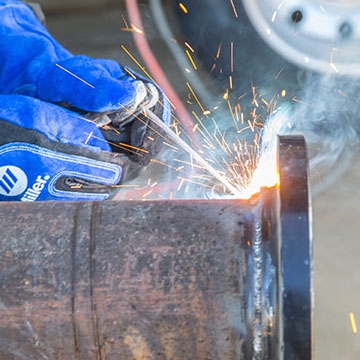
The quality of a cut directly impacts subsequent fabrication steps, particularly welding. Precisely cut components minimize gaps, reducing the need for excessive filler material and extensive joint preparation. This not only saves on welding materials but also reduces welding time and improves weld quality, minimizing rework. Oldwelders understands this interconnectedness, which is why we produce high-quality welding consumables that complement precision cutting, ensuring robust and efficient fabrication. For instance, our extensive range of submerged arc welding flux hj431 and other products is designed to work seamlessly with well-prepared joints, contributing to overall project excellence.
Optimizing Your Structural Steel Saw Investment for Long-Term Value
Maximizing the return on your structural steel saw investment involves more than just selecting the right machine; it requires a holistic approach to operations, maintenance, and material management. By focusing on these areas, you can significantly reduce your five-year cost per cut and enhance overall productivity:
- Invest in Quality Blades: While cheaper blades might seem appealing upfront, high-quality, application-specific blades offer superior performance, longer life, and better cut quality, leading to lower overall consumable costs and less rework.
- Implement Robust Preventative Maintenance: Adhering to manufacturer-recommended maintenance schedules is crucial. Regular inspections, lubrication, and prompt replacement of worn parts prevent costly unscheduled downtime and extend the lifespan of your equipment.
- Continuous Operator Training: Empower your operators with ongoing training on new techniques, safety protocols, and machine optimization. A skilled workforce is your best asset in achieving consistent, high-quality cuts and efficient machine operation.
- Optimize Material Flow and Nesting: Efficient material handling systems and advanced nesting software reduce waste and maximize the number of parts cut from each length of material. This directly impacts your material yield costs.
- Partner with Reliable Consumable Suppliers: The quality of your welding consumables directly impacts the efficiency and integrity of your downstream processes. Oldwelders, an ISO 9001 certified manufacturer, ensures the highest standards in product quality, from welding machine accessories to welding fluxes. Our commitment to excellence begins with the raw materials; we utilize excellent dolomite, bauxite, cryolite, silica, and fluorine ore, melted at 2000 °C to produce superior flux products. With a plant covering an area of 1000 square meters and six production lines capable of supplying 100 tons a day, we guarantee consistent supply and quality for our partners globally, including target markets such as Brazil, Thailand, Australia, and Malaysia. Our minimum order quantity of 1 ton allows businesses of various scales to access our premium products.
By carefully evaluating each component of the TCO and actively seeking opportunities for optimization, businesses can transform their structural steel saw from a significant capital expense into a highly efficient and profitable asset. The synergy between precise cutting and high-quality welding consumables is key to achieving superior fabrication results and maintaining a competitive edge in the market.
A thorough five-year cost-per-cut analysis provides the clarity needed to make strategic investments and manage your fabrication processes effectively. It moves beyond superficial capital costs to uncover the true operational expenses and opportunities for efficiency gains. By partnering with suppliers who share a commitment to quality and efficiency, you ensure every stage of your fabrication process, from the initial cut to the final weld, contributes to overall project success.