
Specify a Flux Production Line for Stable Fill Rates
How to Specify a Flux Production Line for Consistent Fill Rates
In the manufacturing of flux-cored arc welding (FCAW) wires, no single variable is more critical to performance than the flux fill rate. Inconsistent fill ratios lead to erratic arc behavior, weld porosity, and mechanical property failures, ultimately compromising structural integrity and driving up operational costs. While many equipment suppliers focus on the rated speed of individual machines, experienced plant engineers know that true production efficiency comes from the stability and integration of the entire system. Specifying a complete flux production line with a focus on consistent output is paramount.
Achieving this consistency requires a holistic understanding of how each stage—from strip forming to final drawing—impacts the uniformity of the flux core. At Oldwelders, our expertise is built not only on supplying equipment but also on manufacturing high-quality welding materials for demanding global markets. This deep process knowledge, validated by our ISO 9001 certification, informs our approach to engineering production lines that deliver reliable, high-quality output shift after shift.
The Foundation: Precision Strip Forming and Preparation
The journey to a perfectly filled cored wire begins with the steel strip that forms its outer sheath. Any variation at this initial stage will be magnified through subsequent processes. The quality of the final wire is therefore fundamentally dependent on the precision of the strip forming and preparation module.
The primary function of the forming section is to progressively shape the flat metal strip into a uniform 'U' or 'V' trough. This trough acts as the vessel for the flux. The consistency of its cross-sectional area is non-negotiable; if the 'U' shape varies, the volume available for the flux changes, making a stable fill percentage impossible to maintain, regardless of how precise the filling system is. When specifying this module, focus on:
- Roller Design and Material: The forming rollers must be crafted from hardened, wear-resistant tool steel to maintain their profile over millions of meters of strip. The progressive design of the roller sequence is critical to gently shape the metal without introducing stress or defects.
- Dimensional Tolerance Control: A high-precision forming mill should be able to maintain the shape’s critical dimensions to a tight tolerance, often within a few hundredths of a millimeter. This requires a rigid machine frame and finely adjustable roller stands.
- Strip Cleaning and Preparation: Before forming, the strip must be impeccably clean. Any residual drawing lubricants, rust inhibitors, or surface contaminants can interfere with the subsequent seam welding process and introduce impurities into the weld. An effective line will integrate a robust cleaning or brushing station.
Our own experience in manufacturing welding fluxes from premium raw materials like dolomite, bauxite, and silica melted at 2000 °C gives us a unique perspective. We understand that the chemical composition of the core is precisely engineered. The integrity of the sheath that contains it must be equally robust, starting with a perfectly formed, clean foundation.
Core of Consistency: The Flux Filling and Compaction System
The heart of any flux-cored wire line is the filling and compaction system. This is where the powdered flux is metered into the formed steel strip. The goal is not just to fill the strip but to do so with a consistent density along the entire length of the wire, eliminating voids and air pockets.
The filling mechanism is typically a vibratory or screw-type feeder that doses flux from a hopper into the moving 'U' shaped strip. Key specification points include:
- Dosing Accuracy: The system must be capable of highly precise, repeatable metering. Look for systems with closed-loop feedback control. For example, a load cell under the feeder can provide real-time weight data to a PLC, which can then adjust the feed rate to compensate for any variations in flux bulk density.
- Vibration Control: In vibratory systems, the ability to control both the frequency and amplitude of vibration is crucial. This allows operators to "tune" the system for different flux powders, which can have widely varying flow characteristics, ensuring the flux settles evenly without becoming overly aerated.
- Hopper Design: A well-designed hopper with steep walls and potentially a "live bottom" or agitator prevents flux from bridging or "rat-holing," which would otherwise cause interruptions in the feed rate.
Immediately following the filling station, compaction rollers or a vibration table helps settle the powder to a uniform density. This step is vital for ensuring that the subsequent closing and drawing processes do not create internal voids. A poorly compacted core will lead to an inconsistent final fill ratio and can even cause the wire to collapse during drawing.
Sealing and Drawing: Locking in the Quality
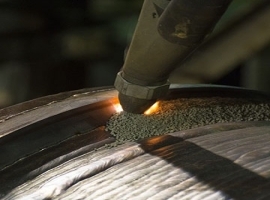
Once the strip is filled and the flux is compacted, the top edges of the 'U' must be brought together and sealed to form a seamless tube. This is a critical step that ensures the integrity of the wire, preventing flux leakage and contamination from the atmosphere. Common sealing methods include high-frequency induction welding, TIG welding, or laser welding. The choice depends on factors like line speed, strip material, and desired seam quality. A poorly executed seam is a common source of defects that only become apparent during welding.
After sealing, the oversized tube undergoes a series of drawing operations. The wire is pulled through a sequence of progressively smaller tungsten carbide or diamond dies. This process serves two purposes:
- Diameter Reduction: It reduces the wire to its final specified diameter (e.g., 1.2mm or 1.6mm).
- Flux Compaction: It further compacts the flux core to its final, high-density state, ensuring intimate contact with the sheath.
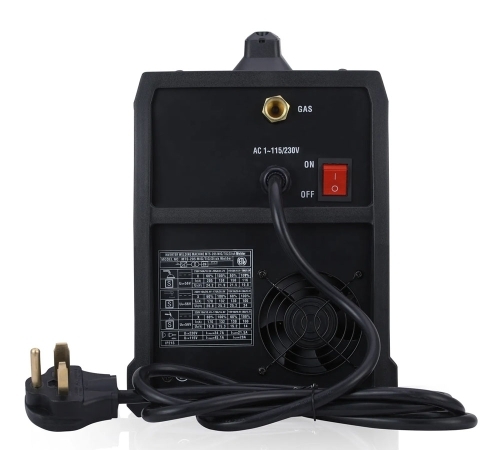
The drawing section of the flux production line must be specified with an emphasis on synchronization. Each drawing capstan must be driven by a precisely controlled motor, with speeds synchronized to account for the elongation of the wire as its diameter is reduced. Any mismatch in speed will either stretch the wire, compromising its fill ratio, or create slack, leading to tangles and line stoppages. This precision is essential for producing wire suitable for advanced welding applications, such as those performed by a mig-mag-tig welding machine.
Integrating Quality Control Throughout the Flux Production Line
Relying solely on end-of-line testing is an inefficient and costly approach to quality assurance. A modern, well-specified flux production line integrates a suite of in-process monitoring systems to provide real-time feedback and control. This philosophy of proactive quality management is central to our ISO 9001 certified processes and is a principle we apply when advising clients in demanding markets from Brazil to Australia.
Essential in-line QC modules to specify include:
- Laser Micrometers: Placed after the final drawing die, these non-contact gauges provide continuous, high-precision measurement of the wire's diameter, ensuring it remains within tolerance.
- Eddy Current Testers: These systems can be installed after the seam welder to detect flaws, cracks, or inconsistencies in the welded seam of the sheath.
- Weight/Length Monitoring: By continuously weighing a known length of wire in-process, the system can calculate the flux fill percentage in real-time. This data can be fed back to the flux dosing controller to make micro-adjustments, ensuring the fill rate remains locked on target.
All these subsystems should be integrated into a single, centralized PLC control system. This allows for unified recipe management, data logging for traceability, and coordinated control of the entire line, ensuring each module works in harmony with the others.
Key Specifications to Demand from Your Supplier
When you are evaluating suppliers for a new flux production line, move beyond generic claims of speed and stability. Demand specific, measurable performance guarantees. As a manufacturer with a 1000-square-meter plant capable of producing 100 tons of welding consumables per day, we understand the metrics that matter for high-volume, high-quality production. Use this checklist as a starting point for your technical requirements:
- Forming Tolerance: What is the guaranteed dimensional tolerance of the formed 'U' profile (e.g., ±0.05 mm)?
- Filling Accuracy: What is the guaranteed fill ratio accuracy as a percentage of the target (e.g., ±1.0%)? How is this measured and controlled?
- Final Diameter Tolerance: What is the achievable tolerance on the final drawn wire (e.g., DIN EN ISO 544 standard or tighter)?
- Line Speed Synchronization: What is the inter-capstan speed holding accuracy (e.g., ±0.1%)?
- Seam Integrity: What method is used for seam welding, and what is the NDT (Non-Destructive Testing) protocol for ensuring seam quality?
- Control System & Data Logging: Does the system offer full recipe management, real-time process monitoring, and comprehensive data logging for quality traceability?
Conclusion: A Systems-Based Approach to Quality
Achieving a stable and consistent flux fill rate is not about having the best filler or the fastest drawing machine. It is the result of a carefully specified and seamlessly integrated flux production line where every stage is designed to support the next. From the initial strip preparation to the final diameter measurement, each module plays a critical role in preserving the uniformity of the flux core.
By focusing on the integration points, demanding specific performance metrics, and incorporating real-time quality control, you can configure a production line that delivers consistent, high-quality flux-cored wire. This systematic approach reduces waste, improves weld performance, and ultimately provides a stronger return on your capital investment. If you are looking to enhance your manufacturing capabilities, from a single welding machine to a complete turnkey production system, our team of experts is ready to assist you in specifying a solution that meets your precise quality and output requirements.