
Sintered Flux Handling: Storage, Reuse & Moisture Control
Proper handling of sintered flux is essential for achieving consistent, high-quality submerged arc welds.
Submerged Arc Welding (SAW) is a high-deposition, high-efficiency process relied upon for critical applications in shipbuilding, pressure vessel fabrication, and heavy structural engineering. The success of this process hinges on the precise interaction between the welding wire and the granular welding flux. While the initial quality of the flux is paramount, its performance can be significantly compromised by improper handling, storage, and reuse practices after it leaves the manufacturer. Understanding the hygroscopic nature of this material and implementing rigorous control procedures is not just a matter of best practice—it is a critical component of quality assurance.
For welding supervisors and operators, particularly those managing large-scale projects in diverse climates from Brazil to Malaysia, maintaining the integrity of their welding consumables is a daily operational challenge. This guide addresses the most frequently asked questions about the storage, reuse, and moisture control of agglomerated fluxes, providing the technical knowledge needed to prevent weld defects, ensure procedural consistency, and maximize the value of your materials.
Why is Moisture Control So Critical for Welding Fluxes?
The primary role of a welding flux is to protect the molten weld pool from atmospheric contamination, particularly from oxygen, nitrogen, and hydrogen. Moisture, in the form of water (H₂O), is a significant source of diffusible hydrogen. When flux with excessive moisture is subjected to the intense heat of the welding arc, the water dissociates into hydrogen and oxygen. While much of this gas escapes, some hydrogen can become entrapped in the solidifying weld metal.
This entrapped hydrogen is the primary cause of hydrogen-induced cracking (HIC), also known as delayed cracking or cold cracking. This defect is particularly dangerous because it may not become apparent until hours or even days after the weld has cooled, potentially passing initial visual inspections. For high-strength, low-alloy (HSLA) steels and thick-section components, the risk of HIC is a major concern that can lead to catastrophic structural failure.
Beyond cracking, excessive moisture in a sintered flux can lead to other serious weld defects:
- Porosity: As hydrogen gas attempts to escape the solidifying weld pool, it can become trapped, forming small, rounded cavities or "wormholes" within the weld. This porosity weakens the weld's mechanical properties and can create stress concentration points.
- Poor Slag Detachability: The chemical balance of the flux is carefully designed for optimal performance. Excess moisture can alter the slag's viscosity and solidification characteristics, making it difficult to remove after welding. This increases cleaning time and labor costs.
- Unstable Arc: High moisture levels can disrupt the electrical stability of the arc, leading to inconsistent bead appearance, spatter, and an overall degradation of the welding process control.
At Oldwelders, our manufacturing process involves melting premium raw materials like dolomite, bauxite, and silica at temperatures of 2000 °C. This high-temperature process creates a flux with specific chemical and physical properties, including a controlled, low-moisture content upon packaging. Maintaining this low moisture level from our plant to your welding station is the key to unlocking the material's full performance potential.
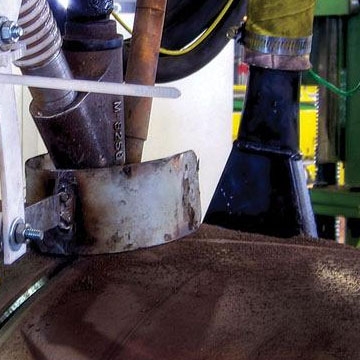
Best Practices for Storing Sintered Flux
Proper storage is the first line of defense against moisture absorption. Agglomerated fluxes are hygroscopic, meaning they will readily absorb moisture from the ambient air. The rate of absorption depends on the humidity, temperature, and the integrity of the packaging.
Storage Environment
The ideal storage area for welding flux should be a clean, dry, and enclosed space. Follow these environmental guidelines:
- Temperature: Maintain a consistent temperature that is at least 10-15 °C (18-27 °F) above the dew point of the air. This prevents condensation from forming on the packaging or the flux itself. Avoid storing flux in areas with large temperature swings.
- Humidity: Relative humidity (RH) should be kept as low as possible, ideally below 50%. In humid climates, such as those found in our key markets like Thailand, using a dehumidified, climate-controlled storage room is highly recommended for critical applications.
- Protection from Elements: Never store flux outdoors, even if it is covered by a tarp. Direct exposure to rain, snow, or ground moisture will quickly ruin the product. The storage area should be weatherproof with no leaks in the roof or walls.
Packaging and Handling
The packaging is designed to protect the flux during transit and initial storage. Preserving its integrity is crucial.
- Keep Bags Sealed: Do not open bags of sintered flux until you are ready to load them into the welding equipment hopper. Once a bag is opened, the flux is immediately exposed to the ambient atmosphere.
- Handle with Care: Avoid dropping or puncturing the bags. If a bag is accidentally torn, immediately use the flux if possible, or transfer it to a clean, airtight, and clearly labeled metal container. Seal the tear with heavy-duty tape as a temporary measure.
- Use a "First-In, First-Out" (FIFO) System: Organize your inventory so that the oldest stock is used first. This minimizes the total time any given bag of flux spends in storage, reducing the cumulative opportunity for moisture absorption.
Our commitment to quality, as demonstrated by our ISO 9001 certification, extends to providing robust, moisture-resistant packaging. However, this packaging is only effective when handled and stored correctly by the end-user. Correct storage procedures are a vital part of a comprehensive quality control program.
Guidelines for the Reuse and Recycling of Unfused Flux
In Submerged Arc Welding, a significant portion of the flux dispensed does not get melted into slag and remains unfused. This unfused material can be collected and reused, which is an important practice for cost control and waste reduction. However, recycling must be done systematically to avoid introducing contaminants into the weld zone.
The Recycling Process
A closed-loop flux recovery system is the most efficient method for recycling. Whether using an automated system or a manual process, the steps are fundamentally the same:
- Collection: Use a vacuum system to collect all unfused flux from the workpiece. Avoid sweeping, as this can easily mix in dirt and other debris.
- Separation: The collected material must be passed through a separator to remove the fused slag. Slag is glassy, lighter, and often has a different color than the unfused granules. Magnetic separators can also be used to remove small metal particles and mill scale.
- Screening: The separated flux should then be passed through a sieve or screen to remove oversized particles (slag fragments) and fines (crushed flux dust). Excessive fines can negatively affect the flow of flux and lead to an unstable arc. The exact mesh size will depend on the original flux granulation.
Contamination Risks
The primary danger in reusing flux is contamination. Be vigilant against:
- Slag: If not fully removed, slag particles can alter the chemical composition of the flux, leading to inconsistent weld metal properties and poor bead appearance.
- Mill Scale and Rust: These iron oxides can introduce excess oxygen into the weld, potentially causing porosity and reducing the effectiveness of deoxidizing elements in the flux.
- Oil, Grease, and Moisture: Contamination from the workpiece or the shop environment can introduce hydrogen and carbon, leading to porosity and cracking.
- Cross-Contamination: Never mix different types of flux in a recovery system. Each sintered flux is formulated for a specific application and wire combination. Mixing them can result in unpredictable and poor-quality welds. It is essential to have dedicated recovery systems for each flux type used in your facility.
Blending with New Flux
It is standard practice to blend recycled flux with new (virgin) flux. A common ratio is one part new flux to two or three parts recycled flux. This helps to replenish any deoxidizers or alloying elements that may have been slightly depleted and stabilizes the overall chemical balance. Do not attempt to use 100% recycled flux for multiple cycles, as this can lead to a gradual degradation known as "flux poisoning," where contaminants build up over time. You can find a wide range of suitable welding materials to replenish your stock and maintain optimal blend ratios.
Re-baking and Conditioning Procedures
If flux has been exposed to moisture, either through improper storage or from being left in a machine hopper overnight in a humid environment, it must be reconditioned before use. Re-baking is the process of heating the flux to a specific temperature for a set duration to drive off absorbed moisture.
Warning: Always consult the manufacturer’s specific recommendations for re-baking. Different flux formulations have different temperature tolerances. Overheating a sintered flux can damage the chemical binders, altering its performance and potentially releasing harmful fumes.
A general procedure for re-baking is as follows:
- Pre-heat the Oven: Use a calibrated oven with good air circulation designed for this purpose.
- Load the Flux: Spread the flux in shallow trays, no more than 25-50 mm (1-2 inches) deep. A shallow depth is critical to ensure that all the flux reaches the target temperature and that moisture can easily escape.
- Heating Cycle: Slowly raise the temperature to the recommended level, typically between 250 °C and 400 °C (482 °F and 752 °F). The exact temperature and time depend on the flux type. A common cycle is 2 hours at 300 °C.
- Cooling: After the baking cycle is complete, the flux can be transferred to a holding oven maintained at around 120-150 °C (250-300 °F) until it is needed for welding. This prevents it from reabsorbing moisture as it cools.
Re-baking is an effective corrective action, but it should not be a substitute for proper storage. Prevention is always the best approach. Our production facility, with six lines capable of supplying 100 tons per day, ensures we can meet demands with fresh, factory-sealed products, often within a 30-day lead time for orders starting at a minimum of 1 ton. This allows you to manage your inventory effectively and rely less on re-baking.
Common Mistakes to Avoid in Flux Handling
Even with established procedures, simple mistakes can lead to costly rework and defects. Welding supervisors should train their teams to avoid these common pitfalls:
- Leaving Flux in Hoppers: Do not leave flux in machine hoppers overnight or over weekends, especially in humid conditions. Hoppers are not airtight. Empty the flux back into a sealed container or a holding oven at the end of each shift. This is a critical discipline for any professional using an automatic welding machine.
- Using Compressed Air for Cleaning: Never use standard shop compressed air to blow dust or debris off a workpiece before welding. This air often contains oil and water, which will contaminate the joint and the flux.
- Ignoring Flux Fines: Failing to screen out excessive fines during recycling can lead to a "packed" flux burden that obstructs the proper flow of welding gases, resulting in porosity.
- Assuming All Flux is the Same: Different types of flux (e.g., active, neutral, alloy) have different sensitivities to moisture and require different handling and re-baking procedures. Always refer to the manufacturer's data sheet for the specific submerged arc welding flux hj431 or other product you are using.
By implementing and enforcing these rigorous handling, storage, and recycling protocols, you can ensure that the high-quality sintered flux you procure delivers its intended performance. This attention to detail protects the integrity of your welds, reduces costly rework, and maintains the safety and reliability of the final fabricated structure.