
Shielded Arc Electrode: Matching to Joint Position
Selecting the Optimal Shielded Arc Electrode for Specific Joint Positions is Crucial for Welding Integrity
For shop supervisors and professional welders, the selection of the correct welding consumable is a foundational decision that directly impacts the quality, efficiency, and safety of every weld. Among the many variables, matching the appropriate Shielded Arc Electrode to the specific joint position is paramount. This strategic choice is not merely about achieving a passable weld; it is about optimizing penetration, bead profile, mechanical properties, and ultimately, the structural integrity of the welded component.
Understanding the nuances of how different electrode classifications perform across various welding positions—flat, horizontal, vertical, and overhead—is essential for developing procedure-ready electrode choices and for effective consumable evaluation. At Oldwelders, we recognize the critical nature of this decision, providing a comprehensive range of welding materials designed to meet diverse industrial demands with unwavering quality.
Understanding the Basics of Shielded Arc Electrode Classification
Before delving into specific joint positions, a firm grasp of the American Welding Society (AWS) classification system for electrodes is indispensable. This system provides a standardized method for identifying electrodes based on their mechanical properties, usability characteristics, and intended applications. For example, an electrode classified as E7018 offers specific advantages over an E6010 in certain scenarios, influenced by its flux composition and core wire.
The "E" in the classification denotes an electrode. The first two (or three for five-digit numbers) digits indicate the minimum tensile strength in thousands of pounds per square inch (psi). The third (or fourth) digit denotes the welding position(s) in which the electrode can be used effectively. The final digit signifies the type of current (AC or DC), penetration, and the type of coating or flux composition, which heavily influences arc characteristics and slag formation. For instance, common electrodes like AWS E6013 welding electrodes are known for their ease of use across multiple positions, while others are more specialized.
Oldwelders ensures that our comprehensive range of welding materials, including various types of welding rods and welding fluxes, adheres to these stringent international standards. Our commitment to quality begins with the raw materials for our flux products, which include excellent dolomite, bauxite, cryolite, silica, and fluorine ore, melted at 2000 °C to ensure superior performance and consistency.
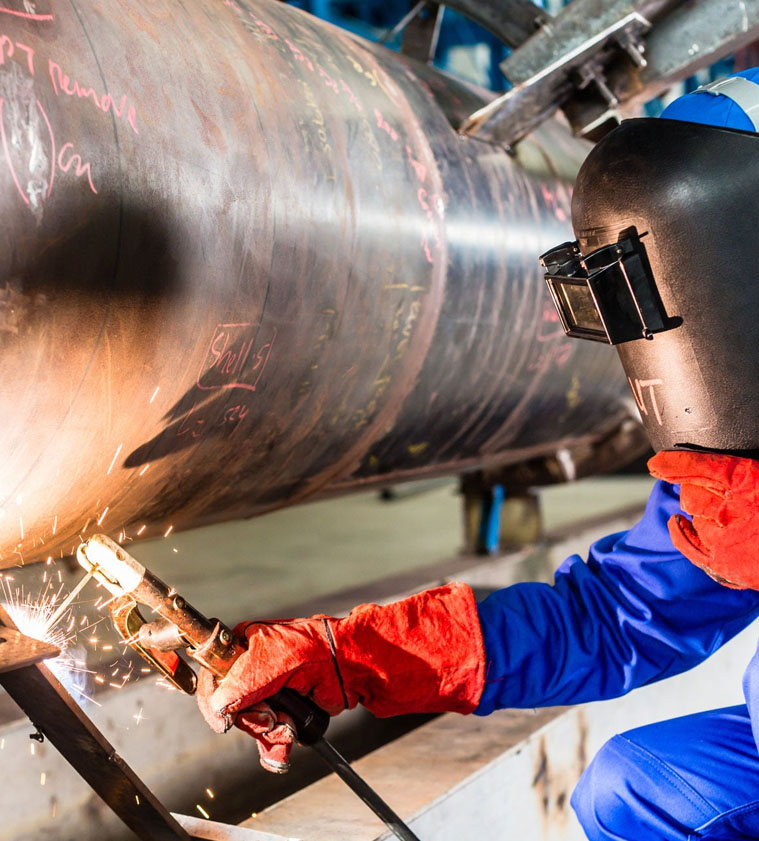
Optimizing Electrode Choice for Flat and Horizontal Welding
The flat (1F/1G) and horizontal (2F/2G) positions are generally considered the easiest to weld, offering the welder the most control over the molten puddle and heat input. Gravitational forces tend to assist rather than hinder the process, allowing for a wider range of electrode choices and higher deposition rates.
Flat Position (1F/1G)
- Characteristics: The workpiece is positioned so that the weld can be performed from the upper side, with the axis of the weld horizontal or inclined at an angle not exceeding 15 degrees to the horizontal. The weld metal is deposited downwards.
-
Suitable Electrodes:
- E6010 / E6011 (Fast-Freeze): While versatile, these electrodes can be used in the flat position, particularly for root passes where deep penetration is required. They offer a forceful arc and quick-freezing slag, which is less critical in flat but still beneficial for puddle control.
- E7018 (Low-Hydrogen, Fill-Freeze): An excellent choice for flat position welding, especially for structural steel and critical applications. E7018 electrodes produce a smooth, stable arc, excellent bead appearance, and high-quality welds with superior mechanical properties. The heavier slag helps to shape the bead.
- E6013 (Rutile, Fill-Freeze): Known for its smooth, stable arc and easy slag removal, E6013 is very user-friendly in the flat position, producing aesthetically pleasing beads. It's often favored for lighter gauge metals and general fabrication where appearance is a priority.
- Advantages: High deposition rates are achievable, and gravity assists in creating a flat, even bead profile.
Horizontal Position (2F/2G)
- Characteristics: The weld axis is horizontal, but the weld is made on a vertical surface (fillet weld) or against a vertical plane (groove weld). Gravity tends to pull the molten metal downwards, requiring careful manipulation to prevent sagging.
-
Suitable Electrodes:
- E7018 (Low-Hydrogen, Fill-Freeze): Highly recommended for horizontal welds due to its controlled puddle and excellent slag support. The low-hydrogen properties are beneficial for preventing hydrogen-induced cracking in critical applications.
- E6010 / E6011 (Fast-Freeze): Can be used effectively, especially for root passes, as their fast-freezing puddle helps to counteract gravity. They require a skilled hand to manage the puddle and prevent undercut.
- E6013 (Rutile, Fill-Freeze): Suitable for horizontal welding, particularly for smaller fillet welds and where a smooth, uniform bead is desired. The arc is gentle, making it easier to control the molten pool.
- Challenges: Managing the molten puddle to prevent sagging or undercut on the upper edge of the weld.
Navigating Vertical and Overhead Welding with the Right Electrodes
Vertical (3F/3G) and overhead (4F/4G) positions present significant challenges due to the direct influence of gravity on the molten weld pool. Successfully welding in these positions demands electrodes with specific characteristics tailored to counteract these forces and prevent weld defects.
Vertical Position (3F/3G)
- Characteristics: The weld axis is vertical. Welding can be performed either vertically up (3F-up/3G-up) or vertically down (3F-down/3G-down). Each direction has distinct advantages and disadvantages.
-
Vertical Up (3F-up/3G-up):
- Advantages: Generally produces better penetration and higher quality welds, particularly for thicker materials, due to increased heat input and slower travel speed.
-
Suitable Electrodes:
- E7018 (Low-Hydrogen, Fill-Freeze): An excellent choice for vertical up welding, especially for critical structural work. The heavier, viscous slag helps to support the molten puddle against gravity, and the low-hydrogen coating minimizes cracking risks. Requires careful electrode manipulation (e.g., weave technique) to build up the weld.
- E6010 / E6011 (Fast-Freeze): Very effective for vertical up due to their fast-freezing slag, which solidifies quickly to hold the molten metal in place. They offer good penetration and are often used for root passes or when welding thinner materials that require less heat.
-
Vertical Down (3F-down/3G-down):
- Advantages: Faster travel speed, higher deposition rates, and often better appearance for thinner materials. Reduces distortion.
-
Suitable Electrodes:
- E6010 / E6011 (Fast-Freeze): Ideal for vertical down welding because their fast-freezing puddle minimizes sag. The forceful arc allows for quick progression. Commonly used for pipe welding and sheet metal applications.
- E6013 (Rutile, Fill-Freeze): Can be used for vertical down on thinner materials where a smooth, cosmetic bead is desired. It generally offers less penetration than E6010/E6011 in this position.
- Disadvantages: Less penetration and higher risk of lack of fusion compared to vertical up, making it less suitable for thick, critical structural welds.
Overhead Position (4F/4G)
- Characteristics: The weld is performed from the underside of the joint, with gravity actively working to pull the molten metal downwards. This is arguably the most challenging position, requiring significant skill and control.
-
Suitable Electrodes:
- E7018 (Low-Hydrogen, Fill-Freeze): The preferred electrode for overhead welding due to its stable arc, controlled puddle, and excellent slag support. The heavier slag helps to hold the molten metal in place, preventing it from dripping. Requires a tight arc and precise manipulation.
- E6010 / E6011 (Fast-Freeze): Can be used for overhead, particularly for root passes or where a very fast-freezing puddle is essential. However, managing the puddle with these electrodes overhead requires considerable skill.
- Challenges: Extreme difficulty in managing the molten pool against gravity, increased risk of spatter, and potential for fatigue for the welder.
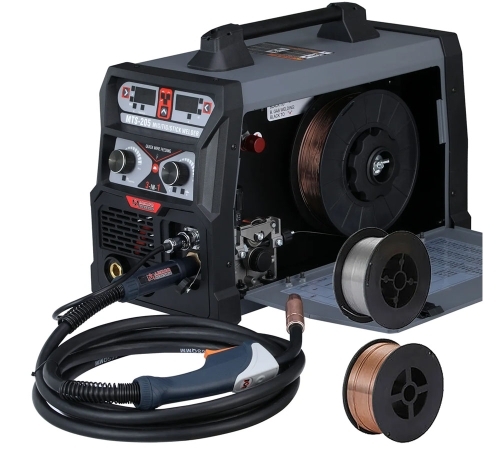
Beyond Position: Additional Factors for Shielded Arc Electrode Selection
While joint position is a primary determinant, several other factors must be considered to make the optimal arc welding machine and electrode choice:
- Base Metal Type and Thickness: Different base metals (carbon steel, stainless steel, cast iron) require specific electrode chemistries. Thicker materials often demand electrodes with deeper penetration capabilities and better mechanical properties.
- Desired Mechanical Properties: Tensile strength, yield strength, ductility, and impact toughness are critical. Low-hydrogen electrodes like E7018 are typically chosen for high-strength, critical applications.
- Current Type and Polarity: Some electrodes are designed for AC, others for DC (straight or reverse polarity), and some for both. Matching the electrode to the power source is crucial for arc stability and weld quality.
- Joint Design and Fit-Up: The geometry of the joint (fillet, groove, lap, butt) and the quality of the fit-up influence the required penetration and bead profile, affecting electrode selection.
- Environmental Conditions: Welding in windy, humid, or confined spaces can influence arc stability and weld quality, sometimes favoring electrodes with more robust flux coatings.
- Production Requirements: Deposition rate, travel speed, and overall efficiency play a role, especially in high-volume manufacturing environments.
Careful consideration of these factors in conjunction with joint position ensures that the chosen Shielded Arc Electrode not only performs adequately but also contributes to the overall success and longevity of the welded structure.
Oldwelders' Commitment to Quality and Global Supply
At Oldwelders, we pride ourselves on being a trusted partner for businesses requiring high-performance welding consumables and equipment. Our dedication to quality is underscored by our ISO 9001 certification, reflecting our adherence to stringent international standards in manufacturing and quality management systems. This commitment ensures that every welding machine, welding wire, welding rod, and welding flux product leaving our facility meets the highest benchmarks for reliability and performance.
Our expansive plant, covering an area of 1000 square meters, houses six state-of-the-art production lines. This robust infrastructure enables us to maintain an impressive daily supply capacity of 100 tons, ensuring that we can consistently meet the demands of our global clientele. Whether you are in Brazil, Thailand, Australia, or Malaysia, Oldwelders is equipped to deliver the welding solutions you need. We understand that timely delivery is crucial for your operations, and we strive for efficient processing, with lead times for some orders being as swift as 30 days, depending on specific product requirements and order volume, which can start from a minimum order quantity of 1 ton for certain products.
We are not just suppliers; we are solution providers. Our comprehensive product range extends beyond electrodes to include a variety of welding machine options, from basic models to advanced automatic welding machine systems, ensuring that our customers have access to a complete suite of welding technologies. We empower shop supervisors and welders with the knowledge and high-quality materials required to make informed decisions for their welding procedures, ultimately enhancing productivity and ensuring superior weld quality across all applications and joint positions.