
Set HJ431 Flux Depth for Stable SAW Welds | Oldwelders
Achieving Consistent Weld Beads with Optimal HJ431 Flux Depth
In Submerged Arc Welding (SAW), the quality of the final weld is a direct result of precise control over numerous variables. While parameters like voltage, current, and travel speed are frequently adjusted, one of the most fundamental yet often overlooked factors is the depth of the granular flux, also known as the flux burden. For operators using a high-performance fused flux, mastering the correct burden depth is paramount for achieving stable arcs, consistent bead profiles, and defect-free welds. An incorrect flux depth can lead to a host of problems, from porosity and arc instability to poor bead appearance and slag inclusions, ultimately compromising the structural integrity of the weldment and leading to costly rework.
This comprehensive guide focuses specifically on optimizing the flux burden for SAW applications. We will explore the critical functions of the flux, detail the consequences of improper depth settings, and provide a practical, step-by-step methodology for establishing the ideal flux layer for your specific welding procedure. By understanding these principles, operators can unlock the full potential of their welding process, ensuring high-quality, repeatable results that meet stringent industrial standards.
The Critical Role of Flux in Submerged Arc Welding (SAW)
Submerged Arc Welding is a high-deposition-rate process renowned for its efficiency and ability to produce high-quality welds in thick materials. Unlike other arc welding processes where the arc is visible, the SAW process features an arc that operates completely submerged beneath a blanket of granular, fusible flux. This "submerged" nature is the defining characteristic of the process and is the source of its many advantages.
The granular flux is not merely a cover; it is an active and essential component of the welding system, performing several critical functions simultaneously:
- Arc Shielding: The primary function of the flux is to shield the molten weld pool and the welding arc from atmospheric contamination. As the flux close to the arc melts, it creates a protective gaseous shield, preventing oxygen and nitrogen from reacting with the molten metal, which would otherwise cause defects like porosity and embrittlement.
- Deoxidation and Cleaning: The molten flux, which becomes a liquid slag, acts as a cleaning agent. It reacts with impurities and oxides present on the surface of the base metal and in the molten weld pool, floating them to the surface. This refining action results in a cleaner, metallurgically sounder weld deposit.
- Alloying and Mechanical Properties: Certain types of fluxes are designed to add specific alloying elements to the weld metal. As the flux melts, these elements transfer into the weld pool, modifying the chemical composition of the final weld to achieve desired mechanical properties such as strength, toughness, and corrosion resistance.
- Arc Stabilization: The chemical composition of the flux helps to stabilize the electric arc. It contains elements that ionize easily in the arc column, providing a consistent and stable path for the welding current. This stability is crucial for creating a smooth, uniform weld bead.
- Bead Shaping and Thermal Insulation: The molten slag layer that forms over the weld bead shapes the surface of the solidifying metal, resulting in a smooth and uniform bead profile. This layer also acts as a thermal blanket, slowing the cooling rate of the weld. This slower cooling can be beneficial for the microstructure of the weld metal, reducing hardness and improving toughness.
Given these critical functions, the consistency and quality of the flux itself are non-negotiable. At Oldwelders, all our welding fluxes are manufactured under a stringent ISO 9001 certified quality management system, ensuring lot-to-lot consistency that professionals in demanding markets like Brazil and Australia rely on.
Understanding Flux Burden and Its Impact on Weld Quality
Flux burden, or flux depth, refers to the height of the granular flux layer covering the arc and the weld zone. This seemingly simple parameter has a profound effect on the arc physics and the resulting weld bead characteristics. Both insufficient and excessive flux depths can lead to significant welding problems.
Consequences of Insufficient Flux Depth
When the flux burden is too shallow, it fails to perform its primary shielding function adequately. This leads to several immediate and obvious problems:
- Arc Flash: The most apparent sign of insufficient flux is visible arc light, often referred to as "arc flash." The SAW process is designed for the arc to be completely submerged. A visible arc indicates that the atmospheric gases are not being excluded, defeating the purpose of the process.
- Porosity: With the protective shield compromised, atmospheric nitrogen and oxygen can be absorbed by the molten weld pool. As the weld solidifies, these gases are expelled, becoming trapped as small voids or pores. This porosity severely weakens the weld's mechanical strength.
- Excessive Spatter: An unstable, unshielded arc will produce significant spatter, where droplets of molten metal are ejected from the weld pool. This not only results in a poor-looking weld but also wastes filler metal and requires extensive post-weld cleaning.
- Poor Bead Appearance: Welds made with insufficient flux are often rough, uneven, and have an irregular shape, failing to meet aesthetic or functional standards.
Consequences of Excessive Flux Depth
Conversely, applying too much flux can be just as detrimental, though the signs may be more subtle. An overly deep flux burden can constrict the arc, leading to a different set of issues:
- Narrow, Ropy Bead: Excessive flux depth can create a highly constricted arc plasma, which focuses the heat into a very narrow zone. This often results in a narrow, high-crowned, or "ropy" weld bead with poor tie-in to the base material at the toes of the weld.
- Slag Entrapment: The deep, narrow weld profile can make it difficult for the molten slag to flow out of the joint, leading to slag inclusions. These trapped non-metallic impurities act as stress risers and are considered serious weld defects.
- Difficult Slag Removal: While a properly formed slag should be easy to detach, the slag from a weld made with excessive flux can be difficult to remove, especially in the grooves of a multi-pass weld. This adds time and cost to the production process.
- Gas Entrapment: A very deep layer of flux can trap the gases generated during welding, preventing them from escaping. This can lead to elongated gas pockets or "wormholes" along the centerline of the weld.
A Practical Guide to Setting the Correct Depth for HJ431 Flux
Determining the optimal flux burden is a practical exercise that balances theory with observation. While general guidelines exist, the perfect depth for your application will depend on your specific parameters, joint design, and equipment.
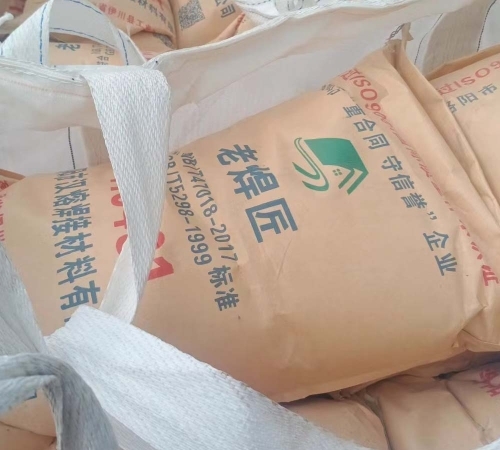
The quality of your flux is the foundation for this process. Our HJ431 Flux is produced using premium raw materials like dolomite, bauxite, and silica, which are melted at 2000 °C in our 1000 square meter facility. This meticulous process, capable of producing 100 tons per day, ensures a chemically consistent and physically stable grain structure, making its behavior under the arc predictable and reliable.
Step-by-Step Procedure for Establishing Optimal Depth:
- Start with a Rule of Thumb: A common starting point is to have a flux burden that is approximately 1 to 1.5 times the diameter of the welding wire. For example, if you are using a 4.0 mm wire, you would start with a flux depth of about 25-30 mm (approx. 1 to 1.25 inches) over the top of the joint. This is only a starting point and will require refinement.
- Set Initial Welding Parameters: Set your voltage, amperage, and travel speed according to your Welding Procedure Specification (WPS) or recommended settings for the material thickness and joint type. Ensure your complete setup, including the arc welding machine, is properly calibrated.
- Lay a Test Bead: On a scrap piece of material identical to your workpiece, lay a test bead of a sufficient length (e.g., 500 mm or 20 inches) to allow the process to stabilize and for proper evaluation.
- Observe During Welding: Pay close attention to the process. You should hear a steady, consistent crackling or buzzing sound from the arc. There should be no visible arc light flashing through the flux layer. You might see a small, localized red glow on the surface of the flux directly above the arc, which is normal. The flux should appear calm and not be blown around excessively by arc forces.
- Evaluate the Slag and Weld Bead: After the weld is complete and has cooled, evaluate the slag covering. It should be continuous, smooth, and ideally, it should detach easily, sometimes even lifting on its own ("self-peeling"). Once the slag is removed, inspect the weld bead. It should have a smooth surface, a consistent width, and good tie-in with the base metal at the toes.
- Adjust and Repeat:
- If you observed arc flash or the bead is porous and wide, your flux burden is too shallow. Increase the depth slightly and run another test bead.
- If the bead is narrow and high-crowned, or if the slag is very difficult to remove, your flux burden is likely too deep. Decrease the depth slightly and repeat the test.
Continue this iterative process of small adjustments and testing until you achieve a stable arc, easy slag removal, and a perfectly formed weld bead. Once established, make sure your flux delivery system can consistently maintain this optimal depth throughout production runs.
Troubleshooting Common Weld Bead Defects Related to Flux Depth
When weld defects appear, operators often first look to adjust electrical parameters. However, checking the flux burden should be one of the primary troubleshooting steps. Here’s how flux depth relates to common issues:
- Surface Porosity: This is the classic sign of insufficient flux depth. The shallow burden fails to protect the molten pool from the atmosphere. The first corrective action should always be to increase the flux depth until all visible arc flashing is eliminated.
- Undercutting: While often linked to high voltage or excessive travel speed, an incorrect flux burden can contribute to undercutting. An overly deep burden can constrict the arc, creating a digging action that can lead to undercut if other parameters are not perfectly balanced. Check your flux depth in conjunction with adjusting your voltage.
- Irregular Bead Shape: A "ropy" or convex bead with a high crown is a strong indicator of too much flux. The excessive depth constricts the arc, preventing the weld pool from wetting out and flowing smoothly to the sides. Reducing the flux depth will allow the bead to flatten and achieve a better profile.
- Slag Inclusions: If you are experiencing slag inclusions, especially in multi-pass welds, excessive flux depth could be the culprit. The deep, narrow bead profile makes it difficult for the slag to be completely removed between passes. Reducing the flux burden to create a wider, more accessible bead profile can often solve this problem. Our HJ431 Flux is specifically formulated for excellent slag detachability, but this property is optimized when the burden is correct.
The Interplay Between Flux Depth and Other Welding Parameters
It is crucial to understand that flux depth does not exist in a vacuum. It interacts directly with the primary electrical parameters of the SAW process. When you adjust one, you may need to fine-tune another.
- Arc Voltage: Arc voltage primarily controls the width of the weld bead. A higher voltage creates a longer arc, which in turn requires a deeper flux burden to ensure it remains completely submerged. If you increase voltage to widen the bead, you must also increase the flux depth to prevent arc flash.
- Welding Current (Amperage): Current controls the penetration and deposition rate. Higher currents generate stronger arc forces (arc blow). If the flux burden is too shallow, a high current can literally blow the granular flux away from the arc zone, exposing the weld pool. Therefore, as you increase current, you may need to increase the flux depth for adequate shielding.
- Travel Speed: Travel speed affects both bead size and penetration. At very high travel speeds, the flux delivery system must be able to keep up and maintain a consistent, sufficient depth ahead of the arc. An inconsistent flux burden at high speeds can lead to intermittent shielding and defects.
A successful SAW operation depends on a holistic understanding of how all these variables work together. By starting with the right consumables, such as high-quality flux and compatible solid wire, and systematically optimizing each parameter, operators can achieve unparalleled productivity and quality. For clients in Thailand, Malaysia, and across the globe, the reliability of our products provides the foundation for efficient and successful welding projects.
Mastering the flux burden is a key skill for any SAW operator. It is a fundamental part of the process that directly influences weld integrity, appearance, and overall production efficiency. By following the guidelines and understanding the underlying principles, you can consistently achieve superior results with the SAW process, ensuring your welds meet the highest standards of quality and performance.