
Selecting Electrode Core Wire by Sheath and Fill
Selecting the Right Electrode Core Wire for Industrial Welding
In high-stakes industrial fabrication, the choice of welding consumable is as critical as the skill of the welder. For processes utilizing Flux-Cored Arc Welding (FCAW), selecting the optimal electrode core wire is paramount to achieving desired mechanical properties, productivity, and cost-efficiency. While many factors influence this decision, a systematic approach begins with a deep understanding of the wire's two primary components: the outer metal sheath and the inner flux or powder fill. This choice directly impacts everything from arc stability and deposition rate to the weld's final chemical composition and resistance to cracking.
Making an informed selection requires moving beyond basic product numbers and into the material science of the consumable itself. For fabrication supervisors and distributors who supply large-scale operations in markets from Brazil to Australia, understanding how sheath and fill correspond to specific applications ensures you are sourcing and recommending the most effective and reliable welding solutions. As an ISO 9001 certified manufacturer, we understand that consistency in every spool of wire is non-negotiable for our partners' success.
Understanding the Fundamental Anatomy of Cored Wire
At its most basic, a cored wire is a continuously fed tubular electrode containing a composite core. Unlike a solid wire, its construction is intentionally complex, designed to introduce elements into the weld pool that a solid wire cannot. These two key components work in tandem:
- The Metal Sheath: This is the outer metallic tube, typically made of mild or low-alloy steel. Its primary function is to carry the welding current to the arc. The design of the sheath, particularly how it is formed (either folded or seamless), can also influence feeding characteristics and moisture resistance.
- The Core Fill: This is the granular material inside the sheath. It is a carefully engineered mixture of fluxing agents, deoxidizers, slag formers, alloying elements, and sometimes additional metal powders. The fill is the "active" part of the wire, responsible for protecting the molten weld pool from atmospheric contamination, refining the weld metal, and establishing the final mechanical properties of the joint.
The interplay between these two parts defines the wire's classification and its ideal operating environment. The first major decision in the selection workflow is determined by the sheath's role in shielding the arc.
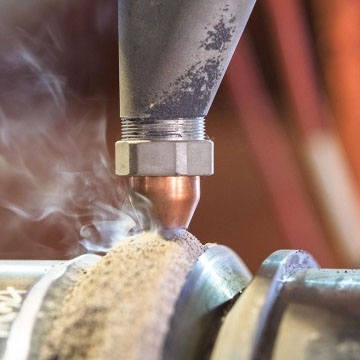
Sheath Functionality: Gas-Shielded vs. Self-Shielded Designs
Cored wires are broadly categorized into two families based on their shielding method: gas-shielded (FCAW-G) and self-shielded (FCAW-S). This is the most fundamental choice and is dictated almost entirely by the intended welding environment.
Gas-Shielded Wires (FCAW-G): Precision for Controlled Environments
Gas-shielded flux-cored wires require an external supply of shielding gas, typically a CO2 or Argon/CO2 blend, delivered through the welding gun. The core fill in these wires contains deoxidizers and slag formers but relies on the external gas for primary protection of the weld pool from oxygen and nitrogen.
Advantages:
- High Deposition Rates: They are highly efficient, allowing welders to lay down more weld metal per hour compared to other processes like shielded metal arc welding (SMAW).
- Excellent Weld Quality: The combination of flux and gas results in a very stable arc, low spatter, and a smooth, professional-looking weld bead that often requires minimal post-weld cleaning.
- Versatility: Available for a wide range of materials, including carbon steels, stainless steels, and low-alloy steels.
Best-Suited For:
FCAW-G is the preferred choice for indoor fabrication shops, pressure vessel manufacturing, and structural steel applications where the welding environment is controlled. Any significant airflow, such as wind on a construction site, can blow the shielding gas away and compromise weld integrity. They pair exceptionally well with a robust mig-mag-tig welding machine configured for flux-cored operations.
Self-Shielded Wires (FCAW-S): Durability for Field Applications
Self-shielded flux-cored wires are designed for simplicity and portability. The core fill contains all the necessary ingredients to generate its own protective gas shield when vaporized by the heat of the arc. This eliminates the need for external gas cylinders and regulators.
Advantages:
- Excellent for Outdoor Use: Because the shielding is generated directly at the arc, it is far more resistant to wind and drafts, making it ideal for field erection, bridge construction, and repair work.
- High Portability: The lack of a gas cylinder makes the setup simpler and easier to move around a large job site.
- Deep Penetration: Many FCAW-S wires offer deep, forceful penetration, which is beneficial for welding on thicker materials or through light surface contaminants.
Best-Suited For:
FCAW-S is the go-to process for outdoor construction and heavy equipment repair. While they produce more smoke and spatter than their gas-shielded counterparts and the resulting slag is typically more difficult to remove, their operational flexibility in challenging conditions is unmatched.
Deconstructing the Fill: Matching Core Composition to Application
Once the shielding method is determined, the next step is to examine the composition of the core fill. The type of flux system used in an electrode core wire dictates its usability, arc characteristics, and the final mechanical properties of the weld deposit. The most common systems are rutile, basic, and metal-cored.
Rutile-Based Fills (T-1, T-9)
Rutile (titanium dioxide) is a primary ingredient in these flux systems. Rutile-based wires are known for being exceptionally user-friendly.
- Arc Characteristics: They produce a soft, smooth, and stable arc with very low spatter.
- Slag System: The slag is fast-freezing and easy to remove, which is a significant advantage for welder productivity.
- Positional Capability: Their excellent slag control makes them suitable for all-position welding, including vertical-up and overhead. Common examples like aws e6013 welding electrodes in the SMAW world share similar rutile-based flux principles for ease of use.
These are general-purpose wires, ideal for single or multi-pass welding on carbon steel in structural and general fabrication.
Basic-Based Fills (T-5)
Basic flux systems use calcium, magnesium, and potassium compounds. They are engineered for performance in demanding applications where weld metal toughness is critical.
- Arc Characteristics: The arc is typically more forceful and less smooth than a rutile wire, requiring a higher level of welder skill.
- Slag System: The slag is often more fluid and can be more difficult to control in out-of-position work.
- Mechanical Properties: Their key advantage is producing a weld deposit with very low hydrogen content and excellent impact toughness, even at low temperatures. This makes them highly resistant to hydrogen-induced cracking.
Basic-based wires are specified for welding thick sections, high-strength low-alloy (HSLA) steels, and applications subjected to high restraint or seismic loading.
Metal-Cored Wires (T-C)
Technically a subset of cored wires, metal-cored wires are distinct because their core consists almost entirely of metallic powders and alloys, with only minimal slag formers. They are almost exclusively gas-shielded.
- Productivity: They offer the highest deposition rates of any semi-automatic welding process, making them ideal for high-volume production.
- Minimal Slag: They produce very little slag, often just a thin film of silica islands, which dramatically reduces or eliminates post-weld cleaning time.
- Automation-Friendly: The stable arc and low spatter make them a perfect match for robotic and automatic welding machine systems.
Metal-cored wires are the top choice for automated welding in the automotive, heavy machinery, and manufacturing sectors where throughput and efficiency are the primary drivers.

Partnering with a Manufacturer for Quality and Supply Chain Reliability
Choosing the right electrode core wire is only half the battle. For distributors and large-scale fabricators in markets like Thailand and Malaysia, ensuring a consistent and reliable supply of high-quality consumables is crucial for maintaining production schedules and project profitability. This requires a partnership with a manufacturer that has the technical expertise and production capacity to meet your demands.
At Oldwelders, our commitment to quality is validated by our ISO 9001 certification. Our production processes are rigorously controlled, from the sourcing of premium raw materials like dolomite and bauxite to the high-temperature melting process at 2000°C. Our 1000-square-meter plant, equipped with six production lines, has the capacity to supply up to 100 tons of finished product per day, ensuring we can fulfill large-volume orders dependably.
We work closely with our B2B partners to provide a seamless procurement experience. With a standard minimum order quantity (MOQ) of 1 ton and a typical lead time of 30 days, you can manage your inventory effectively and keep your operations running smoothly. Whether you require general-purpose rutile wires or specialized basic-flux consumables, our range of welding materials is engineered to deliver consistent performance, spool after spool.
By carefully analyzing your application's needs against the sheath design and core fill of an electrode core wire, you can significantly enhance weld quality, boost productivity, and optimize costs. A knowledgeable manufacturing partner can provide the technical support and reliable supply chain needed to turn this critical selection into a competitive advantage.