
Select the Right Grinding Disc to Reduce Operating Costs
Cut your long-term operating costs by matching the grinding disc grain to the specific metal.
In any industrial fabrication or repair operation, managing consumable costs is a constant battle. For procurement managers and shop supervisors, the price of a single grinding disc can seem trivial. However, when multiplied across hundreds of projects and dozens of operators, the cumulative expense becomes a significant line item. The common approach of selecting the lowest-priced disc often leads to a false economy, resulting in higher long-term costs due to poor performance, frequent replacements, and increased labor time.
The key to unlocking real savings lies not in the initial purchase price, but in the total cost of ownership. This is achieved by understanding the technology behind the abrasive tool and making an informed decision based on application. A high-performance grinding disc, correctly matched to the workpiece material, removes stock faster, lasts longer, and reduces operator fatigue. This translates directly to lower cost-per-part, improved productivity, and a healthier bottom line. This guide provides the technical knowledge needed to move beyond price-per-unit and start evaluating these essential tools based on performance and value, ensuring every purchase contributes to operational efficiency.
Understanding the Core Abrasive Grains in a Grinding Disc
The effectiveness of any abrasive tool is determined by its cutting material. For the modern grinding disc, three primary abrasive grains dominate the market, each with distinct properties, performance characteristics, and ideal applications. Selecting the right one is the first and most critical step in optimizing your grinding operations and controlling costs.
Aluminum Oxide (A.O.)
Aluminum Oxide is the most common and traditional abrasive grain used in manufacturing. It is a tough, durable, and cost-effective material known for its versatility. During use, the grains tend to dull rather than fracture. This characteristic makes it highly effective on ferrous metals, where it can withstand the heat and pressure of grinding without breaking down too quickly. It is the workhorse of the industry, suitable for general-purpose applications on carbon steel, mild steel, and other low-alloy steels.
- Best For: General-purpose grinding on carbon and mild steels, ferrous metals.
- Key Characteristic: Grains dull over time, providing a consistent but less aggressive cut.
- Cost Profile: Lowest initial purchase price, making it attractive for light-duty or non-critical tasks.
Zirconia Alumina (Z.A.)
Zirconia Alumina, often referred to as "zirc," is a significant step up in performance. This grain is an alloy of aluminum oxide and zirconium oxide. Its key advantage is its friability—the ability of the grain to fracture under pressure and expose new, sharp cutting edges. This self-sharpening action allows for a more aggressive cut rate and a longer disc life compared to standard Aluminum Oxide. It excels in heavy-duty applications on structural steel, stainless steel, and other hard metals where rapid stock removal is necessary.
- Best For: Aggressive stock removal on stainless steel, structural steel, and other hard metals.
- Key Characteristic: Self-sharpening grains provide a consistently high cut rate.
- Cost Profile: Higher initial cost than A.O., but often provides a lower total cost through longer life and faster work completion.
Ceramic Alumina (C.A.)
Ceramic Alumina represents the pinnacle of abrasive grain technology. Produced through a high-temperature sintering process, these grains have a unique microcrystalline structure. As the disc is used, microscopic layers of the grain break away, continuously revealing fresh, razor-sharp cutting points. This results in the fastest cut rate and longest life of all three grain types, especially under moderate to high pressure. Ceramic grains require more power to perform optimally and are best suited for demanding applications on heat-sensitive alloys, stainless steel, and exotic metals like Inconel and titanium. While they carry the highest initial price, their unparalleled productivity in the right application delivers the lowest cost-per-grind.
- Best For: High-production grinding on stainless steel, exotic alloys, and heat-sensitive metals.
- Key Characteristic: Micro-fracturing provides an exceptionally cool, fast cut and the longest service life.
- Cost Profile: Highest initial cost, justified by maximum productivity and minimal disc changeovers in industrial settings.
Matching the Abrasive Grain to the Metal Workpiece
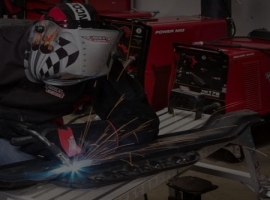
The interaction between the abrasive grain and the metal workpiece is a matter of physics and metallurgy. Using the wrong grain on a specific metal leads to inefficiency at best and workpiece damage at worst. A systematic approach to matching ensures optimal performance, safety, and cost-effectiveness. The goal is to choose a grain that is harder than the material it is grinding, allowing it to cut efficiently without generating excessive heat or prematurely wearing out.
Ferrous Metals (Carbon Steel, Stainless Steel, Cast Iron)
Ferrous metals, which contain iron, are the most common materials in fabrication. However, they vary widely in hardness and heat sensitivity.
- Mild & Carbon Steel: For general-purpose tasks on these materials, Aluminum Oxide is a perfectly suitable and economical choice. For heavy stock removal, weld blending, or high-production environments, upgrading to a Zirconia Alumina grinding disc will yield significant time savings and longer disc life.
- Stainless Steel & Hard Steels: These materials generate more heat during grinding. Zirconia Alumina is an excellent choice as its self-sharpening nature helps maintain a cool cut. For the most demanding applications, such as preparing thick stainless steel joints for a mig-mag-tig welding machine, Ceramic Alumina is the superior option. It cuts faster and cooler, reducing the risk of discoloration (heat tint) and metallurgical damage to the workpiece.
Non-Ferrous Metals (Aluminum, Copper, Brass)
Non-ferrous metals are softer and have a lower melting point, which presents a unique challenge: loading. This occurs when the soft metal particles melt and clog the surface of the disc, rendering it ineffective. To combat this, discs designed for non-ferrous metals often use specialized coatings and grain structures.
- Aluminum: A standard Aluminum Oxide disc is often sufficient, but it's crucial to select one that is specifically labeled for use on aluminum. These often have a lubricant or grinding aid, like calcium stearate, to prevent loading. Applying a grinding wax or lubricant to the disc can also help. Using a Zirconia or Ceramic disc is usually overkill and can lead to aggressive gouging of the soft material.
- Other Non-Ferrous Metals: For materials like brass, bronze, and copper, a silicon carbide abrasive (a different category not covered in depth here) is often recommended, though a specialized Aluminum Oxide disc can also perform well.
Here is a summary table for quick reference:
| Metal Type | Good (Economy) | Better (Performance) | Best (Productivity) |
|---|---|---|---|
| Mild / Carbon Steel | Aluminum Oxide | Zirconia Alumina | Ceramic Alumina |
| Stainless Steel | Zirconia Alumina | Ceramic Alumina | N/A |
| Hard Steels / Alloys | Zirconia Alumina | Ceramic Alumina | N/A |
| Aluminum | Aluminum Oxide (with anti-loading coating) | N/A | N/A |
Beyond the Grain: Other Factors Influencing Performance and Cost
While the abrasive grain is the primary driver of performance, other characteristics of the grinding disc play a vital role in its effectiveness and overall value. A holistic evaluation considers grit, bond, and the operational parameters of the tool being used.
Grit Size (Coarseness)
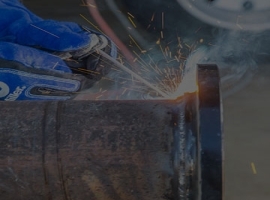
Grit size refers to the physical size of the abrasive grains. It is denoted by a number: the lower the number, the coarser the grit; the higher the number, the finer the grit.
- Coarse Grits (e.g., 24, 36): These are designed for aggressive, heavy stock removal. They cut faster but leave a rougher surface finish. They are ideal for beveling edges, removing large welds, and shaping metal.
- Medium Grits (e.g., 60, 80): These offer a balance between stock removal and surface finish. They are suitable for blending welds, deburring, and light cleaning.
- Fine Grits (e.g., 120+): These are used for finishing and polishing, not for material removal. They are more common in flap discs than in bonded grinding wheels.
Choosing the wrong grit can be costly. Using a grit that is too fine for heavy stock removal will burnish the metal and wear out the disc quickly. Conversely, using a grit that is too coarse will require additional finishing steps, adding time and labor to the process.
Bond Hardness
The bond is the adhesive that holds the abrasive grains together. The "hardness" of the bond determines how quickly old, dull grains are shed to expose new, sharp ones. A hard bond holds onto grains longer, while a soft bond releases them more easily. The choice depends on the material being ground:
- Hard Metals (e.g., Stainless Steel): A softer bond is preferred. The hard metal quickly dulls the abrasive grains, so the softer bond allows them to be shed easily, revealing fresh grains to continue cutting efficiently.
- Soft Metals (e.g., Mild Steel, Aluminum): A harder bond is better. The grains stay sharp longer against the soft material, so the bond needs to hold them in place for maximum use, preventing premature shedding and extending disc life.
A Strategic Approach to Procurement and Operational Value
For procurement professionals and managers in markets from Brazil to Australia, the ultimate goal is to maximize value and minimize operational disruptions. This requires a shift in perspective from cost-per-disc to cost-per-part or cost-per-hour-of-operation. A slightly more expensive, technologically advanced grinding disc that lasts twice as long and works 30% faster delivers a far greater return on investment.
When evaluating suppliers, look for a partner who understands the complete fabrication process. At Oldwelders, our expertise is built on a foundation of manufacturing excellence. Our ISO 9001 certified facility, spanning 1000 square meters with six production lines, is a testament to our commitment to quality and scale. This same dedication to process control and material science informs our approach to all industrial supplies. We understand that preparing a surface for welding is just as critical as the weld itself. Proper surface preparation, achieved with the right abrasive, ensures a stronger, cleaner weld, reducing rework and improving the quality of the final product.
By implementing a "right tool for the job" policy, you can conduct trials to quantify the benefits. Measure disc life, time-on-task, and the number of parts completed per disc. The data will almost certainly show that matching the grain to the metal, even with a higher upfront cost, leads to substantial savings in labor and total consumable spend. This strategic approach to sourcing essential welding accessories is what separates efficient, profitable operations from those constantly battling the hidden costs of false economy. Partnering with a knowledgeable supplier who can provide a full range of high-quality welding materials ensures you have the right products and the right expertise to optimize every step of your workflow.