
Select the Right Basic Welding Rod for Steel
How to Select the Right Basic Welding Rod for Various Steel Thicknesses
The success of any welding project hinges significantly on the precise selection of consumables. For robust, high-integrity welds, particularly in demanding industrial applications, understanding how to match the correct electrode to the material specification is paramount. This guide focuses on the critical process of selecting the appropriate Basic Welding Rod based on steel thickness, ensuring optimal performance, weld quality, and structural integrity. Oldwelders is an ISO 9001 certified manufacturer, providing premium welding solutions to industries across Brazil, Thailand, Australia, and Malaysia.
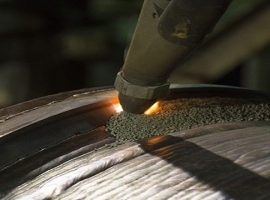
Understanding the Characteristics of a Basic Welding Rod
Basic welding rods, also known as low-hydrogen electrodes (e.g., AWS E7018), are renowned for their exceptional mechanical properties and their ability to produce high-quality, crack-resistant welds. These rods are formulated to minimize hydrogen content in the weld metal, which is a primary cause of cold cracking in steel structures. Their flux coating typically contains a high proportion of basic minerals such such as dolomite and calcium carbonate, along with deoxidizers and alloying elements. When melted at 2000 °C during our manufacturing process, these raw materials – including excellent dolomite, bauxite, cryolite, silica, and fluorine ore – create a stable arc and a dense, protective slag that shields the molten weld pool from atmospheric contamination.
The inherent advantages of basic electrodes include:
- Superior Mechanical Properties: They provide high tensile strength, excellent ductility, and good impact toughness at low temperatures, making them ideal for critical structural applications.
- Low Hydrogen Content: Significantly reduces the risk of hydrogen-induced cracking, especially in high-strength steels or thick sections.
- Good Weld Penetration: Offers consistent and deep penetration, ensuring strong fusion with the base material.
- Versatility: Suitable for welding a wide range of steels, including carbon, low-alloy, and some high-strength low-alloy (HSLA) steels.
- All-Positional Capability: Many types are designed for all-position welding, enhancing flexibility in fabrication.
Oldwelders operates a state-of-the-art facility covering an area of 1000 square meters, equipped with six production lines. This allows us to maintain a daily supply capacity of 100 tons, ensuring consistent availability for your project needs, whether you require a specific Basic Welding Rod or other welding materials.
Matching Electrode Diameter to Steel Thickness
The relationship between the diameter of the welding electrode and the thickness of the steel being welded is fundamental to achieving a sound, efficient weld. Using an electrode that is too small for thick material will necessitate multiple passes, increase heat input, and potentially lead to distortion. Conversely, an electrode that is too large for thin material can cause burn-through or excessive heat input, compromising the weld.
Thin Steel (Up to 3 mm / 1/8 inch)
For very thin steel sheets or plates, precision and controlled heat input are critical to prevent burn-through and warpage.
- Recommended Electrode Diameter: 1.6 mm (1/16 inch) to 2.5 mm (3/32 inch).
- Considerations: Use lower amperage settings and maintain a faster travel speed. While basic rods can be used, their larger puddle and thicker slag might be challenging for beginners on very thin gauges. In some cases, other types of welding rods might be preferred for very thin material, but for critical applications requiring basic rod properties, careful technique is essential.
- Application: Thin sheet metal fabrication, light structural work where high strength is still required.
Medium Steel (3 mm to 12 mm / 1/8 inch to 1/2 inch)
This range represents the most common thickness encountered in general fabrication, structural steelwork, and machinery construction. Basic welding rods are highly effective here.
- Recommended Electrode Diameter: 2.5 mm (3/32 inch) to 4.0 mm (5/32 inch).
- Considerations: This range allows for a good balance of penetration and deposition rate. Multiple passes may be required for the upper end of this thickness range, especially with narrower groove preparations. Optimize amperage, travel speed, and arc length for the specific joint configuration.
- Application: Medium to heavy structural steel, pressure vessel components, pipe welding, general repair and maintenance.
Thick Steel (Over 12 mm / 1/2 inch)
Welding thick sections demands careful planning and execution to ensure full penetration, proper fusion, and freedom from defects. Basic electrodes are often the go-to choice for these applications due to their metallurgical advantages.
- Recommended Electrode Diameter: 4.0 mm (5/32 inch) to 6.0 mm (1/4 inch).
- Considerations: Larger electrodes are used for thicker sections to increase deposition rates and improve efficiency. Multiple passes are almost always necessary, and proper interpass temperature control is crucial. For very thick sections or certain alloy steels, preheating the base material may be required to slow down the cooling rate and prevent hydrogen-induced cracking. Joint preparation (e.g., V-groove, U-groove) becomes more complex to allow for adequate access and fill.
- Application: Heavy fabrication, large structural components, shipbuilding, heavy machinery, and critical repairs.
Optimizing Parameters for Effective Basic Welding Rod Application
Beyond selecting the correct diameter, fine-tuning your welding parameters is essential for achieving high-quality welds with basic electrodes. The specific settings will vary based on the electrode type (e.g., AWS E7018, E7016), steel composition, joint design, and welding position.
Amperage Settings
Amperage directly controls the heat input and penetration. The electrode manufacturer's recommendations are the best starting point, usually provided on the electrode packaging or data sheet.
- Too Low: Causes poor penetration, erratic arc, lack of fusion, and a convex bead.
- Too High: Leads to excessive penetration, burn-through (especially on thinner materials), undercut, porosity, and an overheated electrode.
Arc Length
Basic electrodes generally require a short arc length.
- Short Arc: Promotes a stable arc, good penetration, and minimizes hydrogen pickup from the atmosphere. It also helps control the molten puddle.
- Long Arc: Can lead to arc instability, increased spatter, porosity, reduced penetration, and potential for hydrogen pick-up.
Travel Speed
The speed at which the electrode moves along the joint affects bead shape, penetration, and heat input.
- Too Fast: Results in a narrow, ropey bead, insufficient penetration, and undercut.
- Too Slow: Causes excessive heat input, a wide and convex bead, potential for slag inclusions, and distortion.
Electrode Angle
Maintain a slight drag angle (typically 10-20 degrees from vertical in the direction of travel) for most applications. This helps to direct the arc force, improve penetration, and control the molten puddle and slag.
Polarity
Most basic electrodes are designed for use with Direct Current Electrode Positive (DCEP), also known as Reverse Polarity. This concentrates more heat at the work piece, providing deeper penetration and a more stable arc for these electrode types. While some can be used with AC, DCEP is generally preferred for optimal results. Oldwelders offers a range of welding machine options, including arc welding machine models compatible with DCEP for your basic electrode applications.
Quality Assurance and Supply Chain Excellence at Oldwelders
At Oldwelders, we understand that the reliability of your welding consumables is paramount to your operational success. Our commitment to quality is underscored by our ISO 9001 certification, which governs every stage of our production, from raw material sourcing to final product inspection. The raw materials of the flux products produced by the company are excellent dolomite, bauxite, cryolite, silica, fluorine ore and other ores, which are melted at 2000 °C to ensure superior metallurgical properties.
Our expansive manufacturing plant, covering 1000 square meters and featuring six robust production lines, is designed for high-volume, precision manufacturing. This infrastructure enables us to maintain a daily production capacity of 100 tons, ensuring a consistent and reliable supply of welding rods, wires, and fluxes. We are equipped to meet large-scale industrial demands, with a minimum order quantity of 1 ton, and are proud to offer a delivery timeframe of 30 days, catering to the needs of our global clientele in markets such as Brazil, Thailand, Australia, and Malaysia.
Oldwelders ensures that every Basic Welding Rod we produce adheres to stringent quality controls, guaranteeing optimal performance in your most critical applications. We understand the B2B landscape and the need for dependable, high-performance consumables that contribute to cost-efficiency and project timelines without compromising on safety or structural integrity.
Applications and Best Practices for Basic Welding Rods
The correct selection of a Basic Welding Rod is crucial for industries where weld integrity is non-negotiable. These rods are extensively used in:
- Heavy Fabrication: For constructing large steel components, machinery frames, and earthmoving equipment.
- Structural Steel: In bridges, buildings, and other infrastructure where high strength and ductility are required.
- Pressure Vessels and Boilers: Due to their low-hydrogen properties, they are ideal for welds that must withstand high pressures and temperatures.
- Shipbuilding: For joining thick plates and critical structural elements.
- Pipeline Welding: Especially for root passes and fill passes in high-pressure pipelines.
- Repair Welding: For restoring damaged components where original mechanical properties must be maintained.
Storage and Handling
To preserve the low-hydrogen properties of these electrodes, proper storage is vital. Basic welding rods are highly susceptible to moisture absorption, which can reintroduce hydrogen into the flux coating.
- Store in hermetically sealed containers or dry, heated electrode ovens at recommended temperatures (e.g., 100-150°C / 212-302°F) to prevent moisture pickup.
- Re-baking procedures should be followed if electrodes are exposed to atmospheric moisture for extended periods, as per manufacturer guidelines.
- Avoid leaving opened electrodes exposed on the job site for longer than specified limits.
Safety Considerations
As with all welding processes, adherence to safety protocols is paramount when using basic electrodes.
- Always wear appropriate personal protective equipment (PPE), including welding helmet, gloves, flame-retardant clothing, and safety shoes.
- Ensure adequate ventilation to dissipate welding fumes.
- Be aware of electrical hazards and ensure proper grounding of equipment.
Conclusion
The precise matching of a Basic Welding Rod to steel thickness is a critical factor in achieving durable, high-quality, and structurally sound welds. By understanding the characteristics of these robust electrodes, meticulously selecting the appropriate diameter, and fine-tuning welding parameters, welders and purchasing teams can significantly enhance project outcomes. Oldwelders is dedicated to providing premium, ISO 9001 certified welding consumables, manufactured with the highest quality raw materials and advanced processes. Our extensive production capabilities and commitment to timely global supply make us a trusted partner for your industrial welding needs across various markets. For expert guidance on selecting the ideal Basic Welding Rod or exploring our comprehensive range of welding fluxes, contact us today.