
SJ101 Flux: Match Wire, Current, and Weld Requirements
Achieve Optimal SAW Performance with the Right SJ101 Flux Specifications
Submerged Arc Welding (SAW) stands as a pillar of heavy fabrication, renowned for its high deposition rates and exceptional weld quality. At the heart of this process is the welding flux, a granular material that shapes the chemical composition and mechanical properties of the final weld. Among the most versatile consumables is the SJ101 flux, an agglomerated fluoride-basic flux trusted for demanding applications in structural steel, pressure vessels, and pipeline manufacturing. However, unlocking its full potential requires a precise understanding of how to match it with the correct welding wire and operational parameters.
This technical guide is designed for welding engineers and procurement specialists who need to validate whether SJ101 flux is the right fit for their existing procedures and quality standards. We will explore its fundamental properties, provide clear guidance on wire pairing for different service conditions, and discuss the critical role of parameter optimization and quality assurance. As an ISO 9001 certified manufacturer, we understand that consistent, reliable welding performance begins with superior consumables, and our goal is to provide the clarity needed to make informed technical decisions.
Understanding the Core Properties of Agglomerated SJ101 Flux
Not all welding fluxes are created equal. The manufacturing method and chemical composition define a flux's behavior and suitability for specific applications. SJ101 is an agglomerated, fluoride-basic type flux, which imparts a distinct set of desirable characteristics to the welding process.
The term "agglomerated" means it is produced by mixing finely ground mineral components with a binder, forming pellets, and then baking them at a moderate temperature. This process allows for the addition of deoxidizers and alloying elements that would not survive the high temperatures of fused flux manufacturing. At Oldwelders, we begin with a foundation of excellent raw materials, including high-purity dolomite, bauxite, silica, and fluorine ore, which are meticulously processed and melted at temperatures reaching 2000 °C to ensure homogeneity and performance.
Key properties of a high-quality SJ101 flux include:
- High Basicity: It typically has a high basicity index, which means the resulting weld metal has very low levels of impurities like oxygen and nitrogen. This translates directly into superior mechanical properties, particularly excellent impact toughness at low temperatures, making it a prime choice for critical applications in cold climates or for cryogenic service.
- Excellent Slag Detachability: The slag system is designed to be self-releasing or easily removed after welding. This significantly reduces post-weld cleaning time, boosting productivity in multi-pass welding operations.
- Smooth Bead Appearance: A stable arc and fluid slag coverage produce a smooth, uniform weld bead with a fine ripple pattern, minimizing the need for cosmetic grinding and indicating a sound weld.
- Versatile Current Compatibility: This flux performs exceptionally well with both Direct Current Electrode Positive (DCEP) and Alternating Current (AC), giving operators flexibility to choose the best current for the application—DCEP for deeper penetration or AC for higher deposition rates and mitigating arc blow.
These intrinsic properties make it a reliable foundation for producing welds that meet stringent code requirements, but they must be paired with the appropriate welding wire to achieve the targeted mechanical specifications.
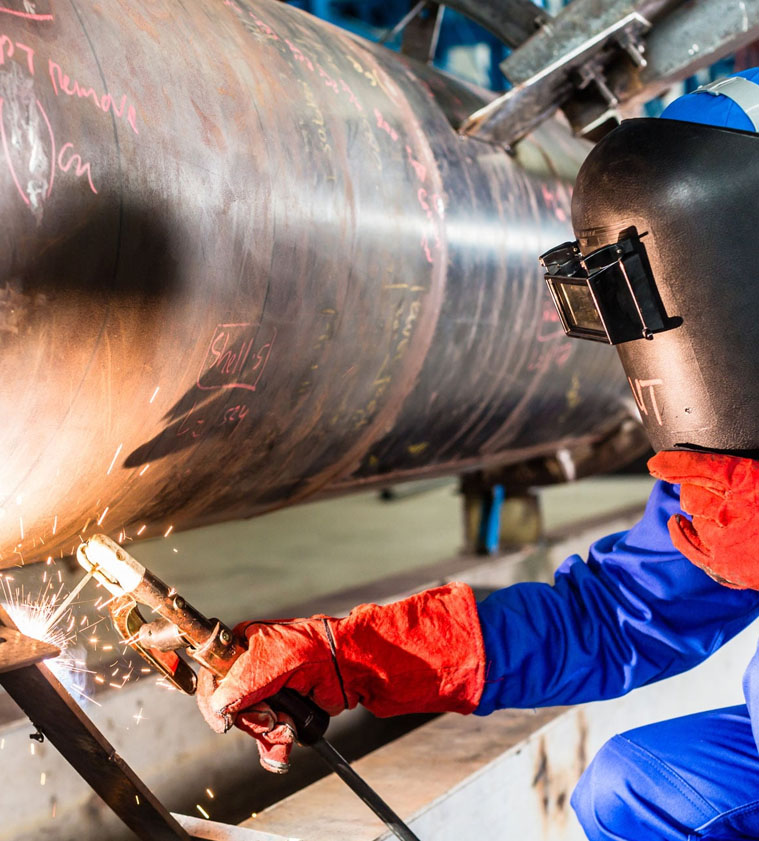
Matching SJ101 Flux with Common SAW Wires for Specific Applications
The combination of flux and wire—not the flux alone—determines the final chemical analysis and mechanical properties of the deposited weld metal. Selecting the correct solid wire is crucial for meeting the demands of the base material and service environment. Below, we outline common pairings for SJ101 flux across various industrial applications.
For General Structural Steel and Shipbuilding
For applications involving mild and medium carbon steels, such as H-beams, general fabrication, and shipbuilding, the primary goal is to achieve sound welds with good mechanical properties and high productivity. In these cases, SJ101 flux is commonly paired with wires like:
- AWS A5.17 EM12K: This is a very common combination. The manganese and silicon in the wire provide effective deoxidation, resulting in a tough, crack-resistant weld deposit. It offers a great balance of strength and ductility for structural work.
- AWS A5.17 EL12 (EL8): A lower manganese wire, this option is suitable for single-pass welding on clean base materials where high impact toughness is not the primary requirement.
This pairing provides a stable arc, easy slag removal, and reliable performance for everyday fabrication needs.
For Pressure Vessels and High-Strength Steels
When fabricating pressure vessels, boilers, or bridges using low-alloy, high-strength steels, the requirements for tensile strength and toughness become more demanding. The flux-wire combination must deposit a weld metal that matches or exceeds the properties of the base material. A recommended wire for these applications is:
- AWS A5.17 EH14: This wire contains higher levels of manganese compared to EM12K, which increases the strength and hardness of the weld deposit. When used with SJ101 flux, the EH14 pairing can consistently achieve the higher tensile strength required for joining materials like SA-516 Grade 70 or similar pressure vessel quality plates.
This combination is engineered to deliver the enhanced mechanical properties necessary for critical structural components that operate under high pressure or significant stress.
For Low-Temperature Service and Offshore Structures
The standout feature of a fluoride-basic flux like SJ101 is its ability to produce welds with excellent Charpy V-notch impact toughness at sub-zero temperatures. This is non-negotiable for applications like LNG storage tanks, offshore platforms, and equipment destined for arctic environments. To leverage this capability, it should be paired with wires that contribute to a clean and tough microstructure:
- AWS A5.23 F7A6-EM12K/F7P6-EH14: The classification itself indicates suitability for low-temperature toughness. Pairing SJ101 flux with wires like EM12K or EH14 under controlled procedures can meet stringent toughness requirements at temperatures of -40°C (-40°F) or even lower, depending on the specific wire chemistry and welding parameters.
- Alloyed Wires (e.g., Ni, Mo): For even more demanding requirements, this flux can be used with low-alloy steel wires containing elements like nickel to further enhance sub-zero toughness.
The following table provides a quick reference for these common pairings:
| Application Area | Recommended AWS Wire | Key Benefits of the Combination |
|---|---|---|
| General Structural Steel, Shipbuilding | EM12K, EL12 | Excellent weldability, good bead appearance, and reliable mechanical properties for mild steel. |
| Pressure Vessels, Boilers, Bridges | EH14 | Higher tensile strength and hardness to match low-alloy, high-strength base materials. |
| Low-Temperature Service, Offshore | EM12K, EH14 (Qualified by procedure) | Superior Charpy V-notch impact toughness at sub-zero temperatures due to high flux basicity. |
Optimizing Welding Parameters for Superior Results
Once the correct flux-wire combination is selected, fine-tuning the welding parameters is essential for process control and weld quality. The versatility of SJ101 flux allows for a wide operating window, but understanding how each variable affects the outcome is key.
Current Type and Polarity
As mentioned, this flux works well on both AC and DCEP.
- DCEP (Direct Current Electrode Positive): This polarity provides deep, stable penetration, making it ideal for root passes and welding thicker materials where complete joint penetration is critical.
- AC (Alternating Current): AC is often preferred for high-speed, high-deposition welding, especially in multi-wire SAW setups. It also helps mitigate the risk of arc blow, a common issue when welding long, magnetized seams or into corners.
Voltage, Amperage, and Travel Speed
These three parameters are interconnected and must be balanced:
- Voltage: Primarily controls the arc length. Higher voltage creates a wider, flatter bead and increases flux consumption. Too high a voltage can lead to a hollow bead or porosity.
- Amperage: Controls the electrode melt-off rate and, consequently, the depth of penetration. Higher amperage increases deposition rate and penetration.
- Travel Speed: Dictates the heat input and the size of the weld bead. Faster speeds result in a smaller bead and lower heat input, which can be beneficial for controlling distortion.
These parameters should always be set and verified according to a qualified Welding Procedure Specification (WPS).
Flux Handling and Re-drying
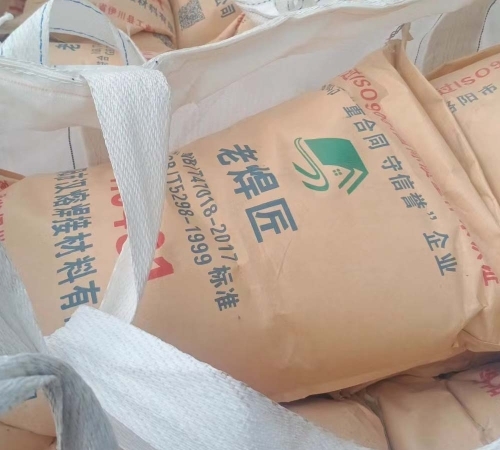
Agglomerated fluxes are hygroscopic, meaning they can absorb moisture from the atmosphere. Welding with damp flux is a primary cause of hydrogen-induced cracking and porosity. To ensure the best results, SJ101 flux must be stored in a dry, sealed condition. If the bags are opened or exposed to humidity, the flux should be re-dried according to the manufacturer's recommendations, typically at a temperature around 300-350°C (572-662°F) for 1-2 hours before use.
Your Partner for Consistent Quality and Reliable Supply
Achieving repeatable, high-quality welds depends on the consistency of your consumables. A flux that varies in composition from batch to batch will lead to unpredictable results and costly rework. This is where supplier validation becomes paramount. At Oldwelders, we operate under a strict ISO 9001 quality management system, ensuring every ton of flux we produce meets the same exacting standards.
Our modern factory, covering 1000 square meters, is equipped with six dedicated production lines capable of supplying up to 100 tons of welding fluxes per day. This capacity allows us to reliably serve large-scale industrial projects in our key markets, including Brazil, Thailand, Australia, and Malaysia. With a standard minimum order quantity of 1 ton and a typical lead time of 30 days, we are structured to support the procurement needs of serious B2B clients. When you partner with us, you are not just buying a product; you are securing a supply chain built on quality, capacity, and consistency.
The Final Authority: The Welding Procedure Specification (WPS)
While this guide provides a strong technical foundation, it is essential to remember that all welding for code-critical work must be governed by a qualified Welding Procedure Specification (WPS) and supported by a Procedure Qualification Record (PQR). The WPS is the formal "recipe" detailing the specific wires, fluxes, base materials, parameters, and techniques to be used.
Before deploying SJ101 flux in production, a PQR must be created by welding a test coupon using the proposed parameters. This coupon then undergoes destructive testing (e.g., tensile tests, bend tests, and Charpy V-notch tests) to prove that the resulting weld meets the mechanical properties required by the project's governing code (e.g., ASME, AWS, or API). This qualification process provides the documented proof that your chosen combination of SJ101 flux, wire, and arc welding machine parameters will produce a weld that is fit for purpose.
In conclusion, SJ101 flux is a powerful and versatile tool for heavy fabrication. Its success lies in a systematic approach: understanding its core properties, pairing it intelligently with the correct wire for the application, optimizing welding parameters, and finally, validating the entire process through a formal WPS. By following these principles, engineers can confidently leverage this flux to produce sound, reliable, and code-compliant welds.
If you have specific project requirements or need assistance in selecting the right welding materials, contact our technical team today to discuss your application.