
Rutile Welding Rod: Tips for Perfect Arc Starts | Oldwelders
Achieve consistently smooth arc starts with a high-quality Rutile Welding Rod.
In the world of Shielded Metal Arc Welding (SMAW), few things are as fundamental—or as frustrating—as initiating the arc. A clean, immediate start sets the stage for a high-quality weld, while a sputtering, difficult start can lead to porosity, inclusions, and a flawed bead from the very beginning. For operators seeking enhanced control, a smoother experience, and superior results, the choice of electrode is paramount. Among the various types available, electrodes with a rutile-based flux coating stand out for their exceptional arc-starting characteristics, forgiving nature, and aesthetic finish.
This comprehensive guide is designed for professional welders and procurement managers who want to understand the science and technique behind achieving flawless arc initiation. We will explore why rutile electrodes are a preferred choice for many applications, delve into the practical steps for a perfect start every time, and discuss how to troubleshoot common issues. By mastering the arc start, operators can significantly improve both their efficiency and the structural integrity of their work.
Understanding the Unique Properties of Rutile Flux Coatings
Not all welding electrodes are created equal. The secret to their performance lies in the flux coating, a carefully formulated mixture of minerals and chemicals that surrounds the core wire. This coating serves multiple critical functions: it generates a shielding gas to protect the molten weld pool from atmospheric contamination, forms a slag to shape the bead and control cooling, and introduces alloying elements. Most importantly for this discussion, it directly influences the electrical characteristics of the arc.
So, what makes a rutile coating special? Rutile is a mineral composed primarily of titanium dioxide (TiO₂). When used as a major component in an electrode's flux, it provides several distinct advantages:
- Easy Arc Ignition: Titanium dioxide is an excellent arc stabilizer. It readily ionizes in the electric field between the electrode and the workpiece, creating a stable path for the current to flow. This makes it significantly easier to strike and maintain the arc, even at lower amperages.
- Smooth and Stable Arc: Once established, the arc from a rutile electrode is notably smooth and quiet, with minimal spatter. This allows the operator to maintain better control over the weld pool, resulting in a more uniform and aesthetically pleasing weld bead.
- Versatile Positional Welding: While not suited for all positions like a cellulosic rod, many rutile-type electrodes (such as the common AWS E6013) perform well in flat, horizontal, and vertical-down positions. The fluid slag helps hold the molten metal in place.
- Self-Releasing Slag: The slag produced by these electrodes is typically easy to remove, often lifting away from the finished weld with minimal effort. This reduces post-weld cleaning time and improves overall productivity.
These combined properties make the rutile welding rod an excellent choice for general fabrication, sheet metal work, and maintenance tasks where ease of use and a clean finish are priorities.
The Science of a Stable Arc: How Rutile Facilitates Ionization
To truly appreciate why a rutile electrode excels at arc initiation, we need to look at the physics involved. An electric arc is a sustained plasma discharge—a superheated, electrically conductive gas. For welding to begin, the air gap between the electrode tip and the workpiece must be "ionized," meaning its atoms are stripped of electrons, allowing it to conduct electricity.
The composition of the flux coating plays a crucial role in this ionization process. The titanium dioxide in the rutile coating has a relatively low ionization potential. When the voltage from the welding power source is applied, the elements in the flux coating ionize more easily than the surrounding air. This creates a conductive "bridge" that allows the arc to establish itself quickly and with less required voltage.
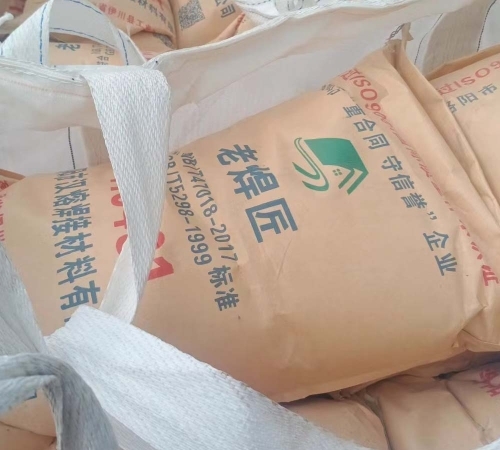
At Oldwelders, the performance of our electrodes is rooted in the quality of our raw materials. The flux is produced from a precise blend of excellent dolomite, bauxite, cryolite, silica, and fluorine ore, which are melted at an extreme temperature of 2000 °C. This meticulous process ensures a homogenous mixture and activates the arc-stabilizing properties of the rutile component. This commitment to material science is a key reason why operators can rely on our consumables for consistent, predictable arc starts, weld after weld. By controlling the purity and composition of these base materials, we can fine-tune the electrode's performance for optimal stability and minimal spatter.
Practical Techniques for a Flawless Arc Start
Even with the best electrode, proper technique is essential. A stable power source, such as a reliable arc welding machine, is the first requirement. Once your equipment is set correctly, mastering the arc start comes down to two primary methods: the "scratch" (or "strike") start and the "tap" start.
The Scratch Start Method
This technique is often compared to striking a match. It is highly effective for rutile electrodes and is generally preferred by many welders for its reliability.
- Positioning: Hold the electrode holder at the correct travel angle for your intended weld (typically 15-20 degrees from vertical). Position the tip of the electrode near the starting point of the weld joint.
- The Strike: Lower your welding helmet. With a light, swift motion, drag the tip of the electrode across the workpiece surface, much like striking a match. This should be a short, controlled scratch of about half an inch.
- Lifting and Pausing: As soon as the arc ignites, immediately lift the electrode to establish the proper arc length (roughly equal to the diameter of the core wire). Pause for a moment at the starting point to allow the weld pool to form and establish proper width and penetration before beginning your travel.
The Tap Start Method
The tap start is a more direct motion and can be useful in tight spaces where a scratching motion is impractical.
- Positioning: Position the electrode tip directly above the desired start point of the weld.
- The Tap: Lower your helmet. In a quick, decisive motion, tap the electrode tip against the workpiece and immediately pull it back to the correct arc length. The key is to be quick; lingering too long will cause the electrode to stick to the workpiece.
- Establish the Pool: As with the scratch method, once the arc is established, hold the position momentarily to allow the weld pool to form before proceeding with the weld.
Regardless of the method used, surface preparation is crucial. Ensure the workpiece is free of rust, paint, oil, or mill scale. A clean surface provides a better electrical ground and prevents contaminants from being drawn into the weld, ensuring a stronger and cleaner start.
Troubleshooting Common Arc Starting Problems
Even experienced welders encounter issues. When arc starts are proving difficult, a systematic approach can help identify the cause. Here are some common problems and their solutions:
Problem: The Electrode Sticks to the Workpiece
- Low Amperage: This is the most common cause. The current is insufficient to melt the electrode tip fast enough, causing it to fuse to the base metal. Increase your amperage in small increments.
- Poor Technique: If you are using the tap start, you may be hesitating too long. The motion should be a quick tap-and-lift. If scratching, you may be using too much pressure.
- Moisture in the Flux: Electrodes that have absorbed moisture from the air can be difficult to start. Store electrodes in a dry, sealed container or a rod oven.
Problem: The Arc is Unstable or Extinguishes Itself
- Incorrect Arc Length: Holding the electrode too far from the workpiece will cause the arc to become long, erratic, and eventually extinguish. Maintain a consistent, tight arc length.
- Poor Ground Connection: Ensure your ground clamp is attached to a clean, bare metal spot on the workpiece and that the clamp itself is in good condition. A weak ground creates high resistance and an unstable arc.
- Incorrect Polarity: Most rutile electrodes, like E6013, run on AC or DCEN (Direct Current Electrode Negative). Check your machine settings to ensure you are using the correct polarity as specified by the manufacturer.
For specific applications, choosing the right electrode classification is key. For example, our range of aws e6013 welding electrodes are designed for excellent performance in general-purpose fabrication due to their superb arc-starting and restriking capabilities.
Partnering with a Reliable Supplier for Consistent Quality
The consistency of your welding consumables has a direct impact on the productivity and quality of your operations. An electrode that performs perfectly one day and causes problems the next leads to downtime, rework, and frustration. This is why partnering with a manufacturer committed to quality control is a strategic business decision.
At Oldwelders, our entire manufacturing process is governed by stringent ISO 9001 quality management standards. From the sourcing of high-purity raw ores to the final packaging, every step is monitored to ensure that each Rutile Welding Rod we produce meets exact specifications. Our 1,000-square-meter plant, equipped with six modern production lines, has the capacity to supply up to 100 tons of high-quality welding consumables per day. This scale allows us to serve large-scale industrial clients while maintaining consistency across every batch.
We understand the logistical needs of our B2B partners. With a standard Minimum Order Quantity (MOQ) of 1 ton and a typical lead time of 30 days, we provide a predictable and reliable supply chain. Our experience serving diverse international markets, including Brazil, Thailand, Australia, and Malaysia, demonstrates our capability to meet global standards and logistical requirements. When you source your welding materials from Oldwelders, you are not just buying a product; you are investing in a partnership built on quality, reliability, and technical expertise.