
Rutile Welding Rod: A Guide to Positions and Polarity
Understanding the Technical Specifications of a Rutile Welding Rod
In industrial fabrication and repair, selecting the correct welding consumable is paramount to achieving structural integrity, operational efficiency, and a high-quality finish. Among the most versatile and widely used consumables is the rutile welding rod, favored for its user-friendly characteristics and reliable performance across a variety of applications. For purchasing managers, welding engineers, and professional welders, a deep understanding of this electrode's operational parameters—specifically welding positions, power source polarity, and storage protocols—is not just beneficial; it is essential for maximizing project outcomes and ensuring safety.
This technical guide provides an in-depth analysis of these critical factors. We will explore the chemical composition that gives these electrodes their name, detail their performance in various welding positions, clarify the nuances of AC and DC polarity settings, and outline the best practices for storage and handling to prevent costly weld defects. This information will empower your team to make informed decisions, ensuring that every weld bead laid is sound, strong, and consistent with project specifications.
What Defines Rutile Welding Electrodes?
The defining characteristic of a rutile electrode is its flux coating, which is primarily composed of titanium dioxide (TiO₂) in its rutile mineral form. This specific formulation is responsible for the electrode's highly desirable operational properties. When the arc is struck, the rutile-based flux coating burns to create a protective gaseous shield, displacing atmospheric oxygen and nitrogen from the molten weld pool. This shielding action is crucial for preventing porosity and embrittlement, resulting in a clean, strong, and ductile weld.
Beyond shielding, the flux performs several other vital functions:
- Arc Stabilization: The titanium dioxide in the coating contains easily ionized elements that help to establish and maintain a very stable and smooth arc. This stability makes the electrode easier for welders to control, reduces spatter, and contributes to a finely rippled, aesthetically pleasing bead appearance. This characteristic is especially valuable in applications where finish quality is a key consideration.
- Slag Formation: As the flux melts, it forms a layer of molten slag that covers the solidifying weld metal. This slag protects the bead from atmospheric contamination as it cools, helps shape the bead profile, and slows the cooling rate, which can improve the metallurgical properties of the weld. The slag produced by a rutile welding rod is typically easy to remove, often lifting away on its own or with light chipping, significantly reducing post-weld cleaning time.
- Alloying and Deoxidation: The flux coating can contain deoxidizers, such as ferromanganese and ferrosilicon, which react with oxygen in the weld pool to prevent the formation of oxides (porosity). It can also include alloying elements to enhance the mechanical properties of the deposited weld metal, such as tensile strength and impact toughness.
These combined benefits make rutile electrodes, such as the common AWS E6013 welding electrodes, a general-purpose solution for welding mild and low-alloy steels. Their smooth operation, easy slag removal, and excellent bead appearance make them a preferred choice for sheet metal work, general fabrication, structural steel, and maintenance tasks where operational ease and efficiency are prioritized.
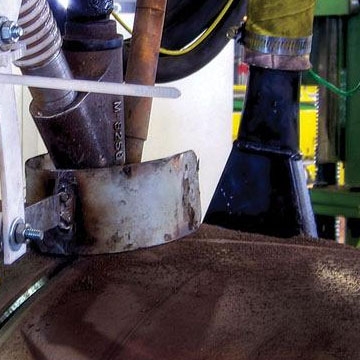
Optimal Welding Positions for Rutile Electrodes
The versatility of an electrode is often measured by its ability to perform effectively in various welding positions. Rutile electrodes are renowned for their all-positional capabilities, making them a flexible and valuable asset in any fabrication shop. However, understanding their specific performance characteristics in each position is key to achieving optimal results.
1. Flat Position (1G/1F)
This is the easiest and most common welding position. The workpiece is laid flat, and the welder deposits the bead from above. In the flat position, rutile electrodes excel, producing a smooth, uniform bead with minimal effort. The fluid slag effectively covers the weld pool, and gravity helps to create a well-contoured bead profile. Welders can use higher amperages in this position, leading to increased deposition rates and improved productivity.
2. Horizontal Position (2G/2F)
In the horizontal position, the weld axis is horizontal. The challenge here is to counteract the effect of gravity, which can cause the molten weld pool to sag. Rutile electrodes perform very well in this position due to their relatively fast-freezing slag. This slag helps to hold the molten metal in place as it solidifies, preventing undercut at the top edge and overlap at the bottom edge of the weld. Maintaining a proper work angle and travel speed is crucial for success.
3. Vertical Position (3G/3F)
Welding in the vertical position requires significant skill, as the welder must fight gravity directly. This can be done in two ways: vertical-up or vertical-down.
- Vertical-Up (Uphill): This technique is generally used for thicker materials as it allows for deeper penetration. The welder starts at the bottom of the joint and moves upward. The slag from rutile electrodes is fluid enough to flow but also solidifies quickly enough to create a "shelf" that supports the weld pool. This technique produces strong, high-quality welds, though it is slower than welding downhill.
- Vertical-Down (Downhill): This technique is faster and is typically used on thinner materials (e.g., sheet metal) where deep penetration is not required or desired. The fast-freezing slag of rutile electrodes is particularly advantageous here, as it solidifies rapidly to prevent the weld pool from running ahead of the arc. This method produces a smooth, flat bead profile with minimal reinforcement.
4. Overhead Position (4G/4F)
The overhead position is the most challenging, as the welder works underneath the workpiece. Gravity pulls the molten metal away from the joint, increasing the risk of a sagging, irregular bead. To succeed, the welder must maintain a very tight arc length and use a quick travel speed. The fast-freezing characteristics of the rutile slag are critical in this position, helping to hold the molten metal in the joint until it solidifies. Lower amperage settings are typically used to keep the weld pool small and manageable.
The all-positional capability of these electrodes makes them a reliable choice for complex assemblies and on-site repair work where the workpiece cannot always be manipulated into the ideal flat position.
Polarity and Power Source Compatibility
The choice of power source and polarity has a significant impact on arc characteristics, penetration profile, and overall weld quality. A key advantage of the rutile welding rod is its compatibility with a wide range of power sources, adding to its versatility.
Alternating Current (AC)
Rutile electrodes are an excellent choice for use with AC power sources. The arc stabilizers in the flux coating ensure the arc remains stable and consistent even as the current rapidly alternates between positive and negative. This makes them ideal for use with less expensive, transformer-based AC "buzzer box" welders commonly found in smaller workshops and maintenance departments. Welding with AC produces a moderately deep penetration profile and a smooth, stable arc with low spatter.
Direct Current (DC)
When using a DC power source, the electrode can be connected to either the positive or negative terminal, a choice that alters the welding characteristics.
- Direct Current Electrode Positive (DCEP / DC+): Also known as reverse polarity, this is the most common setup for rutile electrodes. In DCEP, electrons flow from the workpiece to the electrode. This concentrates approximately two-thirds of the arc's heat on the electrode tip, leading to a forceful, digging arc that provides deeper penetration. DCEP is preferred for welding thicker materials and for out-of-position work, as the arc force helps to control the weld pool.
- Direct Current Electrode Negative (DCEN / DC-): Also known as straight polarity, in this setup electrons flow from the electrode to the workpiece. This directs more of the arc's heat into the base metal, resulting in a higher deposition rate (faster welding) but shallower penetration. DCEN is often used for welding thin sheet metal where excessive penetration could lead to burn-through.
This flexibility allows a single type of electrode to be used with nearly any Shielded Metal Arc Welding (SMAW) machine, from basic AC models to advanced DC inverter-based units. For professional applications, pairing these electrodes with a reliable arc welding machine that offers stable current control is key to unlocking their full performance potential.
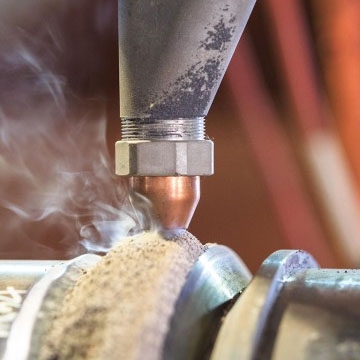
Proper Storage and Handling to Ensure Weld Quality
The performance of any welding electrode is highly dependent on the condition of its flux coating. The coating on a rutile welding rod is hygroscopic, meaning it can absorb moisture from the atmosphere. Excessive moisture in the flux is a primary cause of severe weld defects and must be meticulously managed through proper storage and handling.
When an electrode with a damp coating is used, the intense heat of the arc breaks down the water (H₂O) into its components, hydrogen and oxygen. The free hydrogen can then dissolve into the molten weld pool. As the weld cools and solidifies, this hydrogen can become trapped, leading to several problems:
- Porosity: Pockets of hydrogen gas can form visible pores or "wormholes" on the weld surface or within the bead, weakening the joint.
- Hydrogen-Induced Cracking (HIC): Also known as delayed cracking or cold cracking, this is a much more serious defect. Trapped hydrogen increases internal stresses in the weld and the heat-affected zone (HAZ), which can lead to cracking hours or even days after the weld has been completed. This is a critical risk in high-strength or restrained joints.
- Arc Instability: Excess moisture can also lead to an erratic, unstable arc and increased spatter, making it difficult for the welder to maintain control and produce a quality bead.
Best Practices for Storage and Handling:
- Keep Sealed Until Use: Electrodes should be kept in their original, hermetically sealed packaging until they are ready to be used. This is the best defense against moisture absorption.
- Dry Storage Environment: Once opened, electrodes must be stored in a controlled, dry environment. A heated electrode oven or holding oven, typically maintained at a temperature between 100°C and 150°C (212°F and 300°F), is the industry standard for preventing moisture contamination.
- Re-baking (Reconditioning): If electrodes are suspected of having been exposed to moisture, they can often be reconditioned by baking them in a calibrated oven. The specific temperature and duration for re-baking depend on the manufacturer's recommendations but are typically in the range of 250°C to 350°C (482°F to 662°F) for one to two hours. It is critical to follow these instructions precisely, as overheating can damage the flux coating.
Implementing a strict storage and handling protocol is a low-cost, high-impact measure to prevent expensive rework and ensure the integrity of every welded joint.
Sourcing High-Quality Consumables from a Trusted Partner
The theoretical knowledge of welding positions and parameters is only as good as the quality of the consumables used. Inconsistent flux composition, poor concentricity, and susceptibility to moisture can undermine even the most skilled welder's work. This is why partnering with a reliable manufacturer is a critical business decision.
At Oldwelders, we are committed to excellence throughout our entire manufacturing process. Our operations are ISO 9001 certified, providing our clients with the assurance of a globally recognized quality management system. From our 1000-square-meter plant, six modern production lines have the capacity to supply 100 tons of welding consumables per day, ensuring we can meet large-scale orders with a typical lead time of just 30 days. This capability allows us to reliably serve demanding industrial markets in Brazil, Thailand, Australia, Malaysia, and beyond.
Our commitment to quality begins with the raw materials. We source excellent dolomite, bauxite, silica, and other ores, which are melted at 2000°C to create the foundation for our high-performance welding fluxes and electrode coatings. This rigorous process ensures every batch meets our stringent standards for performance and reliability. With a minimum order quantity of 1 ton, we are equipped to be a strategic partner for businesses of all sizes, providing the superior welding materials necessary to build, fabricate, and repair with confidence.