
Prevent Weld Contamination with Oldwelders Welding Flux
Understanding How Welding Flux Prevents Weld Contamination for Superior Results
In the demanding world of metal fabrication and industrial welding, the integrity and cleanliness of welds are paramount. Weld contamination, a persistent challenge for shop operators, can lead to costly rework, structural weaknesses, and ultimately, project delays. Achieving consistently high-quality welds requires not only skilled operators and advanced machinery but also the right consumables. Among these, welding fluxes play a critical, often underestimated, role in preventing defects and ensuring the mechanical properties of the final joint. At Oldwelders, we understand the complexities involved in producing flawless welds, which is why we provide meticulously engineered solutions designed to enhance your operational efficiency and product quality.
This article delves into the essential functions of welding flux, exploring how it acts as a protective shield and purification agent during the welding process. We will examine the scientific principles behind its effectiveness, the diverse types available, and how selecting a premium product can significantly reduce instances of weld contamination. For businesses striving for excellence in welding applications, understanding the nuances of this critical consumable is not merely beneficial—it is foundational.
The Critical Role of Welding Flux in Achieving Clean, Strong Welds
Weld contamination manifests in various forms, including porosity, inclusions (slag, oxides), and hydrogen-induced cracking, all of which compromise the strength and durability of the weld. These defects often arise from atmospheric gases (oxygen, nitrogen, hydrogen) reacting with the molten weld pool, or from impurities present on the base metal or in the welding environment. This is precisely where welding flux becomes indispensable. Its primary function is to create a protective barrier around the molten metal, isolating it from harmful atmospheric elements.
Beyond simple shielding, welding flux performs several vital actions:
- Atmospheric Protection: As the flux melts under the intense heat of the arc, it decomposes to generate a gas shield that displaces ambient air, preventing oxygen and nitrogen from reacting with the molten metal.
- Slag Formation: A molten slag layer forms over the weld pool. This slag serves multiple purposes: it physically protects the molten metal from the atmosphere, helps shape the weld bead, slows down the cooling rate to prevent cracking, and importantly, absorbs impurities from the weld pool.
- Deoxidation: Fluxes contain deoxidizers that chemically react with oxygen present in the weld pool, forming oxides that float up into the slag, thus purifying the weld metal. This significantly reduces porosity and inclusion defects.
- Alloying: Some fluxes are formulated to introduce specific alloying elements into the weld metal, enhancing its mechanical properties such as strength, toughness, and corrosion resistance. This precise control over weld metallurgy is crucial for specialized applications.
By actively managing these aspects, welding flux ensures that the weld metal solidifies free from detrimental contaminants, resulting in welds that meet stringent quality standards for strength, ductility, and fatigue resistance across various welding materials.
The Science Behind Oldwelders' Premium Welding Flux Formulations
The effectiveness of welding flux hinges on its precise chemical composition and the quality of its raw materials. At Oldwelders, our commitment to superior weld quality begins at this fundamental level. We meticulously select excellent raw materials such as dolomite, bauxite, cryolite, silica, and fluorine ore. These high-purity components are essential for creating fluxes that perform optimally under diverse welding conditions, ensuring consistent and reliable results for our B2B clients.
Our manufacturing process is designed for precision and consistency. These carefully chosen ores are melted at an extreme temperature of 2000 °C, a critical step that ensures proper homogenization and reactivity of the flux components. This high-temperature melting process is key to developing fluxes that provide stable arc characteristics, excellent slag detachability, and superior weld metal properties.
The production of our submerged arc welding flux hj431, along with our other flux products, takes place in a state-of-the-art facility. Our plant covers an area of 1000 square meters and is equipped with six production lines, enabling us to maintain a high level of operational efficiency. This robust infrastructure allows us to supply up to 100 tons of flux per day, meeting the demands of large-scale industrial operations without compromising on quality or consistency. Our adherence to stringent quality management systems is further underscored by our ISO 9001 certification, providing our customers with confidence in every batch of product they receive.
Key Components and Their Functions in Welding Flux
- Dolomite: Primarily contributes to slag formation, providing a stable and protective cover for the weld pool. Its properties help regulate slag viscosity.
- Bauxite: Rich in aluminum oxide, bauxite enhances slag properties, improving both its protective capabilities and its ease of removal after welding.
- Cryolite: A fluorine-containing mineral, cryolite acts as a fluxing agent, reducing the melting point of other components and contributing to arc stability. It also aids in the removal of oxides.
- Silica: Contributes to the vitrification of the slag, influencing its mechanical properties and ensuring it provides an effective barrier against atmospheric contamination.
- Fluorine Ore: Essential for generating a protective gas shield and improving the fluidity of the slag. Fluorine compounds are also crucial for hydrogen control, mitigating the risk of hydrogen-induced cracking in the weld.
The precise balance and high purity of these ingredients are what set Oldwelders' fluxes apart, enabling them to consistently deliver clean, strong, and defect-free welds.
Types of Welding Flux and Their Ideal Applications
The world of welding flux is diverse, with formulations tailored to specific welding processes, base metals, and desired weld characteristics. Understanding these distinctions is crucial for selecting the optimal product to prevent contamination and achieve the desired mechanical properties.
Flux Types by Granularity and Application:
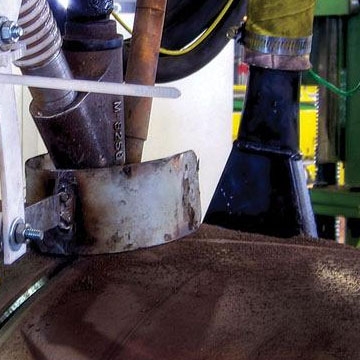
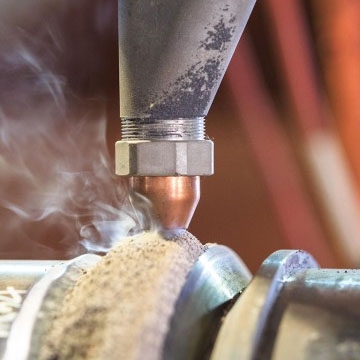
- Granular Fluxes: Predominantly used in Submerged Arc Welding (SAW), these fluxes are applied as a granular blanket over the weld joint. They melt to form a protective slag and gas shield, making them ideal for high-deposition, high-quality welds in industries such as shipbuilding, pressure vessel fabrication, and structural steel.
- Bonded Fluxes: These are manufactured by bonding various raw materials with a silicate binder. They offer flexibility in composition, allowing for precise control over alloying elements and deoxidizers. Bonded fluxes are versatile and can be tailored for specific applications or material combinations.
- Agglomerated Fluxes: Similar to bonded fluxes, but typically produced by sintering, resulting in a more porous structure. They are known for their excellent reusability and consistent performance.
Selecting the Right Flux for Optimal Performance
Choosing the correct welding flux requires a comprehensive understanding of several factors:
- Welding Process: Different fluxes are designed for different processes. For instance, while granular fluxes are central to SAW, other processes like shielded metal arc welding (SMAW) use flux-coated electrodes.
- Base Metal Type: The metallurgical composition of the base metal (e.g., carbon steel, stainless steel, low-alloy steel) dictates the required flux chemistry to ensure compatibility and prevent adverse reactions.
- Desired Mechanical Properties: Depending on whether the application requires high tensile strength, ductility, impact toughness, or corrosion resistance, the flux formulation will need to introduce specific alloying elements or provide particular shielding characteristics.
- Welding Position: While many fluxes are versatile, some are optimized for flat or horizontal positions, while others offer better control for vertical or overhead welding.
- Environmental Conditions: For critical applications or in challenging environments, fluxes with enhanced deoxidizing or hydrogen control properties may be necessary to combat specific contamination risks.
By carefully considering these variables, shop operators can ensure they select a welding flux that not only prevents contamination but also contributes positively to the overall quality and performance of the weld joint.
Ensuring Quality and Reliability with Oldwelders' Welding Flux
At Oldwelders, our reputation is built on delivering exceptional quality and unwavering reliability in all our welding machine and welding consumables. Our advanced manufacturing processes, coupled with rigorous quality control, ensure that every batch of welding flux meets the highest industry standards and performs consistently in your operations. The ISO 9001 certification of our facilities is a testament to our commitment to quality management systems that govern every stage of production, from raw material sourcing to final product inspection.
We understand that for B2B clients, consistent supply and predictable lead times are as crucial as product quality. Our substantial production capacity, with six lines capable of supplying 100 tons a day, ensures that we can fulfill orders efficiently, even for large-scale projects. We maintain a minimum order quantity (MOQ) of just 1 ton, making our premium welding fluxes accessible to a wide range of businesses, from mid-sized fabricators to major industrial plants. Our standard lead time of 30 days is designed to provide predictability for your procurement and project planning.
Oldwelders proudly serves a diverse global clientele, with established markets in Brazil, Thailand, Australia, and Malaysia. Our experience in these regions reflects our capability to understand and cater to the specific requirements and logistical challenges of international commerce. We are dedicated to building long-term partnerships, providing not just products but comprehensive solutions that help our clients achieve superior welding outcomes and operational efficiency. By choosing Oldwelders, you are partnering with a company that prioritizes your success through consistent quality, reliable supply, and expert support.
Conclusion
Preventing weld contamination is a cornerstone of producing high-quality, durable welds that meet stringent industry standards. Welding flux, far from being a secondary consumable, is a critical component in this endeavor, providing essential shielding, purifying the weld pool, and enhancing mechanical properties. Its ability to mitigate defects like porosity and inclusions directly translates into reduced rework, increased productivity, and enhanced structural integrity for your projects.
Oldwelders stands as a trusted partner in this mission, offering premium welding flux products meticulously engineered from superior raw materials and produced in an ISO 9001 certified, high-capacity facility. With our commitment to quality, reliable supply chains, and a deep understanding of welding metallurgy, we empower shop operators to achieve cleaner, stronger, and more reliable welds. Partner with Oldwelders to elevate your welding processes and ensure the consistent quality that your projects demand.