
What is Electrode Core Wire Made Of?
Understanding the Composition and Manufacturing of Electrode Core Wire
In the demanding world of industrial fabrication and construction, the choice of welding consumable significantly impacts productivity, weld quality, and overall project success. Among the various options available, flux-cored wire has emerged as a preferred solution for its versatility and efficiency. This article delves into the fundamental question: what is Electrode Core Wire made of? Understanding its intricate composition and the sophisticated manufacturing processes involved is crucial for welding engineers and fabrication buyers seeking optimal performance.
Oldwelders specializes in providing high-quality welding materials, including advanced flux-cored wires, designed to meet the rigorous standards of modern industry. Our commitment to excellence is underpinned by our ISO 9001 certification, ensuring that every product, from raw material sourcing to final delivery, adheres to stringent quality control protocols.
The Evolution and Importance of Electrode Core Wire in Modern Welding
The development of flux-cored wire marked a significant advancement in welding technology, combining the continuous feeding advantages of solid wire with the metallurgical benefits of shielded metal arc welding (SMAW) electrodes. This innovative design allows for higher deposition rates, improved weld puddle control, and enhanced mechanical properties, making it indispensable across various sectors, from heavy fabrication to shipbuilding. Its ability to penetrate deeply and bridge gaps effectively contributes to its widespread adoption in demanding applications worldwide, including key markets such as Brazil, Thailand, Australia, and Malaysia.
Key Components: What is Electrode Core Wire Made Of?
At its core, flux-cored wire is a composite tubular wire manufactured with a metal sheath surrounding a core of fluxing agents, alloying elements, and deoxidizers. This dual structure provides unique benefits over solid wires or stick electrodes. The composition is meticulously engineered to achieve specific welding characteristics and mechanical properties in the finished weld metal.
The Metal Sheath
The outer metal sheath of the cored wire typically consists of low-carbon steel, often with a copper coating to enhance electrical conductivity and prevent corrosion. The precise type of steel selected for the sheath depends on the intended application and the desired metallurgical properties of the weld. It serves several critical functions:
- Structural Integrity: It holds the flux core securely and allows the wire to be fed continuously through the welding machine.
- Electrical Conduction: It provides the path for the welding current, creating the arc.
- Alloying Contribution: The sheath itself can contribute alloying elements to the weld pool, although the primary alloying is often from the flux core.
The Flux Core: A Multi-Functional Filling
The heart of the cored wire is its flux core, a carefully formulated blend of powdered minerals and metallic compounds. This intricate mixture is designed to perform multiple functions during the welding process, significantly impacting arc stability, weld metal chemistry, and slag characteristics. The raw materials of the flux products produced by Oldwelders are excellent dolomite, bauxite, cryolite, silica, fluorine ore, and other selected ores, which are precisely melted at 2000 °C to ensure homogeneity and optimal performance.
Key components found within the flux core include:
- Arc Stabilizers: Elements such as potassium, sodium, and titanium oxides help to create a stable and consistent arc, improving bead shape and reducing spatter.
- Slag Formers: Compounds like calcium carbonate, calcium fluoride (fluorspar), and various silicates melt to form a protective slag layer over the molten weld pool. This slag shields the weld from atmospheric contamination, controls the cooling rate, and helps shape the weld bead.
- Deoxidizers and Denitrifiers: Manganese, silicon, and aluminum are common deoxidizers that react with oxygen in the weld pool, preventing porosity and improving mechanical properties. Titanium and zirconium serve as denitrifiers, reducing nitrogen absorption.
- Alloying Elements: Chromium, molybdenum, nickel, and vanadium can be incorporated into the flux core to enhance the mechanical properties of the weld metal, such as strength, toughness, and corrosion resistance, tailoring the wire for specific applications.
- Gas Formers: Some flux cores contain carbonates that decompose under the heat of the arc, releasing shielding gases (like CO2) to protect the weld pool from atmospheric contamination. This is particularly prevalent in self-shielded flux-cored wires.
The precise ratio and type of these ingredients dictate the performance characteristics of the welding consumable, including its suitability for different welding positions, materials, and desired weld properties.
The Manufacturing Process: From Raw Materials to Finished Electrode Core Wire
The production of flux-cored wire is a sophisticated multi-stage process that demands precision and stringent quality control. At Oldwelders, our state-of-the-art plant, covering an area of 1000 square meters, houses six production lines, capable of supplying up to 100 tons of welding fluxes or wires per day. This capacity ensures we can meet large-scale industrial demands efficiently and reliably.
Precision Drawing and Forming
The process begins with steel strip, which is precisely cut to width and then formed into a U-shape. This U-channel then receives the carefully blended flux ingredients. The strip is then progressively closed around the flux, forming a continuous tube. Subsequent drawing operations reduce the wire's diameter, compacting the flux core and achieving the desired final size. This cold drawing process also work-hardens the metal sheath, improving its strength and feedability.
Flux Filling and Compaction
The accurate and consistent filling of the flux core is paramount. High-precision machinery ensures that the correct amount and composition of flux are uniformly distributed along the entire length of the wire. During the drawing process, the flux is compacted, minimizing voids and ensuring even melting and consistent arc performance during welding.
Quality Control and Assurance
Throughout the manufacturing process, Oldwelders implements rigorous quality control measures. From the elemental analysis of incoming raw materials to in-process checks on wire diameter, flux fill, and concentricity, every step is monitored. Finished products undergo comprehensive testing, including chemical analysis of the weld metal, mechanical property tests (tensile strength, impact toughness), and radiographic examination to ensure freedom from defects. Our ISO 9001 certification underlines our commitment to delivering products that consistently meet or exceed international standards, providing our clients with reliable and high-performance welding materials.
Selecting the Right Electrode Core Wire for Specific Applications
Choosing the correct flux-cored wire involves considering several factors related to the application, desired weld properties, and welding environment. Oldwelders offers a diverse range of welding consumables to suit various industrial needs.
Types of Flux-Cored Wires
Flux-cored wires are broadly categorized into two main types based on their shielding gas requirements:
- Gas-Shielded Flux-Cored Arc Welding (FCAW-G): These wires require external shielding gas, typically CO2 or an argon-CO2 mixture, to protect the weld pool. The flux core primarily contributes to deoxidation, slag formation, and alloying. They generally offer higher deposition rates, excellent bead appearance, and good mechanical properties, making them suitable for heavy fabrication and structural steel.
- Self-Shielded Flux-Cored Arc Welding (FCAW-S): These wires do not require external shielding gas. The flux core is formulated to produce its own shielding gases when it decomposes under the arc. FCAW-S wires are highly portable and perform well in outdoor or windy conditions, often used for field work, maintenance, and repair, where external gas cylinders are impractical.
Application Considerations
When selecting a flux-cored wire, engineers and buyers should evaluate:
- Base Material: The wire's composition must be compatible with the base metal to achieve sound metallurgical bonds and desired properties.
- Welding Position: Some wires are designed for all-position welding, while others are optimized for flat and horizontal positions.
- Mechanical Property Requirements: Specific tensile strength, yield strength, and impact toughness values are often critical for structural applications.
- Productivity Goals: Flux-cored wires generally offer higher deposition rates than SMAW, contributing to increased productivity.
- Environment: Self-shielded wires are ideal for outdoor use where wind can disrupt external shielding gas.
Partnering with Oldwelders for Your Electrode Core Wire Needs
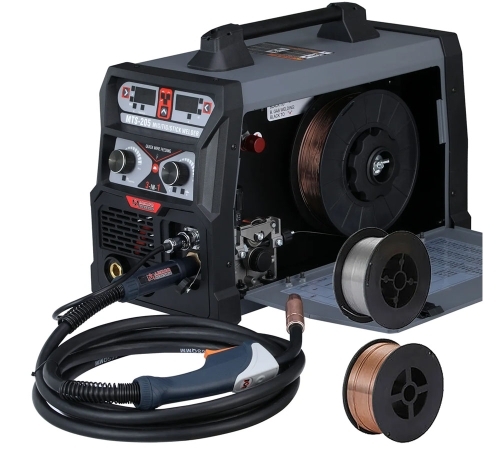
Oldwelders is a trusted global partner for businesses requiring high-performance welding solutions. Our extensive product portfolio includes not only flux-cored wires but also a full range of welding rods, welding wires, and advanced arc welding machines. We understand the critical importance of reliable supply chains and consistent product quality in industrial operations.
With a minimum order quantity (MOQ) of just 1 ton and a typical lead time of 30 days, we are equipped to support both routine and urgent procurement needs for our international clientele across Brazil, Thailand, Australia, and Malaysia. Our robust production capabilities and unwavering commitment to quality, backed by ISO 9001 certification, ensure that you receive superior welding consumables tailored to your specific demands. For expert guidance on selecting the optimal flux-cored wire or any other welding material, contact Oldwelders today. We are dedicated to empowering your operations with advanced welding technology and unparalleled service.