
Pressure Vessel Welding When Orbital Welding Fits
Optimizing Fabrication Through Precise Pressure Vessel Welding Techniques
In the demanding world of industrial fabrication, the integrity of a pressure vessel is paramount. These critical components, designed to contain gases or liquids at pressures substantially different from the ambient pressure, are fundamental to operations across countless industries, from petrochemicals and pharmaceuticals to energy and food processing. The quality of welds directly dictates the safety, longevity, and operational efficiency of these vessels. At Oldwelders, we understand that selecting the optimal welding method for welding machine applications is not merely a technical decision but a strategic one that impacts project timelines, costs, and overall reliability.
This article delves into the nuances of various welding approaches, with a particular focus on orbital welding, examining its unique advantages and specific scenarios where it excels. We will also explore its limitations, offering a balanced perspective crucial for engineering teams assessing fabrication methods for high-purity, repeat-production, or tight-tolerance vessel work.
The Criticality of Welding in Pressure Vessel Fabrication
The fabrication of pressure vessels is governed by stringent international codes and standards, such as ASME Boiler and Pressure Vessel Code, API, and EN standards. These regulations dictate material selection, design parameters, manufacturing processes, and inspection criteria, all aimed at preventing catastrophic failures. At the heart of meeting these requirements lies the welding process. A single faulty weld can compromise the entire vessel, leading to leaks, structural failure, environmental damage, and significant safety hazards.
Achieving defect-free welds in pressure vessels requires not only skilled operators but also precise equipment and high-quality welding materials. The selection of the welding technique must consider the material type, thickness, joint configuration, service conditions, and the required level of quality and repeatability. Oldwelders, an ISO 9001 certified manufacturer, is committed to supplying the robust solutions necessary for these critical applications, ensuring that our products meet the exacting standards demanded by the industry.
Understanding Orbital Welding for Pressure Vessels
Orbital welding is an automated process where the arc rotates mechanically 360 degrees around a static workpiece, typically a pipe or tube. This method was developed to address the need for high-quality, repeatable welds, especially in applications where manual welding struggles to achieve consistent results. For many applications, particularly those involving stainless steel and other high-alloy materials, orbital welding offers an unmatched level of precision and control.
The process is typically performed using the Gas Tungsten Arc Welding (GTAW/TIG) method, which provides a clean, spatter-free weld with excellent penetration and control over the weld pool. The automated nature of orbital welding minimizes human error, ensuring consistent heat input, travel speed, and filler wire addition. This consistency is vital for applications requiring high purity, such as those in the pharmaceutical, semiconductor, and food and beverage industries, where even minor imperfections can lead to contamination or structural weaknesses. The resulting welds often exhibit superior mechanical properties and a smoother internal bead, which is critical for fluid flow and cleanliness.
Key Advantages of Orbital Welding for Pressure Vessels
- Unmatched Consistency and Repeatability: Once programmed, the orbital welding system executes the weld with extreme precision, delivering identical results across multiple welds. This is invaluable for high-volume production where uniformity is essential.
- Superior Weld Quality: The controlled environment of orbital welding, often with inert gas purging, minimizes oxidation and contamination, leading to high-integrity, porosity-free welds. This directly translates to enhanced strength and extended service life for pressure vessels.
- Increased Productivity: While initial setup can take time, orbital welding significantly speeds up the actual welding process compared to manual methods, especially for repetitive tasks. This leads to higher throughput and reduced labor costs over time.
- Enhanced Safety: Automation reduces operator exposure to hazardous welding fumes and arc flash, improving workplace safety.
- Reduced Rework: The high quality and consistency inherently lead to fewer defects, minimizing the need for costly and time-consuming rework or repairs.
When Orbital Welding is the Optimal Choice for Pressure Vessel Welding
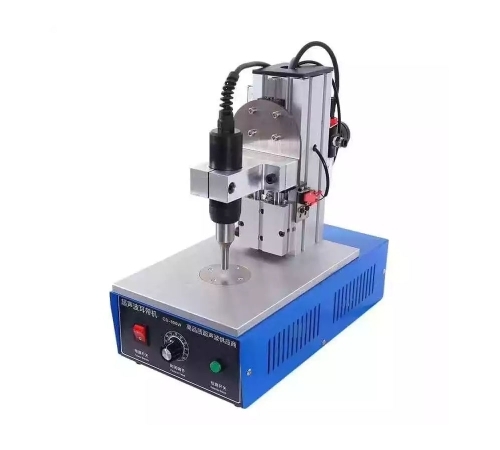
The decision to employ orbital welding for special welding machine processes on pressure vessels hinges on several factors, primarily revolving around the need for high quality, repeatability, and specific geometric requirements. Oldwelders' commitment to quality, backed by our ISO 9001 certification, ensures that our equipment and consumables support the highest standards demanded by these applications.
- Circumferential Pipe and Tube Welds: This is the quintessential application for orbital welding. For pressure vessels constructed from pipe sections or those requiring numerous nozzle connections, orbital welding delivers perfectly uniform circumferential welds.
- High-Purity Applications: Industries like pharmaceuticals, biotechnology, and food processing require ultra-clean internal surfaces to prevent product contamination. Orbital welding's ability to produce smooth, crevice-free internal beads is critical here.
- Exotic and High-Alloy Materials: Welding materials such as titanium, Hastelloy, Inconel, and various stainless steels often require precise heat input control and inert gas shielding to maintain their metallurgical properties and corrosion resistance. Orbital welding provides the necessary control for these demanding materials.
- High Production Volumes: When manufacturing multiple identical pressure vessels or components, the initial setup investment for an orbital system is quickly offset by the increased speed, consistency, and reduced labor costs per weld.
- Critical Service Conditions: Vessels designed for extreme temperatures, high pressures, or corrosive environments demand welds with absolute integrity. Orbital welding consistently delivers the mechanical strength and metallurgical purity required for such arduous conditions.
Our range of welding fluxes, crafted from excellent raw materials like dolomite, bauxite, cryolite, silica, and fluorine ore – melted at 2000 °C – ensures that the consumables used in conjunction with advanced welding techniques contribute to the highest quality welds. This meticulous attention to material science underpins the reliability of solutions supplied by Oldwelders to markets including Brazil, Thailand, Australia, and Malaysia.
Limitations and Alternatives: When to Reconsider Orbital Welding
While orbital welding offers significant advantages, it is not a universal solution. Understanding its limitations is crucial for making informed decisions and knowing when alternative methods might be more appropriate for specific pressure vessel welding tasks.
Geometric Constraints and Access
- Non-Circular or Irregular Welds: Orbital welding is optimized for symmetrical, circumferential joints. For vessels with complex, non-circular geometries, irregular joint designs, or highly variable seam lines, manual or robotic welding with greater freedom of movement may be necessary.
- Limited Accessibility: Orbital welding heads require clear space around the workpiece for rotation. In situations with extremely tight clearances, obstructions, or internal vessel components that impede rotation, an orbital system may not be feasible.
- Large Diameter or Thick-Walled Vessels: While advancements are being made, very large diameter vessels or those with exceptionally thick walls may require specialized orbital equipment or multi-pass manual/automated techniques like Submerged Arc Welding (SAW) to achieve the necessary deposition rates and penetration.
Production Volume and Cost Considerations
- Low Volume or One-Off Projects: For unique, custom-designed pressure vessels or low-volume fabrication where the setup time and programming costs for orbital equipment cannot be amortized over many welds, manual welding might be more cost-effective. The initial investment in a sophisticated orbital system can be substantial.
- Variable Joint Designs: If each weld presents a unique geometry or material requirement, the frequent reprogramming and retooling associated with orbital welding can negate its efficiency benefits.
Alternative Welding Techniques for Pressure Vessels
When orbital welding is not the ideal fit, several other robust techniques are widely employed in pressure vessel fabrication:
- Manual Gas Tungsten Arc Welding (GTAW/TIG): Often used for root passes and high-quality welds on thinner materials or in areas with restricted access. It offers excellent control and precision, making it suitable for critical joints where complex manipulations are required.
- Shielded Metal Arc Welding (SMAW/Stick): A versatile and widely used process, particularly for thicker sections and field repairs. It is cost-effective and adaptable to various positions and environments, though it requires significant operator skill to achieve high quality in pressure vessel applications. Our aws e6013 welding electrodes are an excellent choice here.
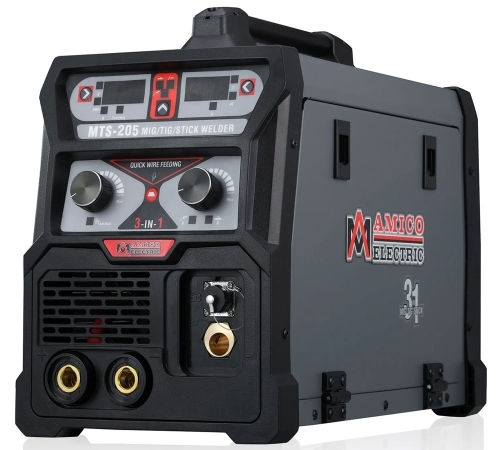
- Gas Metal Arc Welding (GMAW/MIG/MAG): Known for its high deposition rates and suitability for a range of material thicknesses. While not always chosen for the most critical root passes in pressure vessels due to potential for lack of fusion, it is highly effective for fill and cap passes, especially in automated or semi-automated setups. For robust solutions, consider our mig-mag-tig welding machine options.
- Submerged Arc Welding (SAW): Ideal for long, straight seams or large-diameter circumferential welds on thick-walled vessels. SAW offers very high deposition rates and deep penetration, producing high-quality welds with excellent mechanical properties. This process is highly automated and often used for the main seams of large pressure vessels. Oldwelders provides high-performance submerged arc welding flux hj431 designed for such demanding applications.
Selecting the Right Welding Consumables and Equipment
Regardless of the chosen welding method, the success of any pressure vessel fabrication project depends heavily on the quality of the welding materials and equipment. Oldwelders offers a comprehensive range of products tailored for the exacting requirements of pressure vessel manufacturing.
Our product portfolio includes robust automatic welding machine, precision welding wire, high-performance welding rod, and specialized welding fluxes. We understand that consistency in supply is as crucial as product quality. With a plant covering an area of 1000 square meters and six production lines, Oldwelders can supply up to 100 tons of product a day, ensuring that our partners in Brazil, Thailand, Australia, Malaysia, and beyond receive their essential materials promptly. Our minimum order quantity of 1 ton allows businesses of various scales to access our premium products, backed by a 30-day warranty, reflecting our confidence in the durability and performance of our offerings.
Choosing the right consumables—whether it's an electrode for manual stick welding, a solid wire for MIG/MAG, or a flux-cored wire for higher deposition rates—is critical. Each product is engineered to deliver optimal performance, contributing to the structural integrity and operational lifespan of the fabricated vessels.
Conclusion
The fabrication of pressure vessels demands uncompromising quality and precision in every weld. Orbital welding stands out as a superior technique for applications requiring high consistency, pristine cleanliness, and repeatable quality, especially for circumferential pipe and tube welds in high-purity or critical service environments. However, its effectiveness is balanced by limitations concerning complex geometries, restricted access, and low-volume production where traditional or other automated methods may offer better solutions.
Oldwelders serves as a reliable partner, providing the advanced welding machine and high-quality welding materials necessary for all pressure vessel welding challenges. Our extensive product range, coupled with our robust manufacturing capabilities and strict quality control, ensures that fabricators have access to the best tools for achieving ASME-compliant and industry-leading results. By carefully assessing project requirements against the strengths and limitations of each welding method, engineering teams can make informed decisions that guarantee the safety, efficiency, and longevity of their pressure vessel installations.