
Pressure Vessel Welding: A Guide to Process Selection by Joint
Selecting the Optimal Pressure Vessel Welding Process for Each Joint Type
In the high-stakes world of industrial fabrication, the integrity of a pressure vessel is non-negotiable. These critical components operate under immense stress, and the quality of their seams is the primary determinant of safety, reliability, and service life. A crucial step in ensuring this integrity is the correct selection of a pressure vessel welding process tailored to the specific geometry and demands of each joint. A one-size-fits-all approach is not only inefficient but can also introduce unacceptable risks.
For fabrication engineers and project managers, defining the welding route is a foundational task that impacts everything from material procurement to production timelines and final inspection. Understanding the interplay between joint design, material thickness, access, and welding technology is paramount. This guide provides a practical framework for mapping the most effective welding processes to the common joints found in pressure vessel construction, helping you build a robust and reliable fabrication strategy from the ground up.
The Foundational Principles of Pressure Vessel Joint Design
Before selecting a welding process, it's essential to understand why different joints are used in pressure vessel fabrication. The design isn't arbitrary; it's a direct response to the stresses the vessel will endure. Joints are engineered to manage hoop stress, longitudinal stress, and localized stresses around openings.
- Longitudinal Seams: These run the length of the vessel's cylindrical shell. They bear the highest stress in a cylindrical vessel (hoop stress), which is twice the longitudinal stress. Therefore, these welds must be of the highest quality and typically require full penetration.
- Circumferential Seams: Also known as girth seams, these join the cylindrical shell sections to each other or to the end caps (heads). While under less stress than longitudinal seams, their integrity is equally critical to the vessel's overall structure.
- Nozzle and Manway Joints: These are points where pipes, instruments, or access ports are connected to the vessel shell or heads. These joints create complex stress concentrations and require meticulous welding to prevent cracking and failure. They often involve welding dissimilar thicknesses and complex geometries.
- Flange Welds: These joints connect flanges to nozzles or the vessel body itself. They must provide a leak-proof seal and sufficient strength to handle the clamping forces of bolts and internal pressure.
The choice of joint preparation (e.g., V-groove, U-groove, J-groove) is another critical factor, influencing weld accessibility, the volume of filler metal required, and the potential for distortion.
Mapping Welding Processes to Longitudinal and Circumferential Seams
The long, straight, and often thick seams of the main vessel body are prime candidates for automated or semi-automated processes that offer high deposition rates, deep penetration, and consistent quality over long distances.
Submerged Arc Welding (SAW) for Thick-Walled Vessels
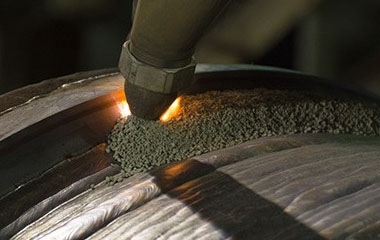
For medium to heavy-walled vessels (typically >10mm), Submerged Arc Welding (SAW) is often the process of choice. SAW involves a continuously fed solid wire electrode, with the arc submerged under a blanket of granular, fusible flux. This flux shields the molten weld pool from atmospheric contamination, cleanses the weld metal, and shapes the bead.
Advantages for Main Seams:
- High Deposition Rates: SAW is one of the fastest welding processes, significantly reducing fabrication time for long seams.
- Excellent Weld Quality: The flux provides superior protection, resulting in welds with very low hydrogen content and excellent mechanical properties, free from porosity.
- Deep Penetration: A single SAW pass can achieve much deeper penetration than other processes, reducing the number of passes needed and minimizing distortion.
- Automation-Friendly: SAW is easily automated on column and boom manipulators or seam welders, ensuring unparalleled consistency for critical longitudinal and circumferential welds.
The quality of the final weld is directly tied to the quality of the consumables. At Oldwelders, our ISO 9001 certified manufacturing process ensures every batch of welding flux meets exacting standards. Our plant, covering 1000 square meters with six production lines, can supply 100 tons a day. We use excellent raw materials like dolomite, bauxite, and cryolite, which are melted at 2000°C to create a flux that guarantees stable arcs and superior metallurgical properties. For many carbon steel applications, a high-performance flux like our submerged arc welding flux hj431 provides the ideal combination of operability and mechanical strength.
Gas Metal Arc Welding (GMAW/MIG/MAG) for Versatility
GMAW is a more versatile process that can be used for a wider range of thicknesses than SAW. In its semi-automatic form, it offers a good balance of speed and control. For pressure vessel work, specific transfer modes are preferred:
- Spray Transfer: Used for thicker sections (>6mm) in flat and horizontal positions, this mode provides a high deposition rate and excellent fusion. It's a good choice for filling grooves after a root pass.
- Pulsed-Spray Transfer: This advanced mode offers the benefits of spray transfer but can be used in all positions. It provides excellent control over the weld pool, making it suitable for both fill and cap passes on circumferential seams where the position changes as the vessel is rotated.
GMAW is generally faster than TIG or SMAW but requires robust shielding gas coverage to prevent defects.
Gas Tungsten Arc Welding (GTAW/TIG) for Critical Root Passes
While slow, Gas Tungsten Arc Welding provides the highest level of precision and purity. It uses a non-consumable tungsten electrode and a separate filler rod. Its primary role in main seam welding is for the root pass—the most critical part of the weld.
Advantages for Root Passes:
- Superior Control: The operator has independent control over heat input and filler metal addition, allowing for a perfect, uniform root bead without suck-back or lack of fusion.
- High Purity: The inert gas shielding (typically Argon) creates an exceptionally clean weld, which is essential for preventing root pass cracking, especially in alloyed materials.
A common procedure for high-integrity vessels is to perform the root pass with GTAW and then switch to a higher-deposition process like SAW or GMAW for the subsequent fill and cap passes. This hybrid approach combines the quality of TIG with the speed of other processes. A reliable mig-mag-tig welding machine with stable arc characteristics is essential for executing this technique flawlessly.
Tackling Complex Geometries in Nozzle and Flange Welds
The areas around nozzles, manways, and flanges present a different set of challenges. Automation is more difficult, access can be restricted, and the welding positions are often varied and complex. This part of pressure vessel welding demands processes that offer flexibility and all-positional capability.
Shielded Metal Arc Welding (SMAW/Stick)
Despite being one of the oldest processes, SMAW remains indispensable in pressure vessel fabrication for its versatility and simplicity. An operator can carry the equipment anywhere and weld in any position, making it ideal for tacking, repairs, and welding in tight spaces where a GMAW gun or SAW head cannot fit.
With the correct electrode, SMAW can produce welds that meet the stringent requirements of ASME codes. Low-hydrogen electrodes (e.g., E7018) are standard for pressure vessel work to prevent hydrogen-induced cracking. For instance, our range of aws e6013 welding electrodes and other specialized rods are designed for high-quality results in demanding applications.
Flux-Cored Arc Welding (FCAW)
FCAW offers a compromise between the speed of GMAW and the versatility of SMAW. It uses a continuously fed tubular wire filled with flux. It can be implemented in two primary modes:
- Self-Shielded (FCAW-S): The flux inside the wire provides all the necessary shielding, making it excellent for site work where wind can disrupt shielding gas.
- Gas-Shielded (FCAW-G): This mode uses an external shielding gas in addition to the flux, providing higher deposition rates and smoother weld beads, similar to GMAW but with better fluxing action for handling mill scale or impurities.
FCAW is highly effective for nozzle-to-shell welds, especially on thicker sections, as it provides good penetration and high productivity in out-of-position welding.
Key Considerations Beyond the Joint: Materials and Standards
The selection of a pressure vessel welding process is not made in a vacuum. It is deeply interconnected with the base material and the governing codes and standards.
Material Type:
- Carbon & Low-Alloy Steels: These are the most common materials and are compatible with all major welding processes. The main concern is managing heat input to control the microstructure and prevent cracking, often requiring preheat and post-weld heat treatment (PWHT).
- Stainless Steels: These require meticulous cleaning and lower heat input to prevent carbide precipitation and loss of corrosion resistance. GTAW is often preferred for root passes due to its cleanliness.
- Non-Ferrous Alloys (e.g., Aluminum, Titanium): These require specialized processes, typically AC GTAW or advanced GMAW, with impeccable gas shielding and surface preparation.
Codes and Standards:
All pressure vessel fabrication is governed by strict codes, most commonly the ASME Boiler and Pressure Vessel Code (BPVC), Section VIII. This code dictates requirements for design, materials, welding procedures (WPS), welder qualification (WPQ), inspection, and testing. Your chosen welding process must be capable of consistently producing welds that meet or exceed these standards. Partnering with a supplier that understands and adheres to international quality management systems is critical. Oldwelders' ISO 9001 certification is a testament to our commitment to quality, a standard we apply to products delivered to clients across our key markets in Brazil, Thailand, Australia, and Malaysia.
Partnering with a Reliable Consumables and Equipment Supplier
Achieving code-compliant welds consistently across every joint in a pressure vessel requires more than just skilled welders and a valid WPS. It requires high-quality, reliable welding equipment and consumables that perform predictably from the first arc to the last. Inconsistent wire feed, fluctuating power output, or variable flux composition can lead to defects that require costly repairs and can compromise the entire project.
As a vertically integrated manufacturer, Oldwelders provides the end-to-end solutions needed for successful pressure vessel welding projects. With a minimum order quantity of just 1 ton and a standard lead time of 30 days, we are equipped to support projects of any scale. Our comprehensive portfolio includes a wide array of welding machine options, from advanced multi-process inverters to heavy-duty SAW tractors, alongside a full suite of certified welding materials. By controlling the entire production process, from melting raw ores for our welding fluxes to drawing and spooling our welding wires, we ensure a level of quality and consistency your critical applications demand.
By carefully matching the welding process to the joint type, material, and production goals, fabrication engineers can build a foundation of quality and efficiency that ensures the final product is safe, reliable, and built to last.