
Pipeline Welding: Preheat Limits for Thick-Wall Pipe
Understanding Preheat Limits for Robust Pipeline Welding in Thick-Wall Pipes
For welding engineers and QA managers involved in high-stakes infrastructure projects, ensuring the integrity of thick-wall pipeline joints is paramount. The consequences of weld failure in such applications can be catastrophic, leading to significant delays, environmental impact, and immense financial losses. One of the most critical parameters in preventing cracking and ensuring metallurgical soundness in high-restraint joints is the precise control of preheat temperatures during welding materials. This article delves into the science and practical application of preheat limits for thick-wall pipeline welding, offering insights to refine Welding Procedure Specifications (WPS) and optimize field temperature controls.
Thick-wall pipes, often made from high-strength low-alloy (HSLA) steels, present unique challenges. Their increased mass acts as a substantial heat sink, rapidly drawing heat away from the weld zone. This rapid cooling can lead to undesirable microstructural changes, such as the formation of brittle martensite, and elevate residual stresses, significantly increasing the susceptibility to hydrogen-induced cracking (HIC) and cold cracking. Effective preheating mitigates these risks by slowing the cooling rate, allowing hydrogen to diffuse out of the weld metal, and reducing the temperature differential across the joint, thereby lowering stress.
The Critical Role of Preheat in Thick-Wall Pipeline Welding
Preheating is not merely a precautionary step; it is a fundamental pillar of sound metallurgical practice in demanding applications like thick-wall pipeline welding. Its primary functions are multifaceted and interconnected:
- Slowing the Cooling Rate: By raising the base metal temperature, the thermal gradient between the weld pool and the surrounding material is reduced. This allows the weld metal and heat-affected zone (HAZ) to cool more slowly, promoting the formation of more ductile microstructures like bainite or ferrite-pearlite, rather than brittle martensite.
- Facilitating Hydrogen Diffusion: Hydrogen, a common contaminant from consumables, moisture, and base metals, is a primary culprit in cold cracking. Elevated temperatures increase the diffusivity of hydrogen, allowing it to escape the weld metal and HAZ before it can accumulate and cause embrittlement. Sustained interpass temperatures also contribute to this benefit.
- Reducing Thermal Stresses: Welding introduces significant thermal stresses due to localized heating and cooling. Preheating reduces the temperature differential between the weld zone and the cooler base material, thereby minimizing shrinkage stresses and distortion, which are particularly problematic in high-restraint thick-wall geometries.
- Removing Moisture: Surface moisture, frost, or condensation can introduce hydrogen into the weld pool. Preheating effectively drives off these contaminants, directly reducing the risk of hydrogen-induced cracking.
Understanding these mechanisms is crucial for developing accurate WPS documents and ensuring their diligent execution in the field. Neglecting proper preheat can compromise the mechanical properties of the weld, leading to costly failures and reputational damage.
Establishing Optimal Preheat Limits for Thick-Wall Joints
Determining the correct preheat temperature range involves a careful balance of factors, including material composition, thickness, restraint, heat input, and ambient conditions. Relying on generic values is insufficient; a tailored approach is essential for each specific welding machine application.
Material Composition and Carbon Equivalent (CE)
The chemical composition of the pipe material, particularly its carbon equivalent (CE), is a primary determinant of required preheat. Higher carbon and alloy content increase hardenability, making the material more susceptible to cold cracking and thus requiring higher preheat temperatures. Formulas like the International Institute of Welding (IIW) CE formula (CE = C + Mn/6 + (Cr+Mo+V)/5 + (Ni+Cu)/15) are often used to estimate hardenability. Steels with higher CE values will generally demand higher minimum preheat temperatures.
Plate Thickness and Joint Restraint
As pipe wall thickness increases, so does the mass of material acting as a heat sink. This necessitates higher preheat temperatures to maintain the desired cooling rate. Thick-wall pipes also inherently introduce higher levels of joint restraint, further increasing the risk of cracking if not properly managed. The level of restraint, whether from adjacent structures or the pipe's own geometry, must be factored into preheat calculations. For example, a circumferential weld on a large diameter, thick-wall pipe will have significant restraint, demanding stringent preheat control.
Welding Process and Heat Input
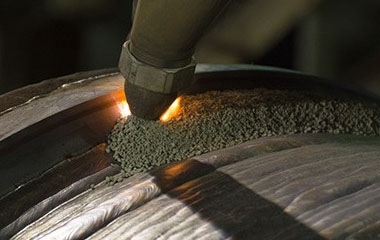
The chosen welding process (e.g., SMAW, GMAW, FCAW, SAW) and its associated heat input play a role. Processes with lower heat input generally require higher preheat to compensate for the faster cooling. Conversely, higher heat input processes can sometimes allow for slightly lower preheat, but this must be carefully balanced to avoid excessive grain growth and reduced toughness in the HAZ. The selection of welding fluxes also impacts metallurgical outcomes, especially in submerged arc welding, where flux chemistry influences weld metal composition and properties.
Ambient and Environmental Conditions
Field conditions, especially in regions like Brazil, Thailand, Australia, or Malaysia where Oldwelders serves its global clientele, can vary dramatically. Low ambient temperatures, high winds, and precipitation all accelerate cooling rates and necessitate higher preheat temperatures or additional protection from the elements. A robust WPS must account for these variables, often specifying higher minimum preheat values for adverse conditions or requiring environmental enclosures.
Oldwelders understands the unique demands of such diverse operational environments. Our commitment to quality is reflected in our ISO 9001 certification, ensuring that our products, from advanced welding machines to precisely formulated welding fluxes, consistently meet the stringent requirements of international pipeline projects.
Field Execution and Monitoring of Preheat
Even the most meticulously developed WPS is only as effective as its implementation in the field. Accurate and consistent application of preheat is critical. QA managers must establish rigorous protocols for measurement, maintenance, and documentation.
Preheat Application Methods
Common methods for applying preheat include:
- Induction Heating: Offers precise, localized, and efficient heating, often preferred for large, thick-wall pipes due to its speed and control.
- Resistance Heating: Uses electrical resistance elements wrapped around the pipe, providing uniform heating, though sometimes slower than induction.
- Flame Heating (Propane/Oxy-Fuel): A common, versatile method, but requires skilled operators to ensure uniform heating and avoid localized overheating.
Regardless of the method, the goal is to achieve a uniform temperature across the specified preheat zone, typically extending at least 75mm (3 inches) on either side of the weld joint.
Temperature Measurement and Control
Accurate temperature measurement is non-negotiable. Infrared thermometers, contact pyrometers, and temperature-indicating crayons are standard tools. For critical applications, thermocouples connected to data loggers provide continuous, objective temperature monitoring. Measurements should be taken on the surface farthest from the heating source, ensuring the entire wall thickness has reached the minimum specified preheat temperature.
Interpass temperature control is equally vital. After each weld pass, the temperature of the weldment must be maintained within a specified range (minimum and maximum interpass temperatures). This prevents excessive cooling between passes, which could lead to cracking, and avoids overheating, which can degrade mechanical properties.
Documentation and Compliance
Comprehensive documentation of preheat application, measurement, and interpass temperatures is essential for traceability and quality assurance. This includes calibrating measuring equipment, recording temperature readings at specified intervals, and noting any deviations from the WPS. Adherence to industry codes and standards (e.g., API 1104, ASME B31.X) is mandatory for all pipeline welding operations.
Advanced Considerations and Best Practices
Beyond the basics, several advanced considerations can further enhance the integrity of thick-wall pipeline welds and optimize preheat strategies.
Hydrogen Bake-Out Procedures
For highly susceptible materials or in cases where hydrogen cracking risk is exceptionally high, a post-weld hydrogen bake-out may be specified. This involves holding the weldment at an elevated temperature for an extended period after welding but before it cools to ambient, to encourage further diffusion of any trapped hydrogen. This supplemental treatment can be crucial in preventing delayed hydrogen cracking.
Preheat Modeling and Simulation
Computational tools and finite element analysis (FEA) can model thermal cycles and stress distributions during welding, helping engineers predict optimal preheat ranges and potential problem areas. While resource-intensive, these simulations can be invaluable for complex, novel, or extremely critical arc welding machine projects, allowing for virtual optimization before physical prototyping.
Consumable Selection
The choice of welding consumables has a direct impact on the metallurgical outcomes and, consequently, on preheat requirements. Low-hydrogen electrodes and wires are preferred for thick-wall applications to minimize hydrogen input. Oldwelders manufactures a range of high-quality electrode and solid wire products, specifically engineered to deliver superior performance and meet the stringent demands of modern pipeline construction.
Our flux products, for instance, are meticulously crafted from excellent dolomite, bauxite, cryolite, silica, fluorine ore, and other specialty ores, melted at precisely 2000 °C to ensure optimal purity and performance. This rigorous material selection and processing contribute to the reliability of our consumables in critical pipeline welding applications.
Oldwelders: Your Partner in Advanced Pipeline Welding Solutions
At Oldwelders, we understand the complexities and critical nature of modern pipeline construction. Our comprehensive range of products—including advanced welding machines, high-performance welding wire, robust welding rods, and specialized welding fluxes—is designed to meet the exacting standards of the industry. We are an ISO 9001 certified manufacturer, committed to delivering quality and reliability that our B2B partners can trust.
With a state-of-the-art plant covering an area of 1000 square meters and six production lines, we boast a daily production capacity of 100 tons. This extensive capability ensures a consistent supply of quality welding products, with a typical lead time of just 30 days for many orders. Our minimum order quantity of 1 ton makes us an accessible partner for projects of various scales, from Brazil to Thailand, Australia, and Malaysia.
Whether you are tackling a new infrastructure project, optimizing your WPS for challenging materials, or seeking to enhance the quality and efficiency of your field operations, Oldwelders provides the expertise and equipment you need. Partner with us to ensure the integrity and longevity of your critical pipeline assets.