
Pipeline Welding Fit-Up Tolerances for Field Joints
Pipeline Welding Fit-Up Tolerances for Field Joints
Achieving structural integrity and operational longevity in pipeline infrastructure hinges significantly on the precision of initial joint preparation. Effective welding materials and advanced welding machine technology are crucial, but their performance is maximized only when foundational fit-up tolerances are meticulously controlled. For field foremen and pipe fabricators, standardizing joint preparation across crews is not merely a best practice; it is a critical step in mitigating defects, preventing costly reworks, and ensuring the long-term reliability of a pipeline system. This guide delves into the essential fit-up tolerances for field joints in pipeline welding, providing practical insights for achieving optimal joint quality before any arc is struck.
Understanding the Importance of Fit-Up Tolerances in Pipeline Welding
Fit-up tolerances are the prescribed limits within which pipe components must be aligned and prepared before the welding process begins. These parameters dictate the gap between pipe ends, the alignment of internal and external surfaces, and the accuracy of the bevel. In the demanding environment of pipeline construction, where infrastructure often spans vast distances and operates under immense pressure, even minor deviations in fit-up can lead to significant problems. Incorrect fit-up can result in incomplete fusion, excessive residual stress, cracking, or reduced mechanical strength, ultimately compromising the entire pipeline's structural integrity. Adhering to strict fit-up standards is a cornerstone of quality assurance, directly impacting weld quality, operational efficiency, and project timelines.
Key Elements of Joint Fit-Up
Successful joint fit-up encompasses several critical elements, each requiring precise control:
- Bevel Angle: The angle prepared on the pipe ends to form a groove for the weld metal. This must be consistent around the circumference.
- Root Opening (Gap): The distance between the closest points of the two pipe segments at the root of the joint. This gap allows for proper penetration and fusion.
- Root Face (Land): The small, unbeveled portion at the end of the pipe, providing a shelf for the molten weld pool and preventing burn-through.
- High-Low Misalignment: The difference in elevation or offset between the internal or external surfaces of two adjacent pipe ends.
- Joint Squareness: Ensuring the pipe ends are cut perpendicular to the pipe axis.
Each of these elements must conform to specified tolerances, typically outlined in welding procedure specifications (WPS) and relevant industry codes. Oldwelders, as an ISO 9001 certified manufacturer, understands that the quality of our welding fluxes, wires, and machines is only as effective as the preparation that precedes their use. Our commitment to quality extends to supporting our clients in Brazil, Thailand, Australia, and Malaysia with products that perform optimally under stringent field conditions.
Impact of Improper Fit-Up
The ramifications of poor fit-up are far-reaching. They can lead to:
- Increased Welding Time and Cost: Welders may need to compensate for gaps, requiring more filler material and passes, thereby increasing labor and material costs.
- Reduced Weld Quality: Poor fit-up can lead to defects such as lack of fusion, incomplete penetration, porosity, and undercut, necessitating costly repairs or cut-outs.
- Stress Concentrations: Misalignment induces localized stresses, which can become initiation points for fatigue cracks or brittle fracture, especially in dynamic pipeline environments.
- Compromised Mechanical Properties: The weld metal may not achieve its intended strength or toughness if the joint geometry is compromised.
- Health and Safety Risks: Unsound welds in high-pressure pipelines pose significant safety hazards.
Critical Parameters for Pipeline Welding Fit-Up
Achieving consistent, high-quality pipeline welds requires meticulous attention to various fit-up parameters. Understanding and controlling these elements ensures the integrity of the weld and the overall pipeline structure.
Pipe End Preparation and Bevel Angle
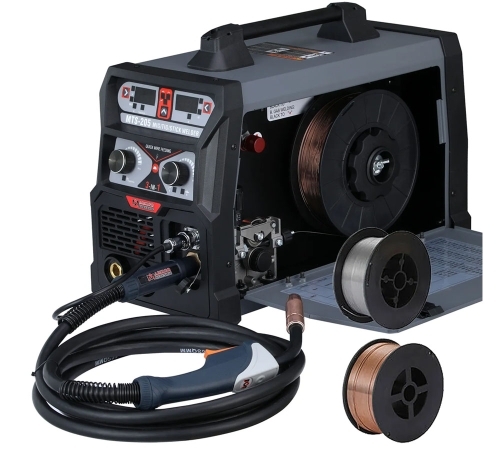
The preparation of pipe ends is foundational for sound welds. Pipe ends must be cut squarely and deburred. The bevel angle, typically 30° to 37.5°, must be uniform around the entire circumference. Variations in bevel angle can lead to inconsistent root openings, uneven penetration, and difficulty in controlling the weld pool. Specialized pipe beveling machines are often used to ensure precision and repeatability, critical for high-volume pipeline projects. The surface of the bevel should be clean, free from rust, scale, oil, or any contaminants that could introduce impurities into the weld. Oldwelders provides a comprehensive range of arc welding machine options, suitable for various pipe preparation requirements, ensuring that the initial cut and bevel are perfectly aligned with the demands of the welding procedure.
Root Gap and Land Thickness
The root gap, or root opening, is arguably the most critical fit-up parameter. It dictates the ability of the welding electrode or wire to penetrate to the root of the joint and achieve full fusion. Typical root gaps for manual welding range from 1/16 inch to 1/8 inch (1.6 mm to 3.2 mm), but this can vary based on welding process, pipe wall thickness, and specific WPS requirements. A root gap that is too small can lead to lack of penetration, while one that is too large can cause burn-through or excessive weld reinforcement. The root face (land) provides support for the molten weld pool, preventing it from collapsing into the pipe interior. The ideal land thickness ensures good root penetration without being so thick as to impede full fusion. Welders often use specific spacers or wedges to maintain a consistent root gap during tack welding.
High-Low Misalignment
High-low misalignment refers to the offset between the internal or external surfaces of two pipe sections. This often occurs due to variations in pipe wall thickness, out-of-roundness, or improper pipe handling. Internal misalignment is particularly problematic as it creates an uneven root gap and can lead to lack of fusion or excessive internal bead protrusion. Industry standards often limit internal high-low misalignment to a small fraction of the pipe wall thickness, typically 1/16 inch (1.6 mm) or less. External misalignment is less critical for root integrity but can affect the overall profile and stress distribution of the completed weld. Proper use of internal and external lineup clamps is essential to minimize high-low conditions.
Tack Welding Procedures
Tack welds are small, temporary welds used to hold the pipe sections in alignment and maintain the fit-up tolerances before the full weld is applied. The quality of tack welds is paramount, as they often become part of the final weld. They must be made with the same care and using similar parameters as the root pass of the main weld. Key considerations for tack welding include:
- Number and Spacing: Sufficient tack welds should be placed around the circumference to prevent movement during welding.
- Size: Tacks should be large enough to hold the joint but small enough to be easily incorporated into the final weld without creating defects.
- Cleanliness: Tack welds must be free of cracks, porosity, or slag inclusions.
- Removal/Feathering: Depending on the WPS, tack welds may be fully removed or feathered into the bevel before the root pass, particularly for critical applications.
Tools and Techniques for Achieving Optimal Fit-Up
Achieving and maintaining precise fit-up tolerances in pipeline welding relies on a combination of specialized tools, skilled personnel, and established procedures. Investing in the right equipment and training is crucial for efficiency and quality.
Measurement Tools
Accurate measurement is the first step towards perfect fit-up. Essential tools include:
- Measuring Tapes and Rules: For general dimensions and joint squareness checks.
- Feeler Gauges: Used to accurately measure the root gap. A set of feeler gauges allows for precise verification of the specified gap.
- Hi-Lo Gauges: Specifically designed to measure internal and external misalignment between pipe sections.
- Bevel Gauges: For verifying the angle of the pipe bevel.
- Digital Calipers: For precise measurements of pipe wall thickness, root face, and other critical dimensions.
Regular calibration of these instruments is vital to ensure their accuracy, directly contributing to reliable mig-mag-tig welding machine performance and overall project quality.
Alignment Clamps and Internal Line-Up Clamps
Alignment clamps are indispensable for holding pipe sections in position and ensuring concentricity. External clamps are suitable for smaller diameter pipes, while internal line-up clamps are preferred for larger diameter pipelines. Internal clamps provide superior alignment, minimizing high-low conditions and ensuring a consistent root gap. These clamps can be manual, hydraulic, or pneumatic, with some advanced models offering precision control and automated operation. Proper selection and operation of alignment clamps are critical to achieving the desired fit-up before tack welding.

Grinding and Machining for Correction
Despite careful preparation, minor imperfections in pipe end geometry or alignment may require correction. Grinding is a common method for removing burrs, cleaning surfaces, and making minor adjustments to the bevel or root face. However, grinding must be done carefully to avoid over-grinding or creating uneven surfaces. For more significant corrections, or to ensure very precise bevels, portable machining tools can be employed in the field. These tools provide a higher degree of accuracy and repeatability compared to manual grinding, particularly for critical applications or high-strength materials. Oldwelders supplies a range of electrode and solid wire products that are designed to perform reliably even with minor fit-up variations, though optimal fit-up always yields the best results.
Quality Control and Inspection for Field Joints
Before any major welding commences, a rigorous quality control (QC) inspection of the fit-up is mandatory. This process ensures that all parameters meet the specified tolerances and that the joint is ready for welding. Inspection typically involves:
- Visual Inspection: Checking for cleanliness, freedom from defects, and general adherence to joint geometry.
- Dimensional Verification: Using feeler gauges, hi-lo gauges, and bevel gauges to confirm root gap, high-low, and bevel angle.
- Documentation: Recording all measurements and inspection results. This documentation forms a crucial part of the project's quality record.
- WPS Adherence: Ensuring that the fit-up strictly conforms to the approved Welding Procedure Specification (WPS) for the specific pipeline welding project.
Any deviations found during QC must be corrected before welding proceeds. This proactive approach saves significant time and resources compared to repairing defective welds later. It also reinforces the professional and knowledgeable B2B tone that Oldwelders embodies, providing solutions and materials that support rigorous quality standards.
Oldwelders' Contribution to Quality Pipeline Welding
At Oldwelders, we understand the critical role that high-quality welding consumables and equipment play in the demanding field of pipeline construction. Our comprehensive product range, including state-of-the-art welding machine, premium welding wire, robust welding rods, and specialized welding fluxes, is designed to meet the stringent requirements of pipeline fabrication worldwide.
Our Commitment to Quality and Capacity
We pride ourselves on our ISO 9001 certification, a testament to our unwavering commitment to quality management systems. Our manufacturing facility, spanning an area of 1000 square meters, is equipped with six advanced production lines. This robust infrastructure allows us to maintain a daily supply capacity of 100 tons, ensuring that even large-scale pipeline projects receive timely deliveries. For our flux products, we utilize only excellent raw materials such as dolomite, bauxite, cryolite, silica, and fluorine ore, which are melted at precisely controlled temperatures of 2000 °C. This meticulous process guarantees the superior performance and consistency of our submerged arc welding flux hj431 and other specialized fluxes, providing the reliability essential for critical pipeline welding applications.
Global Reach and Product Range
Our dedication to quality and extensive production capabilities enable us to serve a diverse international clientele. We are proud to be a trusted supplier in key markets such as Brazil, Thailand, Australia, and Malaysia, supporting their infrastructure development with dependable welding solutions. Whether you require general-purpose welding rods like aws e6013 welding electrodes, specialized flux-cored wire, or high-grade energy welding machines, Oldwelders offers the expertise and products to ensure your pipeline welding projects are completed to the highest standards. Our efficient logistics and production processes ensure that orders, with a minimum quantity starting from 1 ton, are typically fulfilled within 30 days, minimizing project delays and keeping your operations on schedule.
Adhering to precise fit-up tolerances is a non-negotiable aspect of successful pipeline welding. By understanding these parameters, utilizing appropriate tools, and implementing rigorous quality control, field teams can lay the groundwork for durable, high-performance pipelines. Oldwelders stands as your reliable partner, providing the high-quality consumables and equipment necessary to achieve these exacting standards, backed by our commitment to excellence and extensive manufacturing capabilities.