
Optimize Submerged Arc Flux Depth
Optimizing Submerged Arc Flux Depth for Consistent Weld Quality
In the realm of automated and semi-automated welding operations, particularly with Submerged Arc Welding (SAW), achieving consistent weld quality is paramount. A critical, yet often overlooked, parameter influencing this consistency is the depth of the welding fluxes, specifically the Submerged Arc Flux. Proper flux depth ensures a stable arc, adequate shielding, and desirable weld bead characteristics. This guide delves into the significance of flux depth, factors influencing its optimal setting, and practical methods for SAW operators to achieve consistent arc coverage.
Oldwelders understands the intricate demands of industrial welding. As an ISO 9001 certified manufacturer, we are committed to supplying high-quality welding consumables that contribute to superior results. Our commitment to excellence begins with the raw materials, utilizing excellent dolomite, bauxite, cryolite, silica, and fluorine ore, melted at 2000 °C, to produce fluxes that meet stringent performance standards for markets including Brazil, Thailand, Australia, and Malaysia.
Understanding the Role of Submerged Arc Flux in SAW
Submerged Arc Welding is characterized by its use of a granular, fusible flux that completely covers the arc and molten metal. This flux serves multiple vital functions:
- Arc Shielding: It protects the molten weld pool and arc from atmospheric contamination, preventing porosity and other defects.
- Thermal Insulation: The flux blanket helps retain heat in the weld zone, leading to slower cooling rates, which can improve metallurgical properties and reduce distortion.
- Arc Stabilization: It provides a conductive path for the welding current, contributing to a stable and consistent arc.
- Metallurgical Contribution: Certain flux compositions can introduce alloying elements or scavenge impurities, influencing the final mechanical properties of the weld metal.
- Slag Formation: Upon solidification, the molten flux forms a protective slag layer that can be easily removed, further protecting the weld during cooling.
The effectiveness of these functions is directly tied to the depth of the Submerged Arc Flux. Too little flux, and the shielding is compromised; too much, and the arc becomes unstable, affecting penetration and bead shape.
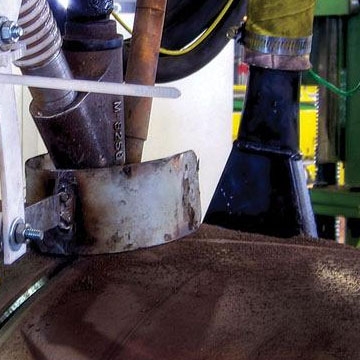
Key Factors Influencing Optimal Flux Depth
Setting the correct flux depth is not a one-size-fits-all solution. Several interacting factors dictate the optimal setting for a given application. SAW operators must consider these variables to fine-tune their process.
Welding Parameters
The electrical and travel parameters of the SAW process are primary determinants of suitable flux depth:
- Welding Current (Amperage): Higher currents generate more heat and a larger molten pool, requiring a greater flux depth to provide adequate shielding and prevent arc blowouts. Conversely, lower currents may tolerate shallower flux depths.
- Arc Voltage: Voltage primarily affects arc length and bead width. Higher voltages tend to produce a wider, flatter bead and can sometimes necessitate a slightly deeper flux layer to maintain full coverage over the broader weld pool.
- Travel Speed: Faster travel speeds mean less time for the molten pool to cool and solidify, potentially requiring slightly deeper flux to ensure complete coverage and slag formation before the weld cools. Slower speeds allow more time for the flux to melt and react.
- Electrode Stick-out: The distance the electrode extends beyond the contact tip affects resistance heating and penetration. Changes here can subtly influence the required flux depth.
Flux Characteristics
The physical properties of the submerged arc welding flux hj431 itself play a crucial role:
- Granular Size and Shape: Finer, more angular flux particles tend to pack more densely than coarser, rounder particles. This density affects how much flux is required to achieve a certain "depth" and how easily it flows.
- Bulk Density: Denser fluxes will provide more mass per unit of volume, potentially allowing for a slightly shallower visual depth compared to less dense fluxes while still offering adequate coverage.
- Flux Type (Agglomerated, Fused, Bonded): Different manufacturing processes result in fluxes with varying properties. Fused fluxes are typically denser and more uniform, while agglomerated fluxes may be lighter and more porous. These differences influence flow characteristics and optimal depth.
- Moisture Content: Excess moisture can lead to porosity. While not directly affecting depth requirements, it highlights the importance of proper flux handling and storage.
Joint Design and Material
The geometry of the weld joint and the base material also impart requirements on flux depth:
- Joint Type (Butt, Fillet, Lap): Different joint types present varying contours that affect how the flux settles and contains the molten pool. Deep groove welds may require more flux to fill the cavity and ensure complete coverage.
- Plate Thickness: Thicker materials often involve higher heat inputs and larger weld pools, necessitating a deeper flux layer to manage the increased volume of molten metal.
- Base Material Composition: The thermal conductivity and melting point of the base material can influence the size and duration of the molten pool, indirectly affecting flux depth needs.
Practical Methods for Setting and Monitoring Flux Depth
Achieving the optimal Submerged Arc Flux depth requires a systematic approach, combining initial guidelines with real-time adjustments and visual inspection.
Initial Setup Guidelines
For automated and semi-automated lines, consistency in flux delivery is key. Oldwelders provides high-quality welding materials designed for reliable performance across various applications.
- Manufacturer Recommendations: Always start with the flux manufacturer's recommendations. These often provide a good baseline for typical applications.
- Flux Hopper and Delivery System: Ensure the flux hopper is adequately filled and the delivery system (e.g., auger, vibrator, gravity feed) is calibrated to provide a consistent flow of flux. The minimum order quantity for our premium fluxes is 1 ton, ensuring you have a consistent supply for continuous operations.
- Initial Depth Setting: A common starting point for flux depth is typically 25-50 mm (1-2 inches) above the arc, though this can vary significantly based on the factors discussed above. Use a ruler or a depth gauge to measure the initial static depth of the flux before striking the arc.
- Trial Welds: Conduct short trial welds on scrap material using your target welding parameters. Observe the arc stability and weld bead appearance.
Real-time Adjustments and Visual Cues
During welding, the dynamic interaction of the arc, molten pool, and flux can provide visual cues for necessary adjustments.
- Arc Stability: A properly submerged arc should produce a relatively quiet, stable hum. If you hear excessive sputtering, popping, or see visible arc flashes, the flux depth might be insufficient, or other parameters are off.
- Weld Pool Appearance: The molten weld pool should be fully covered by the flux. If the edges of the molten pool are visible or the slag system is not forming properly, increase the flux depth.
- Slag Removal: After cooling, the slag should detach easily without excessive chipping or grinding. If the slag is difficult to remove, it might indicate an issue with flux depth or composition.
- Weld Bead Shape and Profile: Monitor the weld bead for consistent width, penetration, and reinforcement. Inconsistent bead profiles can sometimes be linked to fluctuating flux depth.
- Flux Consumption Rate: Track flux consumption. Significant deviations from expected rates can indicate issues with the delivery system or an incorrect depth setting. Our production facility, covering 1000 square meters with six production lines, can supply 100 tons of flux a day, ensuring consistent availability for your operational needs.
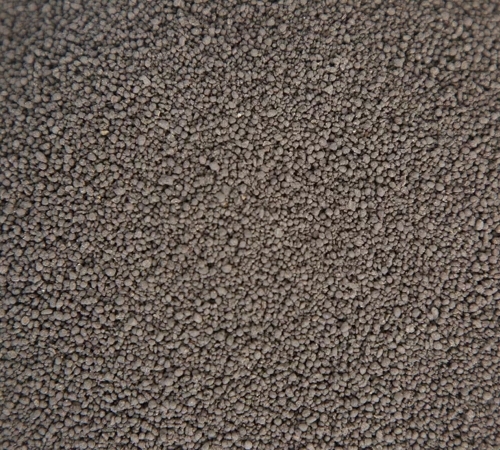
The Impact of Incorrect Flux Depth
Deviations from the optimal flux depth can lead to a range of costly weld defects and operational inefficiencies. Understanding these consequences helps reinforce the importance of precise control.
Insufficient Flux Depth
When the Submerged Arc Flux layer is too shallow, the arc is not adequately protected or contained:
- Arc Flashing and Instability: The arc may become visible, leading to arc flashes that pose safety hazards and reduce arc stability.
- Porosity: Inadequate shielding allows atmospheric gases (nitrogen, oxygen) to contaminate the molten weld metal, resulting in porosity within the weld bead.
- Spatter: While SAW is known for minimal spatter, insufficient flux depth can lead to increased spatter, reducing material efficiency and requiring more post-weld cleaning.
- Undercut and Inconsistent Bead Shape: Poor arc containment can lead to inconsistent heat distribution, potentially causing undercut, uneven bead width, and poor aesthetics.
- Reduced Penetration: An unstable or exposed arc may not effectively transfer heat to the base metal, leading to insufficient penetration.
Excessive Flux Depth
Conversely, a flux layer that is too deep can also cause problems:
- Arc Wandering and Instability: An excessively deep layer of granular flux can make it difficult for the arc to establish and maintain a stable path, leading to wandering and erratic arc behavior.
- Reduced Penetration: The increased thermal insulation from a very deep flux layer can sometimes lead to a broader but shallower weld pool, reducing the effective penetration.
- Increased Flux Consumption: More flux than necessary is consumed, leading to higher material costs and potentially more slag waste.
- Difficulty in Slag Removal: While less common than with insufficient flux, an overly thick slag layer can sometimes be more difficult to remove, especially if it cools too slowly or has trapped gases.
- Increased Risk of Flux Bridging: In some setups, an excessive amount of flux can lead to bridging or clogging in the delivery system, interrupting the welding process.
Ensuring Quality and Supply with Oldwelders
Mastering Submerged Arc Flux depth is a critical skill for SAW operators aiming for peak performance and defect-free welds. It requires a thorough understanding of the interplay between welding parameters, flux characteristics, and joint design, combined with careful observation and systematic adjustment.
Oldwelders is your trusted partner for high-performance arc welding machine and welding consumables. Our commitment to quality is unwavering, backed by our ISO 9001 certification and a robust manufacturing process. We ensure that every batch of welding flux, welding wire, and welding rod meets the highest standards. With a minimum order quantity of just 1 ton and a potential lead time of 30 days for some orders, we are equipped to support your production schedules efficiently.
By integrating our expertly crafted welding fluxes with precise parameter control, including optimal flux depth, you can achieve superior weld integrity, enhanced productivity, and reduced rework. Explore our range of welding solutions to elevate your fabrication processes.