
How to Source Welding Equipment for Fabrication Lines
A Strategic Guide to Sourcing Welding Equipment for Modern Fabrication Lines
Outfitting a new or expanded fabrication line is a significant investment. The decisions made during the procurement process directly impact production efficiency, weld quality, and long-term operational costs. For procurement managers and engineers, sourcing the right welding equipment is not merely about purchasing machinery; it's about establishing a robust, reliable, and scalable production ecosystem. This requires a comprehensive approach that balances technical specifications, supplier capability, and total cost of ownership.
Successfully navigating this process involves a deep understanding of your specific application needs, a thorough evaluation of potential suppliers, and a clear strategy for integrating new assets into your workflow. From high-capacity automated systems to the precise chemistry of welding consumables, every component plays a critical role. This guide provides a detailed framework for sourcing industrial welding solutions, helping you to ask the right questions and identify partners who can support your production goals both now and in the future.
Understanding Your Fabrication Line's Core Requirements
Before issuing a single Request for Quotation (RFQ), the most crucial step is to perform an in-depth internal needs analysis. A clear and detailed specification is the foundation of a successful procurement strategy. This initial phase prevents costly mismatches between equipment capabilities and production demands.
Assess Production Volume and Cycle Times
The scale of your operation dictates the type and level of automation required. A high-volume production line running multiple shifts will have vastly different needs than a job shop focused on custom fabrication.
- Low to Medium Volume: Manual or semi-automatic systems, such as MIG, TIG, or Stick welders, often provide the necessary flexibility and a lower initial investment. These are suitable for varied tasks and prototypes.
- High Volume / Repetitive Tasks: Automated or robotic welding cells are essential for maximizing throughput and ensuring consistent quality. Consider systems that can be integrated into your existing production management software. The required duty cycle of the machinery will be a primary factor here; equipment must be rated for continuous or near-continuous operation without overheating or performance degradation.
Define Material Types and Thicknesses
The materials being joined are a primary determinant of the welding process and power source requirements. Your team should create a comprehensive list of all metals and alloys that will be processed on the line.
- Carbon Steel: Widely used in structural and general fabrication, carbon steel is compatible with most common arc welding processes like MIG (GMAW), Stick (SMAW), and Submerged Arc Welding (SAW).
- Stainless Steel: Requires precise heat control to prevent warping and preserve corrosion resistance. TIG (GTAW) is often preferred for its clean, high-quality welds, while pulsed MIG processes offer higher productivity.
- Aluminum and Non-Ferrous Alloys: These materials have high thermal conductivity and require specific equipment. AC TIG welders with high frequency are standard for aluminum, as are advanced pulsed MIG systems with specialized wire-feeding mechanisms to prevent wire tangling.
Material thickness directly influences the amperage needed from the power source. Welding thick plates (e.g., >10mm) requires high-amperage machines and may necessitate processes like Submerged Arc Welding for deep penetration and high deposition rates.
Identify Required Weld Types and Quality Standards
The end-use of your fabricated product governs the required weld quality and a-ppearance. A structural beam for a building has different requirements than a high-pressure vessel or a consumer-facing product.
- Structural Welds: Strength and penetration are paramount. Processes that offer high deposition rates and deep fusion, such as Flux-Cored Arc Welding (FCAW) or SAW, are often used.
- Aesthetic Welds: For products where appearance is a key selling point, a process like TIG is often chosen for its neat, precise bead.
- Code Compliance: If your products must adhere to specific industry codes (e.g., AWS, ASME, ISO), your chosen welding machine and consumables must be capable of producing certifiable welds. This may require equipment with advanced monitoring and control features.
Key Types of Welding Equipment for Industrial Applications
With your requirements clearly defined, you can begin to evaluate specific types of equipment. A modern fabrication line typically employs a mix of technologies, each suited to different tasks. The core of any setup is the power source, which provides and regulates the electrical current needed to create the arc.
Arc Welding Machines
Arc welding is the most common category for industrial fabrication. It uses an electric arc to melt and join metals.
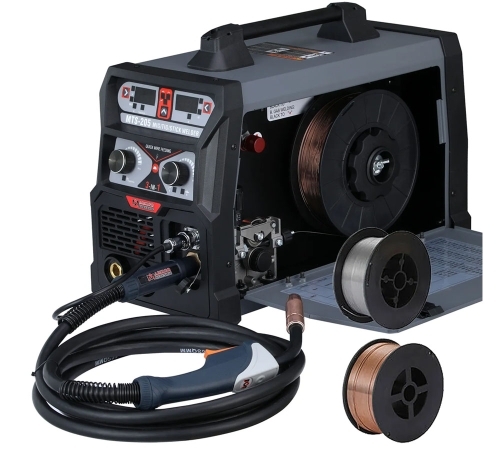
- MIG/MAG (GMAW): Gas Metal Arc Welding is a versatile and fast process, ideal for a wide range of thicknesses in steel, stainless steel, and aluminum. It uses a continuously fed wire electrode and a shielding gas. An industrial mig-mag-tig welding machine offers a balance of speed and quality suitable for both manual and automated applications.
- TIG (GTAW): Gas Tungsten Arc Welding uses a non-consumable tungsten electrode to produce highly precise, clean welds. It is a slower process but offers superior control, making it perfect for thin materials, complex joints, and applications where aesthetics are critical.
- Stick (SMAW): Shielded Metal Arc Welding is a manual process using a consumable electrode coated in flux. It is highly portable and excellent for repairs, outdoor work, and welding on dirty or rusty materials.
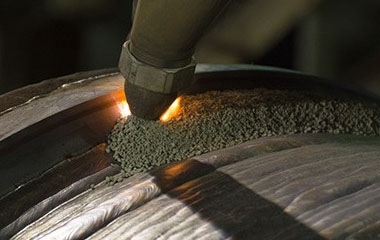
- Submerged Arc Welding (SAW): An automated or semi-automated process where the arc is "submerged" under a blanket of granular flux. This results in extremely high deposition rates, deep penetration, and a high-quality weld with no spatter or arc flash. It is ideal for heavy fabrication of thick steel plates.
Resistance Welding Machines
Resistance welding uses the application of electrical current and mechanical pressure to join metal sheets. Spot welding is the most common form, widely used in the automotive and appliance manufacturing industries for its speed and suitability for automation.
Other Specialized Welding Systems
Depending on your industry, you may require more specialized systems. This includes plastic welding machine for joining thermoplastics, laser welding for high-precision and high-speed applications, or friction stir welding for joining dissimilar metals without melting them.
Evaluating Supplier Capability and Reliability
Choosing the right supplier is as important as choosing the right equipment. A reliable partner provides not just machinery, but also technical support, consistent supply of consumables, and long-term value. When evaluating potential suppliers, look for concrete evidence of their capabilities and quality commitment.
Certifications and Quality Management
A supplier's commitment to quality is often demonstrated through their certifications. An ISO 9001 certification is a fundamental indicator that the company has a robust and internationally recognized quality management system in place. This ensures that their processes, from raw material sourcing to final product inspection, are standardized and focused on delivering consistent quality. This certification provides peace of mind that the welding equipment you procure will meet its stated specifications.
Production Capacity and Scalability
For a fabrication line, supply chain stability is paramount. A supplier's production capacity is a direct measure of their ability to meet your demands, especially during periods of growth or urgent orders. Inquire about their manufacturing facilities. A supplier with a large plant—for instance, a 1000-square-meter facility with six production lines—demonstrates a significant investment in their operational capabilities. A stated capacity, such as the ability to supply 100 tons of consumables per day, confirms their ability to handle large-scale industrial contracts without delays, ensuring your production line never sits idle waiting for materials.
Global Experience and Logistical Expertise
In today's global economy, a supplier's experience in international markets is a significant asset. A company with established export markets in diverse regions like Brazil, Thailand, Australia, and Malaysia has proven expertise in navigating complex international logistics, customs procedures, and varied regulatory environments. This experience translates into smoother, more reliable delivery schedules and a better understanding of the challenges faced by international clients.
Technical Support and Partnership
Beyond the initial sale, assess the level of technical support offered. Does the supplier have engineers who can help optimize your welding parameters? Do they offer training for your operators? A supplier who acts as a technical partner, rather than just a vendor, can contribute significantly to your operational efficiency and problem-solving capabilities.
The Critical Role of Welding Consumables
The performance of your welding equipment is inextricably linked to the quality of the consumables you use. Welding wire, rods, and fluxes are not generic commodities; their chemical composition and manufacturing quality have a direct impact on weld strength, integrity, and appearance. Sourcing your consumables from a knowledgeable and reputable manufacturer is essential.
Types of Welding Consumables
- Welding Wire: This includes solid wire for MIG welding and flux-cored wire (FCAW). The choice depends on the material, application, and desired welding characteristics. High-quality wire has a consistent diameter and chemical composition, ensuring a stable arc and smooth feeding.
- Welding Rods (Electrodes): Used in Stick (SMAW) welding, these consist of a metal core coated in flux. The flux coating provides shielding, deoxidizers, and alloy additions to the weld pool. Different classifications, like the common aws e6013 welding electrodes, are designed for specific positions and materials.
- Welding Fluxes: Used in Submerged Arc Welding (SAW) and as a coating on electrodes, flux is a critical component that protects the molten weld pool from atmospheric contamination. The quality of the flux is determined by the purity of its raw materials and the precision of the manufacturing process. For instance, high-quality fluxes are produced by melting materials like dolomite, bauxite, and cryolite at extreme temperatures (e.g., 2000 °C) to create a homogenous, glassy substance with specific metallurgical properties. A product like submerged arc welding flux hj431 is formulated for specific applications to achieve desired mechanical properties in the final weld.
Matching Consumables to the Application
Always use consumables that are specifically recommended for the base material and welding process you are using. Using the wrong wire or flux can lead to weld defects such as porosity, cracking, or lack of fusion, compromising the integrity of your final product. A reliable supplier can provide technical data sheets (TDS) and material certifications for all their consumables, ensuring traceability and quality assurance.
Navigating the Procurement Process: From RFQ to Delivery
Once you have shortlisted potential suppliers, the final stage involves managing the procurement logistics to ensure a smooth transaction and build a lasting relationship.
Request for Quotation (RFQ)
Your RFQ should be as detailed as possible, including:
- Precise equipment specifications (model, amperage, duty cycle).
- Quantities of machines and consumables.
- Required quality certifications (e.g., ISO 9001).
- Delivery timelines and location.
- Requests for warranty information and after-sales support details.
Understanding Commercial Terms
Pay close attention to the commercial terms offered by the supplier. Key factors include:
- Minimum Order Quantity (MOQ): This is particularly important for consumables. A supplier with a reasonable MOQ, such as 1 ton, allows for efficient inventory management without requiring excessive capital outlay on storage.
- Lead Time: This is the time from order confirmation to dispatch. A typical lead time of around 30 days is common for industrial orders and should be factored into your production planning.
- Payment Terms and Shipping (Incoterms): Clarify all costs, responsibilities, and transfer of risk associated with the shipment.
By taking a structured, detail-oriented approach to sourcing welding equipment, procurement managers can mitigate risks, control costs, and build a foundation for a highly productive and profitable fabrication line. The key is to look beyond the price tag and evaluate suppliers based on their quality systems, production capacity, technical expertise, and ability to act as a long-term strategic partner.