
How to Source E7018 Electrodes for Structural Welding
A Procurement Guide to Sourcing the Right E7018 Electrode for Structural Applications
For procurement professionals in construction, manufacturing, and heavy industry, sourcing welding consumables is a critical task that directly impacts project safety, integrity, and profitability. Among the most specified consumables for high-strength applications is the E7018 electrode. Its unique properties make it indispensable for welding structural steel, bridges, pressure vessels, and heavy machinery. However, not all E7018 electrodes are created equal. Sourcing this vital component requires a diligent approach that goes beyond price comparison to focus on quality, supplier reliability, and documented performance.
This guide provides a detailed framework for sourcing the E7018 electrode, designed to help purchasing managers and engineers create effective RFQs, vet potential suppliers, and secure a consistent supply of high-performance welding rods for their most demanding structural projects.
Understanding the E7018 Electrode Classification
To source the correct product, it is essential to first understand what the "E7018" designation signifies according to the American Welding Society (AWS) A5.1 standard. This classification is not just a product name; it is a precise technical specification that guarantees specific performance characteristics. A thorough understanding of this code is the first step in ensuring you procure the right material.
Deconstructing the AWS A5.1 Code: E7018
- E: This letter simply stands for "Electrode," indicating it is a consumable used in arc welding processes like Shielded Metal Arc Welding (SMAW).
- 70: This number represents the minimum tensile strength of the deposited weld metal, measured in thousands of pounds per square inch (psi). An E7018 electrode produces a weld with a minimum tensile strength of 70,000 psi, making it suitable for applications that must withstand significant stress and load.
- 1: This digit indicates the welding positions in which the electrode can be used. A "1" signifies that the electrode is suitable for all positions: flat, horizontal, vertical (uphill and downhill), and overhead. This versatility is crucial for structural work where welding cannot always be performed in an ideal, flat position.
- 8: The final digit provides information about the electrode's coating, polarity, and hydrogen content. The "8" specifies a low-hydrogen, iron powder coating. This is the most critical characteristic for structural applications. The low-hydrogen nature minimizes the risk of hydrogen-induced cracking in the weld and heat-affected zone, a common and dangerous failure mode in high-strength steels. The iron powder in the coating contributes to a higher deposition rate and a smoother arc, improving efficiency and weld quality. This type of electrode can be used with Alternating Current (AC) or Direct Current Electrode Positive (DCEP).
When sourcing, confirming that a supplier's product strictly adheres to every aspect of this classification is non-negotiable for structural integrity.
Key Quality and Performance Specifications to Verify
Once you understand the classification, the next step is to establish a set of quality benchmarks to evaluate potential suppliers. Relying solely on a product datasheet is insufficient; procurement teams should request specific documentation and understand the manufacturing processes behind the product.
Certifications and Quality Management Systems
Reputable manufacturers operate under stringent quality control protocols. The most fundamental requirement is a documented adherence to AWS A5.1 standards. Beyond this, look for suppliers with internationally recognized quality management certifications. For example, an ISO 9001 certification demonstrates that the manufacturer has established and maintains a quality system for the design, production, and distribution of their products. This provides an extra layer of assurance that processes are consistent and products are traceable.
Material Composition and Manufacturing Process
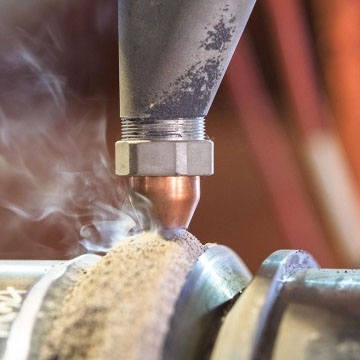
The performance of an E7018 electrode is directly tied to the quality of its flux coating. The raw materials used in this coating—such as dolomite, bauxite, silica, and fluorine ore—must be of high purity. In our manufacturing process, these components are melted at temperatures reaching 2000 °C to ensure a homogenous, high-purity flux. This meticulous process is essential for achieving the low-hydrogen characteristics required for critical welds. Ask potential suppliers about their raw material sourcing and manufacturing processes. A transparent supplier will be able to provide details on their methods for ensuring flux integrity.
Documentation and Traceability
For any structural project, traceability is key. Always request the following documents with your order:
- Certificate of Conformance (CoC): A statement from the manufacturer confirming that the product batch meets the requirements of the AWS A5.1 standard.
- Material Test Report (MTR) or Mill Certificate: This is a more detailed document providing the exact chemical analysis and mechanical properties (tensile strength, yield strength, elongation) of the specific batch you are purchasing. This data allows for precise verification against project specifications.
These documents are not just paperwork; they are your proof of quality and your defense in the event of a material audit or inspection.
Evaluating Supplier Capabilities for Bulk Procurement
For large-scale projects, the capabilities of your supplier are just as important as the quality of the product itself. An unreliable supply chain can cause costly delays. Assess potential partners on their production capacity, logistical expertise, and business practices.
Production Capacity and Scalability
Your supplier must be able to meet your demand, both now and for future projects. Inquire about their manufacturing facility and output. A well-equipped supplier with a substantial plant, such as a 1000 square meter facility with six production lines, offers confidence in their ability to scale. A stated production capacity, for instance, of 100 tons per day, provides a concrete metric to evaluate if they can handle large, time-sensitive orders without compromising quality or lead times. This level of capacity ensures a stable supply chain, even during periods of high demand.
Minimum Order Quantity (MOQ) and Lead Time
Understand the commercial terms before committing. For bulk industrial consumables like the E7018 electrode, it is common for manufacturers to have a Minimum Order Quantity (MOQ). A typical MOQ of 1 ton is standard for factory-direct sourcing. Similarly, clarify the production and shipping lead time. A standard lead time of around 30 days from order confirmation to dispatch is a realistic benchmark for international shipments, allowing for proper production scheduling and quality checks.
Global Logistics Experience
If you are sourcing internationally, your supplier’s experience in export is critical. A manufacturer with a proven track record of shipping to diverse global markets, including regions like Brazil, Thailand, Australia, and Malaysia, demonstrates a deep understanding of international trade. They will be adept at handling complex documentation, packaging for sea freight to prevent moisture contamination, and navigating customs procedures in different ports. This experience minimizes the risk of logistical delays that can derail a project schedule.
A reliable supply of various welding materials is foundational to any large-scale fabrication operation, and vetting your supplier's logistical prowess is a key part of ensuring that reliability.
Technical Considerations for Application-Specific Sourcing
While E7018 is a versatile electrode, certain technical factors should be considered to ensure optimal performance for your specific application.
Proper Storage and Handling
The primary advantage of an E7018 electrode—its low hydrogen content—is also its greatest vulnerability. The flux coating is hygroscopic, meaning it can absorb moisture from the atmosphere. This moisture can introduce hydrogen into the weld, negating the electrode's purpose and increasing the risk of cracking. It is crucial to source electrodes packaged in hermetically sealed containers. Once opened, they must be stored in a temperature-controlled holding oven. Discuss packaging options with your supplier to ensure the product arrives and can be stored on-site in pristine, dry condition.
Compatibility with Welding Equipment
Confirm that the electrodes are compatible with your existing welding fleet. While E7018 is designed for use with an AC or DCEP arc welding machine, performance can vary. The stable arc and smooth bead profile are best achieved with a constant current (CC) power source. Discussing your equipment with a supplier's technical team can help confirm suitability and provide recommended amperage settings for different electrode diameters.
Weldability and Operator Feedback
Ultimately, an electrode must perform well in the hands of a welder. A good E7018 electrode should offer a stable, smooth arc, low spatter, and slag that is easy to remove. The resulting weld bead should be uniform and finely rippled. Whenever possible, request a small sample batch for qualification testing by your welding team. Their feedback is an invaluable part of the evaluation process, ensuring that the product is not only technically compliant but also practical and efficient to use.
Creating an Effective Request for Quotation (RFQ) for E7018 Electrodes
A well-structured RFQ is the final piece of the sourcing puzzle. It ensures you receive comparable, comprehensive quotes from potential suppliers. Your RFQ should be specific and request all the information needed to make an informed decision.
Essential Information to Include in Your RFQ:
- Product Specification: Clearly state "E7018 Electrode per AWS A5.1."
- Required Diameters: List all sizes needed (e.g., 2.5mm, 3.2mm, 4.0mm).
- Quantity: Specify the required quantity for each size, typically in kilograms or tons.
- Packaging Requirements: Demand hermetically sealed packaging and specify package weight if necessary (e.g., 5 kg vacuum-sealed packs).
- Required Documentation: Explicitly request that quotes be accompanied by proof of ISO 9001 certification and sample Material Test Reports (MTRs).
- Delivery Terms: State your required Incoterms (e.g., FOB, CIF) and the final destination port or address.
- Price Validity: Ask for the quote's validity period to protect against price fluctuations.
By providing a detailed RFQ, you streamline the procurement process and signal to suppliers that you are a knowledgeable and serious buyer. It sets a professional tone for the business relationship and ensures all bids can be evaluated on an equal footing. While sourcing a specific product like an E7018, it may also be beneficial to inquire about related consumables, such as AWS E6013 welding electrodes for general-purpose work, to consolidate suppliers.
In conclusion, sourcing the E7018 electrode for structural welding is a process that demands rigor and diligence. By focusing on technical specifications, quality certifications, supplier capacity, and logistical reliability, procurement managers can mitigate risks and build a resilient supply chain. This ensures that every weld laid down on a critical project is backed by a product of verified strength and integrity.