
How to Source Aluminum Oxide Grit by Mesh Size Effectively
How to Source Aluminum Oxide Grit by Mesh Size for Optimal Industrial Performance
In the expansive realm of industrial operations, the precision of surface preparation can significantly impact the quality, durability, and performance of final products. Abrasives play a pivotal role in this process, with welding materials and components often requiring meticulously prepared surfaces for optimal adhesion and structural integrity. Among the most versatile and widely used industrial abrasives is Aluminum Oxide Grit, renowned for its hardness, toughness, and sharp, angular facets. However, merely specifying "Aluminum Oxide Grit" is insufficient for procurement teams and abrasive media buyers aiming for consistent, high-quality results. The true efficacy lies in understanding and accurately sourcing this material by its mesh size.
This guide delves into the nuances of selecting and procuring Aluminum Oxide Grit based on mesh size, providing a framework for informed decision-making. We will explore the technical specifications, application-specific requirements, critical quality considerations, and strategic supplier evaluation methods that are essential for successful industrial procurement.
Understanding Aluminum Oxide Grit Mesh Sizes and Standards
The term "mesh size" is fundamental to understanding the characteristics and application suitability of Aluminum Oxide Grit. It refers to the size of the abrasive particles, determined by their ability to pass through a sieve with a specific number of openings per linear inch. A higher mesh number indicates finer particles, while a lower mesh number signifies coarser particles. For instance, 16-mesh grit is much larger and more aggressive than 220-mesh grit.
Accurate specification of mesh size is paramount because it directly influences the surface profile, material removal rate, and ultimate finish of the treated substrate. Industrial standards, primarily FEPA (Federation of European Producers of Abrasives) and ANSI (American National Standards Institute), provide a standardized classification system for abrasive grain sizes, ensuring consistency across suppliers globally. Procurement teams must specify not only the mesh number but also the standard used (e.g., FEPA F80 or ANSI 80) to avoid discrepancies.
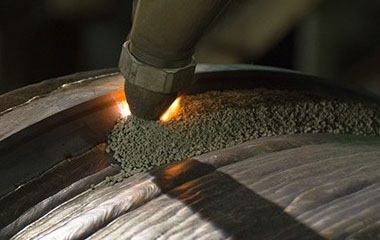
FEPA vs. ANSI: Decoding Abrasive Standards
The FEPA standard, often used in Europe and Asia, categorizes abrasive grains into F-series for blasting and general industrial applications (e.g., F12 to F220 for macrogrits, F230 to F1200 for microgrits) and P-series for bonded and coated abrasive products. The ANSI standard, prevalent in North America, uses a different sizing scale but serves the same purpose of classifying grains for various applications. While both aim to standardize particle size, their numerical designations for equivalent particle sizes can differ. A thorough understanding of these standards is critical to ensure that the procured Aluminum Oxide Grit aligns precisely with operational requirements and desired outcomes.
Matching Aluminum Oxide Grit Mesh Sizes to Specific Applications
The selection of the appropriate Aluminum Oxide Grit is a critical factor in achieving desired surface characteristics, whether for aggressive material removal, precise surface profiling, or delicate finishing. Different mesh sizes are engineered to excel in distinct applications:
- Coarse Grits (e.g., 16-60 mesh): These larger particles are ideal for heavy-duty tasks such as descaling, removing thick rust, preparing surfaces with deep pits, or creating a coarse anchor profile for subsequent coatings or welding machine applications. Their aggressive cutting action allows for rapid material removal.
- Medium Grits (e.g., 70-120 mesh): Offering a balance between material removal and surface finish, medium grits are versatile for general cleaning, deburring, and creating a consistent, textured surface. They are frequently used to establish a medium anchor profile suitable for many types of paint, coatings, or before the application of welding fluxes.
- Fine Grits (e.g., 150-240 mesh and finer): These smaller particles are employed for lighter cleaning, surface finishing, and achieving a smoother, more refined aesthetic. They are suitable for applications where minimal material removal is desired, or where a specific RMS (Root Mean Square) surface finish is required for cosmetic or functional purposes.
Understanding the interplay between mesh size, substrate material, and the desired outcome is crucial. For instance, preparing a surface for a high-performance coating or a critical weld often necessitates a specific anchor profile that can only be achieved with a carefully selected mesh size, ensuring optimal mechanical bonding.
Ensuring Quality and Consistency in Your Aluminum Oxide Grit Supply
Beyond mesh size, the overall quality and consistency of Aluminum Oxide Grit are paramount for reliable industrial performance. Key quality attributes include the purity of the material (e.g., brown, white, or pink aluminum oxide, each with varying levels of alumina content and associated properties), its hardness, friability (tendency to break down), and toughness. The particle shape—whether angular, blocky, or semi-rounded—also significantly impacts its cutting efficiency and longevity.
Procurement professionals should also assess the supplier's commitment to consistent particle size distribution within a specified mesh. Wide variations can lead to uneven surface profiles, reduced abrasive lifespan, and increased operational costs. Factors like recyclability, dust generation, and compliance with environmental regulations are additional considerations for sustainable and efficient operations.
The Oldwelders Standard for Industrial Materials
While Oldwelders specializes in high-performance welding solutions, our operational philosophy extends to all industrial procurement. Our commitment to quality is underscored by our ISO 9001 certification, ensuring that our internal processes for sourcing and manufacturing meet stringent international standards. This rigorous approach is evident in our own production, where raw materials for flux products, such as excellent dolomite, bauxite, cryolite, silica, and fluorine ore, are melted at extreme temperatures exceeding 2000 °C, guaranteeing purity and performance. Such meticulous control is what procurement professionals should seek in any industrial material supplier.
Suppliers with robust production capabilities, similar to our own 1000 square meter plant with six production lines capable of supplying 100 tons of flux a day, demonstrate the infrastructure to meet demanding industrial requirements. For large-scale operations, minimum order quantities are a key consideration. Oldwelders typically works with a minimum order of 1 ton for its industrial products, reflecting a capacity to handle significant volumes efficiently. Furthermore, our lead times, generally around 30 days, are structured to provide reliable delivery schedules for our partners in markets like Brazil, Thailand, Australia, and Malaysia, ensuring global accessibility and dependable service.

Strategic Supplier Selection for Aluminum Oxide Grit
Choosing the right supplier for Aluminum Oxide Grit is a strategic decision that extends beyond simply comparing price lists. A reliable supplier acts as a true partner, contributing to the efficiency and success of your operations. Procurement teams should meticulously evaluate potential suppliers based on a comprehensive set of criteria:
- Certifications and Quality Control: Verify relevant certifications such as ISO 9001, which signifies a commitment to quality management systems. Inquire about their in-house quality control procedures, including particle size analysis, chemical composition testing, and contamination checks.
- Production Capacity and Reliability: Assess the supplier's ability to consistently meet your volume requirements. A large-scale operation with multiple production lines and a significant daily output capacity indicates stability and the ability to handle fluctuating demands.
- Logistics and Delivery: Evaluate their logistical capabilities, including typical lead times, shipping options, and reliability in delivering to your specific geographic location. A supplier with a proven track record in diverse international markets, as Oldwelders serves Brazil, Thailand, Australia, and Malaysia, often indicates robust global supply chain management.
- Technical Support and Expertise: A knowledgeable supplier can offer invaluable technical guidance on mesh size selection, application optimization, and troubleshooting, ensuring you leverage the full potential of the abrasive.
- Minimum Order Quantity (MOQ): Understand their MOQ policies. While some suppliers may offer flexibility, a standard MOQ, such as Oldwelders' 1-ton minimum for industrial products, often reflects their operational scale and efficiency in handling bulk orders.
Requesting samples for testing, along with comprehensive technical data sheets (TDS) and safety data sheets (SDS), is a non-negotiable step in the evaluation process. This allows for real-world performance validation before committing to a bulk order.
Procurement Best Practices for Abrasive Media
Effective procurement of abrasive media, including Aluminum Oxide Grit, requires a systematic approach to ensure consistent quality, cost-effectiveness, and operational efficiency. Implementing best practices can mitigate risks and optimize supply chain performance.
Developing Clear RFQs (Request for Quotations)
Precision in your RFQ documents is paramount. Clearly specify the exact mesh size (e.g., FEPA F60 or ANSI 80), purity requirements (e.g., brown aluminum oxide, 95% Al2O3), particle shape, hardness, and any specific friability or toughness expectations. Detail packaging requirements (e.g., 25kg bags, 1-ton bulk bags), labeling standards, and delivery terms. Mandate the submission of certifications, SDS, and TDS with all bids. This level of detail helps suppliers provide accurate quotes and minimizes misunderstandings.
Testing and Verification
Upon receipt of any new batch of abrasive media, establish rigorous incoming inspection procedures. This should include visual inspection for contaminants, verification of labeling against the purchase order, and, ideally, in-house testing of particle size distribution using sieves. For critical applications, conduct performance testing with a representative sample in your actual production environment to confirm that the material meets operational standards and yields the desired surface finish or material removal rate.
Inventory Management and Forecasting
Strategic inventory management is crucial to avoid stockouts or excessive holding costs. Factor in supplier lead times, typical consumption rates, and any seasonal fluctuations in demand. Utilize forecasting tools to predict future needs and communicate these proactively with your chosen supplier to facilitate timely production and delivery. A reliable supplier with consistent lead times, like Oldwelders' typical 30-day delivery, helps in precise inventory planning.
Building Strong Supplier Relationships
Foster open and transparent communication channels with your suppliers. Provide constructive feedback on product performance and delivery schedules. Long-term partnerships can lead to benefits such as preferred pricing, access to new product developments, custom solutions, and improved responsiveness during urgent situations. A collaborative approach ensures that both parties are invested in the success of the supply chain.
Conclusion: Partnering for Precision in Industrial Abrasives
Sourcing Aluminum Oxide Grit by mesh size is a nuanced process that demands a deep understanding of technical specifications, application requirements, and supplier capabilities. Thoroughly understanding the specifications and sourcing reliable Aluminum Oxide Grit suppliers are critical steps towards achieving consistent quality and optimizing industrial processes.
For procurement teams, the principles of rigorous quality control, robust production capacity, dependable logistics, and transparent communication are universal across all industrial materials. By applying these strategic sourcing methodologies, informed decisions can be made that significantly impact operational efficiency and product integrity. Partnering with suppliers who demonstrate a steadfast commitment to these standards ensures that your abrasive media procurement contributes positively to your overall manufacturing excellence.