
How to Control Distortion in Pressure Vessel Welding
How to Effectively Control Distortion in Pressure Vessel Welding
For fabricators and production supervisors, maintaining dimensional accuracy is paramount. Uncontrolled distortion during the manufacturing process can lead to costly rework, project delays, and compromised structural integrity. This is especially critical in pressure vessel welding, where tight tolerances and safety standards are non-negotiable. While some degree of distortion is an inherent consequence of applying intense, localized heat to metal, it can be effectively managed through a systematic approach that encompasses design, preparation, in-process controls, and material selection. This guide provides actionable strategies for minimizing dimensional variation and ensuring your final product meets all specifications.
By understanding the mechanics of thermal distortion and implementing rigorous process controls, you can transition from reactive correction to proactive prevention, improving both efficiency and quality on the workshop floor.
Understanding the Physics of Welding Distortion
At its core, welding distortion is a result of the non-uniform heating and cooling of the workpiece. When you apply a welding arc, the metal at the joint rapidly heats and expands. The surrounding cooler metal resists this expansion, creating compressive stress. As the weld pool solidifies and cools, it contracts significantly. This contraction pulls on the surrounding material, creating tensile stresses that cause the structure to warp, bend, or twist. In large cylindrical structures like pressure vessels, these forces can manifest in several ways:
- Angular Distortion: This occurs perpendicular to the weld line, causing a rotation of the plates around the weld. It's often seen as "peaking" at the longitudinal seam of a vessel shell.
- Longitudinal Shrinkage: This is shrinkage that occurs parallel to the weld axis, which can shorten the overall length of the component.
- Transverse Shrinkage: This shrinkage occurs perpendicular to the weld axis, pulling the plates closer together and potentially reducing the vessel's diameter.
- Bowing and Buckling: A more complex, out-of-plane deformation that can affect the overall straightness or roundness of the vessel shell.
The magnitude of this distortion is influenced by factors like the material's coefficient of thermal expansion, the amount of heat input, the joint design, and the rigidity of the structure. The challenge in pressure vessel fabrication is to manage these forces across long seams and complex nozzle joints to maintain the required geometry.
Pre-Welding Strategies for Distortion Mitigation
The most effective way to control distortion is to plan for it before the first arc is struck. Proactive measures taken during the preparation stage can significantly reduce the stresses that cause warping and buckling. For any large-scale fabrication, success begins here.
1. Joint Design and Fit-Up
The design of the weld joint directly impacts the volume of weld metal required, and consequently, the total heat input. A joint requiring more filler metal will experience greater shrinkage upon cooling.
- Minimize Weld Volume: Where possible, use joints with smaller included angles. For example, a narrow-gap V-groove or a U-groove requires less weld metal than a wide-angle V-groove for the same plate thickness, reducing overall shrinkage.
- Ensure Accurate Fit-Up: A consistent, minimal root gap is crucial. An excessively wide or inconsistent gap forces the welder to deposit more metal, increasing heat and subsequent distortion. Proper edge preparation and alignment are essential first steps.
2. Pre-Setting and Pre-Cambering
This advanced technique involves intentionally misaligning the components in the opposite direction of the expected distortion. As the weld cools and contracts, it pulls the structure into the correct alignment. For example, when welding a longitudinal seam on a vessel shell, the plates can be pre-set at a slight angle. The angular distortion from the weld then pulls them flat. This requires experience and often mock-up testing to determine the precise amount of pre-set needed, but it is a highly effective method for high-volume production.
3. Use of Restraints: Jigs, Fixtures, and Strongbacks
Physically restraining the workpiece can counteract the forces of contraction. This is a common and effective method for controlling distortion in pressure vessel welding.
- Tack Welds: Strong, closely spaced tack welds help hold the joint in alignment during welding. They should be substantial enough to resist shrinkage forces but small enough to be easily consumed by the final weld pass.
- Jigs and Fixtures: For repetitive jobs, custom jigs and fixtures can hold components in their precise final shape during welding and cooling. This is particularly useful for attaching flanges or nozzles where orientation is critical.
- Strongbacks: These are temporary stiffeners, typically steel bars or beams, tacked onto the workpiece away from the weld joint. They provide rigidity and resist bending or buckling forces. They are removed after the weld has completely cooled.
In-Process Welding Techniques to Balance Heat Input
How the weld is deposited has a profound impact on heat distribution and resulting stress. The goal is to apply heat symmetrically and minimize its concentration in any single area for an extended period.
1. Balanced Welding Sequence
Instead of completing a weld from one end to the other, a planned sequence can distribute the heat and shrinkage stresses more evenly. Common techniques include:
- Backstep Welding: The overall progression is in one direction, but each weld segment is deposited in the opposite direction. This breaks up the continuous buildup of stress in one direction.
- Skip Welding: Weld segments are deposited at intervals along the joint, with the welder later returning to fill in the gaps. For a long longitudinal seam, a welder might weld one meter, skip two meters, weld another meter, and so on, before returning to the skipped sections.
- Symmetrical Welding: For double-sided V-groove joints, depositing weld passes alternately on each side of the plate helps to balance the shrinkage forces, preventing angular distortion. Similarly, having two welders work simultaneously on opposite sides of a large-diameter vessel can be highly effective.
2. Control of Welding Parameters
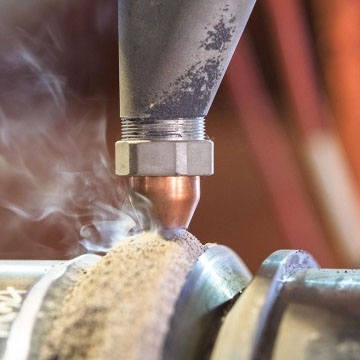
Minimizing total heat input is a primary goal. Heat input is a function of amperage, voltage, and travel speed. While sufficient heat is needed for proper fusion, excessive heat serves only to increase the size of the heat-affected zone (HAZ) and exacerbate distortion. Utilizing a modern welding machine with precise digital controls allows operators to fine-tune these parameters. For automated processes, using higher travel speeds with appropriately adjusted current and voltage can reduce the time the heat source dwells on any given point, thus lowering the total heat input per unit length of weld.
The Critical Role of Consumables and Quality Control
The selection of welding consumables—including wires, rods, and fluxes—is another vital component of a comprehensive distortion control strategy. High-quality consumables provide stable arcs, consistent deposition rates, and predictable metallurgical properties, all of which contribute to a more controlled welding process.
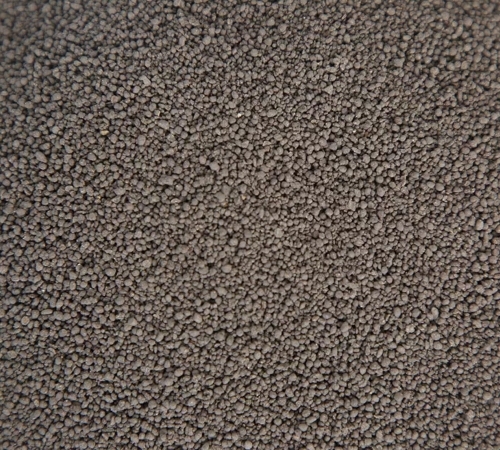
For submerged arc welding (SAW), a common process in pressure vessel welding, the flux plays a multi-faceted role. It not only shields the weld pool but also influences the bead shape, slag detachability, and cooling rate. A well-formulated flux can help create a bead profile that minimizes stress concentration. As an ISO 9001 certified manufacturer serving demanding markets in Brazil, Thailand, and Australia, we understand the importance of consistency. Our production facility is equipped with six production lines capable of supplying 100 tons of high-quality welding fluxes per day. The raw materials, including select dolomite, bauxite, and silica, are melted at 2000 °C to ensure homogeneity and purity, resulting in a flux that delivers reliable performance weld after weld.
Choosing the right flux-cored wire or solid wire also impacts the process. Wires designed for high deposition rates can help increase travel speed, reducing heat input. The key is to select a complete system of equipment and consumables that work together to achieve the desired mechanical properties with the lowest possible heat input.
Post-Weld Heat Treatment (PWHT) and Correction
Even with the best preparation and in-process controls, some residual stress will remain in the structure. For many pressure vessel codes and applications, Post-Weld Heat Treatment (PWHT) is a mandatory step.
PWHT involves heating the completed fabrication to a specific temperature below its lower transformation temperature, holding it for a prescribed period, and then slowly cooling it. This process does not eliminate distortion that has already occurred, but it effectively relieves the locked-in residual stresses. By reducing these stresses, PWHT lowers the risk of brittle fracture and improves the component's long-term service life. It is a stress-relieving process, not a straightening one.
In cases where distortion has exceeded acceptable limits, mechanical straightening may be necessary. This can involve press straightening, line heating, or other methods. However, these should be considered corrective actions of last resort, as they are time-consuming and can introduce their own stresses if not performed correctly.
Conclusion: A Holistic Approach to Dimensional Control
Effectively controlling distortion in pressure vessel welding is not about a single trick or technique. It is a holistic discipline that integrates intelligent design, meticulous preparation, disciplined in-process execution, and the use of high-performance materials. By implementing strategies like balanced welding sequences, proper joint design, and physical restraints, fabrication supervisors can proactively manage the powerful forces of thermal expansion and contraction.
Partnering with a knowledgeable supplier for your equipment and consumables is a cornerstone of this approach. With a deep understanding of material science and a commitment to quality backed by ISO 9001 certification, Oldwelders provides the reliable welding machines, wires, and fluxes that enable you to implement these advanced control strategies with confidence. By focusing on process control from start to finish, you can deliver dimensionally accurate, high-integrity pressure vessels that meet the most stringent industry standards.